Volunteer Burnout Risk Calculator
Assess your risk of volunteer burnout using evidence-based indicators from a 2024 University of Melbourne study. Based on your inputs, you'll receive personalized guidance to maintain sustainable volunteering.
Your Volunteering Hours
Your Risk Assessment
Volunteering feels good. You show up, you help out, you leave with that warm fuzzy feeling. But what happens when showing up becomes showing up every day? When you say yes to every request, every shift, every event? What if your calendar looks like a volunteer schedule and your personal life feels like an afterthought?
There’s a quiet crisis happening in communities worldwide - people are volunteering themselves into exhaustion. Not because they’re forced, but because they care too much. And that’s the problem.
When Helping Becomes a Habit You Can’t Break
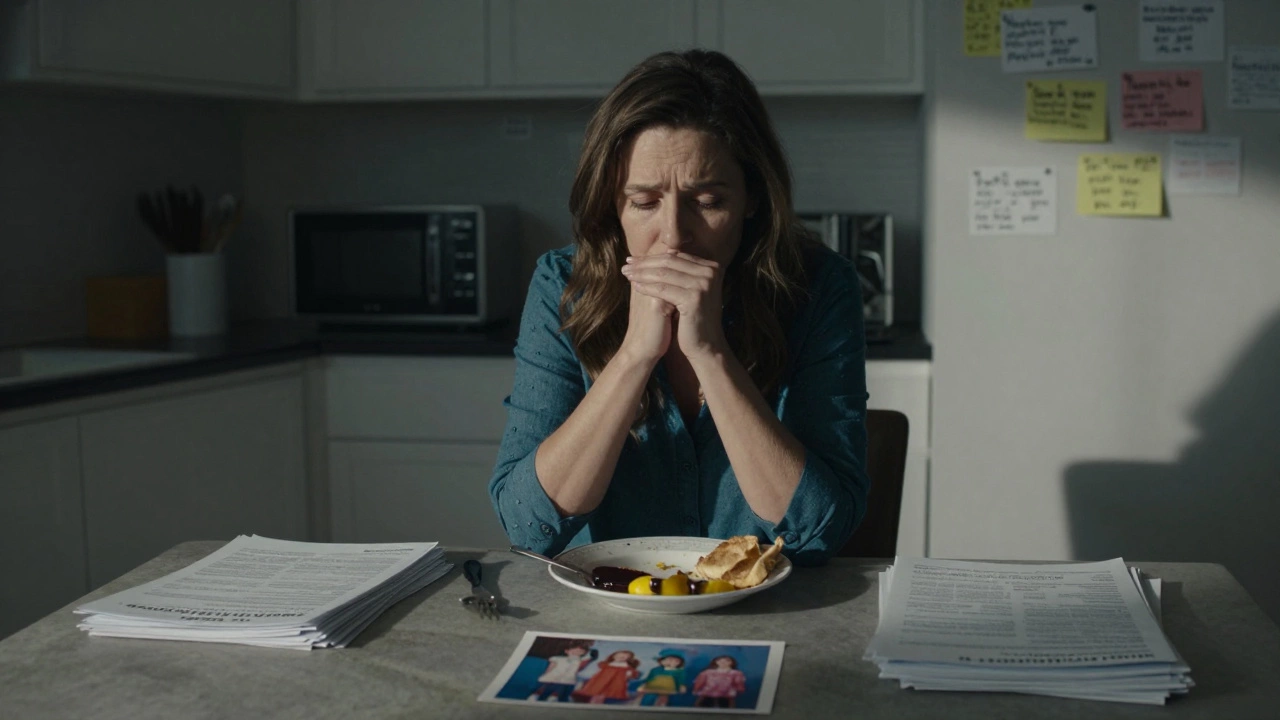
I’ve seen it in Sydney. A woman who runs the food bank on Tuesdays, tutors kids on Thursdays, helps at the animal shelter on weekends, and still shows up for the monthly clean-up drive. She doesn’t complain. She smiles. But her hands are always tired. Her eyes look tired too. She hasn’t taken a vacation in three years. Her partner left. Her kids don’t ask her to their school plays anymore.
This isn’t heroism. This is burnout dressed up as dedication.
Volunteering isn’t meant to replace your job, your family time, or your mental health care. It’s meant to complement them. But when you start measuring your worth by how many hours you log, you’re not volunteering - you’re performing.
The Numbers Don’t Lie
A 2024 study from the University of Melbourne tracked over 2,000 regular volunteers across Australia. The findings? People who volunteered more than 15 hours a week were 42% more likely to report chronic stress, sleep issues, and feelings of resentment toward the organizations they served. Not because the work was hard - but because they had no boundaries.
And here’s the kicker: those same people were less effective at their roles. They made more mistakes. They missed deadlines. They showed up late. Their enthusiasm faded. The very thing they gave to protect - their community - started to suffer because they gave too much of themselves.
What Does Too Much Look Like?
There’s no universal number. One person thrives on 20 hours a week. Another crashes after 6. But here are the red flags:
- You skip meals because you’re rushing to your next shift
- You say yes to everything, even when you’re sick or emotionally drained
- Your partner, kids, or friends have stopped asking you to hang out
- You feel guilty if you miss a volunteer day
- You can’t remember the last time you did something just for you
- You’ve stopped tracking your own needs - only others’
If any of this sounds familiar, you’re not broken. You’re just caught in a cycle many well-meaning people fall into: believing that more hours = more impact. It’s a lie.
The Myth of the Perfect Volunteer
We’re taught to admire the person who does it all. The one who shows up at 6 a.m. and stays until midnight. The one who never says no. But here’s the truth: organizations don’t need superheroes. They need sustainable volunteers.
A volunteer who shows up consistently for 5 hours a week, with energy and focus, is more valuable than someone who shows up for 20 hours but is exhausted, distracted, or resentful. Quality beats quantity every time.
And let’s be honest - if you’re volunteering because you feel guilty or afraid of being seen as selfish, you’re not helping anyone. You’re just filling a void inside yourself. That’s not service. That’s self-sacrifice.
Who Pays the Price When You Overgive?
It’s not just you. It’s everyone around you.
When you burn out, the organization loses a reliable person. They scramble to find someone else. Someone who may not have your experience. Someone who might quit after a few weeks because they didn’t know how heavy the load was.
Your family pays too. Kids grow up thinking it’s normal for a parent to disappear every night. Partners learn to live without you. Friends stop inviting you because they’ve been rejected too many times.
And the community? It gets a volunteer who’s checked out. Someone who smiles on the surface but is hollow inside. That’s not service. That’s performance.

How to Volunteer Without Losing Yourself
Here’s how to keep giving without giving everything:
- Set a hard limit. Decide what’s sustainable for you - maybe 6 hours a week. Stick to it. Say no when you hit it.
- Choose one or two causes. Spread yourself thin across ten organizations? That’s not impact. That’s chaos. Pick what truly moves you and go deep.
- Protect your recharge time. Block out time for sleep, hobbies, walks, coffee with friends. Treat it like a meeting with your boss - because it is.
- Ask for help. If you’re overwhelmed, say it. Most organizations have backup volunteers. They’ll appreciate you being honest.
- Track how you feel, not just hours. At the end of each week, ask: Did this leave me energized or drained? If it’s the latter, it’s time to adjust.
Volunteering isn’t a competition. There’s no medal for the most hours logged. The real reward is showing up as your whole self - rested, present, and genuinely happy to be there.
What If You’re Already Burned Out?
If you’re already feeling resentful, numb, or guilty for wanting to stop - you’re not alone. And you’re not failing.
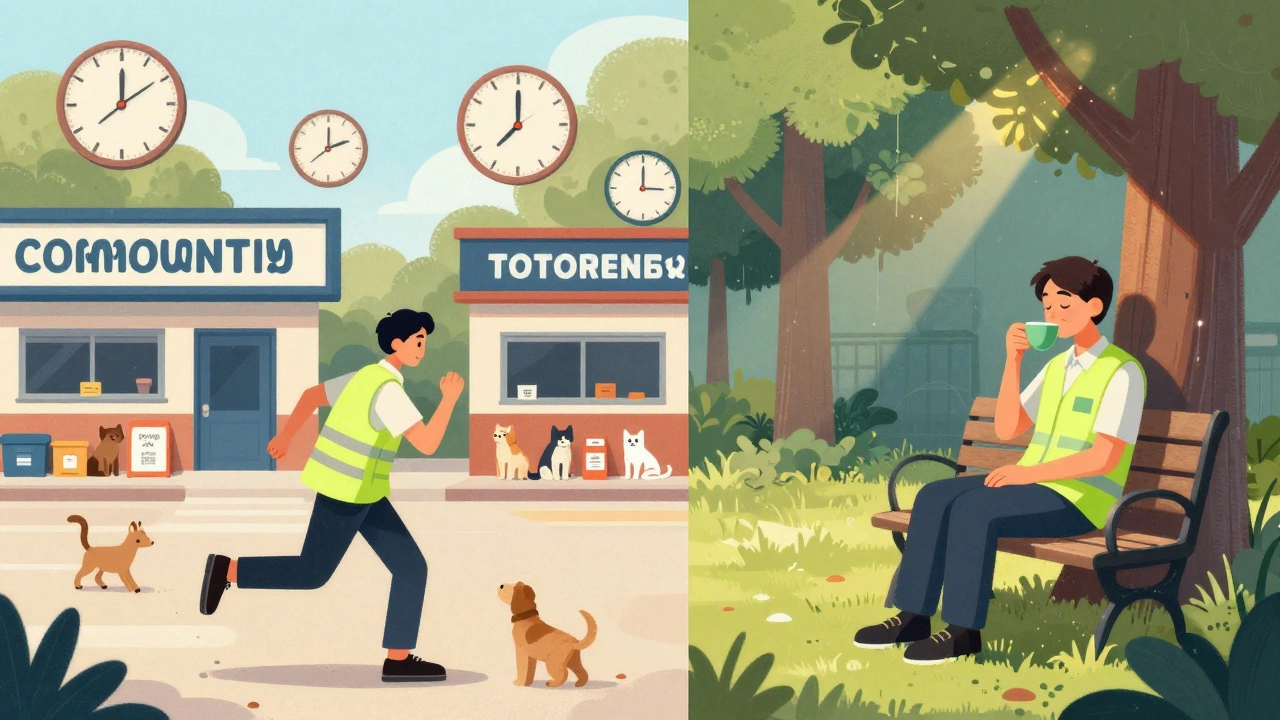
Take a break. Not a vacation. A real break. Two weeks off. No calls. No emails. No guilt.
Use that time to remember who you are outside of your volunteer role. What did you love before you started giving everything? Go back to it. Even for an hour. Read a book. Sit in the park. Cook a meal without checking your phone.
When you come back - if you come back - you’ll be better. More present. More effective. And honestly? The organization will thank you.
It’s Not Selfish to Care for Yourself
Here’s the quiet truth: the best volunteers aren’t the ones who give the most. They’re the ones who give the most sustainably.
You can’t pour from an empty cup. And you don’t have to be the hero. You just have to be human.
Volunteering is a gift - not a debt. You’re allowed to rest. You’re allowed to say no. You’re allowed to put yourself first - because the people you help deserve someone who shows up fully. Not someone who’s running on fumes.
Be kind to your community. But don’t forget to be kind to yourself.
Is it possible to volunteer too much?
Yes. Volunteering too much can lead to burnout, resentment, strained relationships, and reduced effectiveness. Studies show that people volunteering over 15 hours a week are significantly more likely to experience chronic stress and emotional exhaustion. The goal isn’t to do more - it’s to do better.
How many hours of volunteering is too much?
There’s no universal number, but 15 hours a week is a common tipping point for burnout, according to a 2024 Australian study. The right amount depends on your energy, responsibilities, and emotional capacity. If you’re skipping meals, canceling plans with loved ones, or feeling guilty for taking a day off, you’re likely overextended.
Can volunteering harm your mental health?
Yes - if it becomes a compulsion. When volunteering replaces self-care, silences your needs, or becomes a way to avoid personal problems, it can contribute to anxiety, depression, and emotional fatigue. It’s not the act of helping that’s harmful - it’s the lack of boundaries around it.
What should I do if I feel guilty for saying no to volunteering?
Recognize that guilt is often a sign you’ve lost your boundaries. Saying no doesn’t make you selfish - it makes you sustainable. Good organizations want volunteers who are present and energized, not ones who show up out of obligation. Practice saying, "I care about this cause, but I need to protect my time right now." It’s honest, respectful, and healthy.
How can I help my community without burning out?
Focus on consistency over quantity. Pick one or two causes you’re passionate about. Set a weekly limit - like 5-8 hours - and stick to it. Protect your rest, communicate your limits, and take breaks when needed. Sustainable giving lasts longer and has more impact than frantic overdoing.