
Caregiver Payment Eligibility Finder
Where are you located?
Programs vary significantly by country.
You are exhausted. The nights are long, the medical appointments are endless, and your bank account is shrinking because you had to cut back on hours at work-or quit entirely-to look after your aging parent. It feels like a thankless job, doesn't it? So, when you hear whispers about programs that might pay you to do what you are already doing, hope flares up. But here is the hard truth: there is no universal government program designed specifically to write you a paycheck for being a daughter or son.
However, that does not mean you are left with zero options. Depending on where you live and your specific financial situation, there are pathways to receive financial support. These aren't always direct wages for caregiving; often, they come in the form of disability benefits, tax credits, or specialized Medicaid waivers that allow you to be hired as a professional provider. Let’s break down exactly how these systems work, who qualifies, and how you can navigate them without getting lost in red tape.
The Myth of the "Caregiver Salary"
First, let's clear up a common misconception. Most people imagine a scenario where the government says, "You take care of Mom, so we will deposit $2,000 into your account every month." In most jurisdictions, including the United States and Australia, this direct model is rare. Why? Because public assistance programs are generally means-tested. They are designed to help those with low income or significant assets depletion due to medical needs, not to supplement the income of middle-class families.
If your parent has substantial savings or a high pension, you likely won't qualify for government aid. If your parent is struggling financially, however, the door opens slightly. The key is understanding that the money usually goes toward elderly care services, and sometimes, under strict rules, you can be the one providing those services for a fee.
Medicaid Waivers: The Best Bet in the US
If you are in the United States, the primary vehicle for getting paid to care for a parent is through Medicaid Home and Community-Based Services (HCBS) Waivers. Standard Medicaid covers nursing home care, but it rarely pays for in-home help unless the person is eligible for a waiver. These waivers vary by state, which makes this process tricky. Some states have "Cash and Counseling" programs, while others use "Consumer Directed Personal Assistance Programs" (CDPAP).
| Program Type | Who Pays? | Can Family Be Paid? | Key Requirement |
|---|---|---|---|
| Medicaid HCBS Waivers | State/Federal Gov | Yes, in many states | Parent must meet financial & medical criteria |
| Veterans Aid & Attendance | VA Department | No (goes to vet) | Parent must be a veteran with service-connected issues |
| Long-Term Care Insurance | Private Insurer | Often Yes | Parent must have purchased policy beforehand |
| SSA Disability Benefits | Social Security Admin | No (goes to disabled adult child) | Adult child must have disability before age 22 |
To get paid through a waiver, your parent typically needs to apply for Medicaid eligibility. This involves proving their income and assets are below a certain threshold. Once approved, a case manager assesses their needs. If they need help with bathing, dressing, or medication management, the state allocates funds. In states like New York (via CDPAP) or California (via In-Home Supportive Services), you can often hire yourself as the personal care aide. You become an employee of your parent, and the state reimburses the cost. You will still need to file taxes on this income, and you must keep detailed logs of your hours.
Australia: Carer Payments and Allowances
Since I am writing this from Sydney, let’s look at how it works down under. The Australian system is distinct because it separates the concept of "care" from "income support." The Department of Social Services offers two main types of support for informal caregivers: the Carer Payment and the Carer Allowance.
The Carer Payment is for people who provide full-time care to someone who needs help with daily activities. To qualify, you must pass a means test, meaning your own income and assets must be low. Crucially, you cannot work more than 25 hours a week if you want to receive this payment. It effectively replaces your wage if you’ve stopped working to care for your parent. It is not a bonus on top of a salary; it is a safety net.
The Carer Allowance is different. It is a non-means-tested payment of around $140 per fortnight (as of recent updates). You can receive this even if you are working full-time. Think of it as a small stipend to cover the extra costs of caregiving, like buying special equipment or taking time off for appointments. It is not enough to live on, but it acknowledges the financial strain of caring.
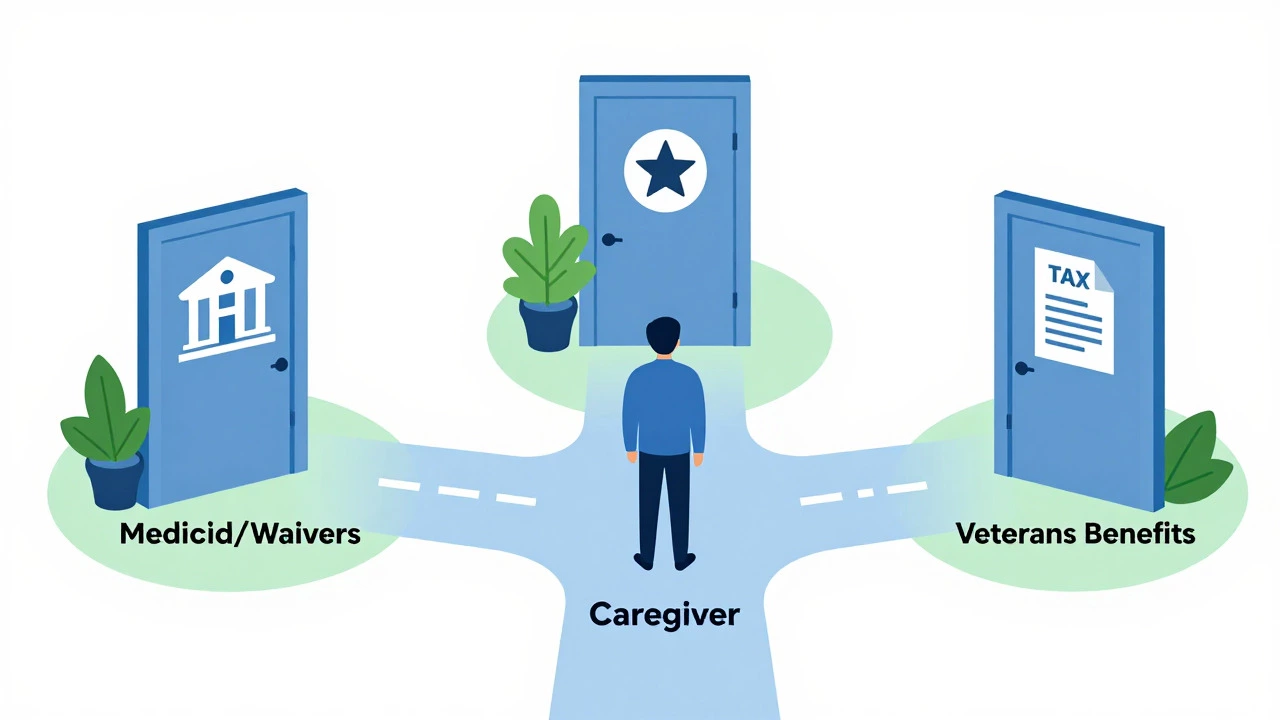
Veterans Benefits: A Hidden Resource
Did your parent serve in the military? If so, you might have access to the Aid and Attendance Pension. This is a highly underrated benefit available through the Department of Veterans Affairs. It provides additional monthly money to veterans who need help with daily living activities, such as bathing, dressing, or feeding. While the money technically goes to the veteran, it is intended to cover the cost of care. Many families use these funds to compensate family members for their care efforts, though the VA does not directly employ the family member. The application process is complex, involving proof of wartime service and medical documentation, but the payout can be significantly higher than standard social security checks.
Tax Credits and Deductions
Even if you don’t get a direct paycheck, the tax code might offer some relief. In the US, the Caregiver Tax Credit (part of the Child and Dependent Care Credit) allows you to claim a portion of expenses if you are working and paying for care. However, claiming a parent as a dependent requires them to live with you for more than half the year and earn less than a specific threshold. If you qualify, you can deduct a percentage of the care costs from your taxable income. It’s not cash in hand, but it reduces the amount you owe the IRS, which effectively puts more money back in your pocket.
In Australia, you can claim deductions for out-of-pocket expenses related to caring, such as travel costs to medical appointments or modifications to your home, provided you keep meticulous receipts. You cannot claim the value of your own labor, but reducing your taxable income helps offset the loss of earnings.

Private Long-Term Care Insurance
This is the "if only you knew sooner" option. If your parents bought Long-Term Care Insurance years ago, you might be in luck. Many policies include provisions for family caregivers. Some insurers allow beneficiaries to designate a family member as the primary caregiver and reimburse them for their services. Check the policy details carefully. Look for terms like "family caregiver reimbursement" or "informal care benefits." If this exists, it is often the easiest path to getting paid, as it bypasses government means testing entirely.
Steps to Take Right Now
- Assess Eligibility: Gather your parent’s financial statements and medical records. Determine if they qualify for Medicaid (US) or Centrelink payments (Australia).
- Contact Local Agencies: In the US, call your local Area Agency on Aging. In Australia, contact My Aged Care. Ask specifically about "waivers" or "carer support services."
- Check Military Records: If applicable, start the Aid and Attendance application immediately. It can take months to process.
- Review Insurance Policies: Dig through old files for any long-term care or life insurance policies that might have rider benefits for caregiving.
- Keep Records: Start a log today. Track every hour you spend caregiving, every expense you incur, and every medical appointment. This data is crucial for applications and tax claims.
Navigating the Emotional Side
Beyond the money, remember that caregiving is emotionally draining. Financial compensation can feel like validation, but it doesn't fix burnout. Whether you get paid or not, ensure you have respite care options. Many of the same programs that offer financial aid also provide temporary relief services, allowing you to take a break while a professional steps in. Don't hesitate to use them. Your well-being matters just as much as your parent's.
Can I get paid to care for my mother if she has no income?
If your mother has little to no income and limited assets, she may qualify for Medicaid in the US or the Carer Payment in Australia. In the US, Medicaid waivers often allow family members to be paid as providers. In Australia, the Carer Payment is a welfare benefit for those who reduce work hours to care, rather than a wage for services rendered.
Does Medicare pay family caregivers?
Generally, no. Original Medicare (Part A and B) does not pay for long-term custodial care or family caregivers. It primarily covers skilled nursing care for short periods after a hospital stay. For ongoing in-home care, you usually need a Medicaid waiver or private insurance.
What is the difference between Carer Payment and Carer Allowance in Australia?
The Carer Payment is a means-tested income support for those providing full-time care, limiting your work hours to 25 per week. The Carer Allowance is a non-means-tested supplementary payment (approx. $140/fortnight) that you can receive while working full-time, intended to help with extra costs associated with caregiving.
Do I have to pay taxes on caregiver payments from Medicaid?
Yes. If you are employed by your parent through a Medicaid waiver program like CDPAP, the payments are considered earned income. You will receive a W-2 form, and you must report this income on your tax return. Make sure to set aside a portion for federal and state taxes.
Can I claim my parent as a dependent for tax purposes?
In the US, you can claim a parent as a dependent if they live with you for more than half the year and their gross income is below the exemption threshold (around $5,050 in recent years). This allows you to potentially claim the Dependent Care Credit if you pay for their care while you work.