
Outreach Goal Calculator
Define Your Outreach Goal
Your Action Plan
Goal
Break your goal into these actionable steps:
Pro Tip: The most successful outreach focuses on relationship building rather than immediate conversions. Track repeat engagement and referrals instead of just attendance numbers.
Planning an outreach activity isn’t about handing out flyers or showing up at a local fair with a table. If you’ve tried that before and got crickets in return, you’re not alone. Too many groups treat outreach like a checklist item-do the thing, hope for the best, move on. But real outreach? It’s a conversation starter. It’s about listening before you speak, showing up consistently, and building trust long before you ask for anything.
Start with the people, not the plan
Before you pick a date, print banners, or book a venue, you need to know who you’re trying to reach. Not in broad terms like "low-income families" or "seniors." Real people. The single mom who works two shifts and drops her kids off at the community center after work. The retired veteran who still walks three blocks to get his weekly groceries. The teenager who scrolls through Instagram while waiting for the bus after school. Go there. Sit in the park. Talk to the staff at the food bank. Ask questions like: "What’s something you wish someone would help with around here?" or "What stopped you from joining something like this before?" You’ll hear patterns. Maybe people don’t come because they’re afraid of judgment. Maybe they don’t know it’s free. Maybe they’ve been burned by promises before. One group in Liverpool, Australia, spent three weeks just talking to parents at the local playground before launching a free after-school tutoring program. They didn’t mention tutoring once. They asked about homework stress, childcare gaps, and who they could trust. The result? Their first session had 42 kids-because parents already knew who they were and trusted them.Define your goal, then shrink it
"We want to help our community" is not a goal. It’s a feeling. A real outreach goal is specific, measurable, and time-bound. Instead of:- "Raise awareness about mental health."
- "Get 50 residents to attend a free mental health workshop by the end of May."
- "Sign up 30 new families for our weekly food box program within six weeks."
- "Have 15 local teens volunteer to lead a clean-up day by April 10."
Choose the right format-not the flashy one
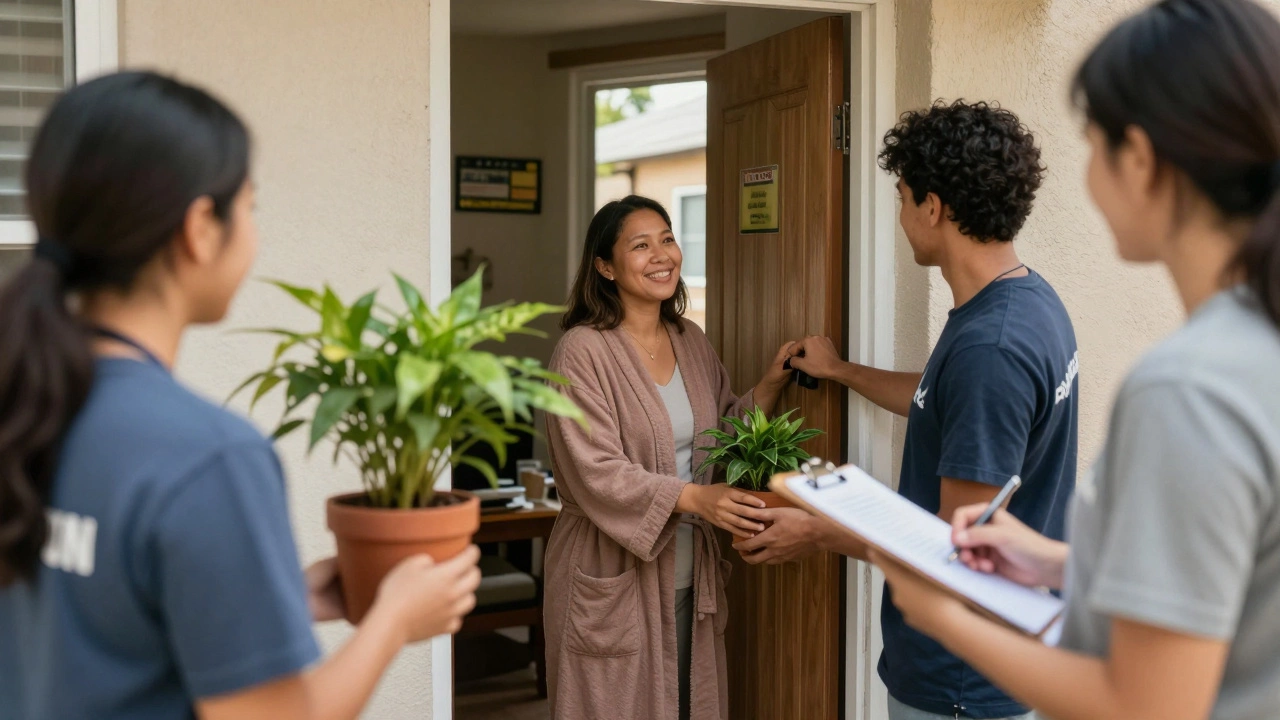
You don’t need a big event. You need the right fit. A food drive? Great-if people have storage and transportation. But if they’re living in apartments without fridges or cars? Then a mobile drop-off van that comes to their block works better. A health fair? Maybe. But if people don’t trust clinics, a coffee morning with a nurse sitting at the local bakery? That’s where they already are. Here’s what actually works right now:- Door-knocking with a purpose: Not "Hi, we’re from X organization." But "Hi, I’m Maria. I live two streets over. I noticed the bus stop here doesn’t have shade. Would you be open to a little bench and a plant? We’re starting this next week."
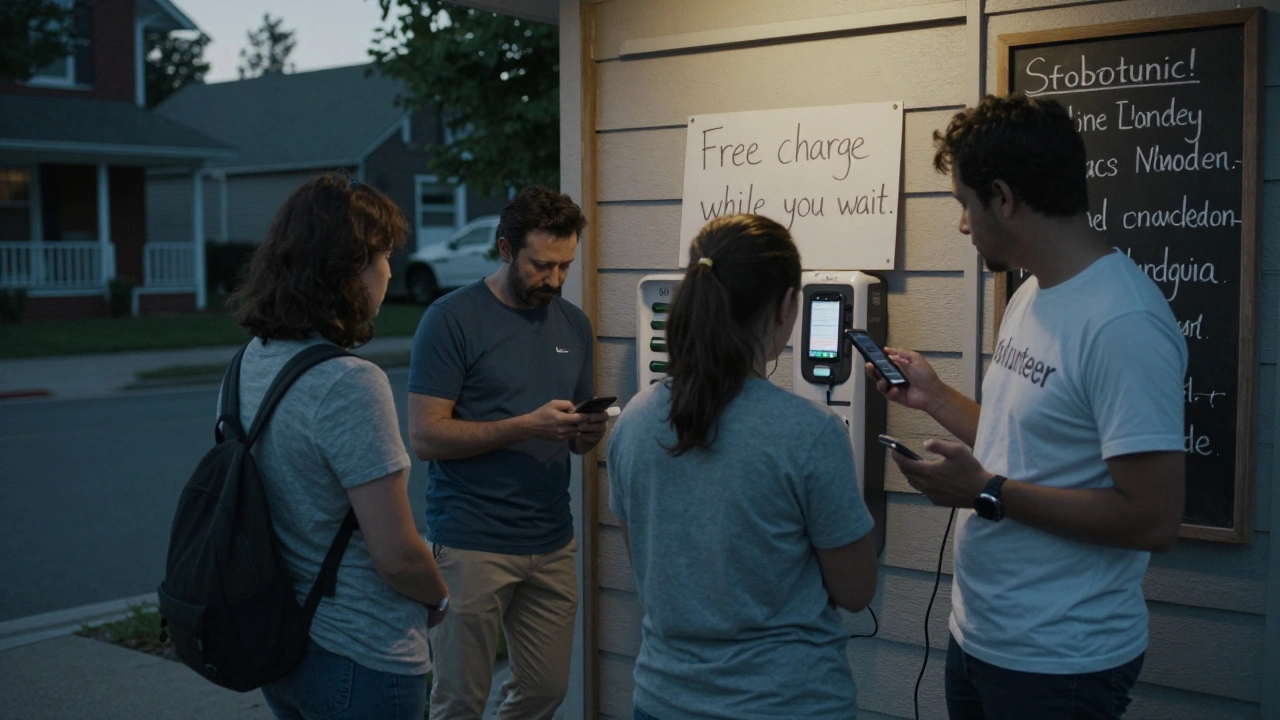
- Pop-up chats: Set up a small table with coffee and cookies at a bus stop, library, or laundromat. No pitch. Just chat. "What’s one thing you wish was easier around here?"
- Partner with existing spaces: A church, a corner store, a gym, a laundromat-they already have trust. Ask if you can leave flyers, host a 15-minute chat once a month, or just put a sign on the door.
Build your team-not your budget
You don’t need 10 staff members. You need 3 people who care deeply and show up reliably. Find them where they already are. The librarian who knows every kid in town. The barber who’s been cutting hair in the same spot for 22 years. The retired teacher who still tutors kids on weekends. Ask them: "Can I sit with you for 20 minutes next week? I want to learn how to reach people like you already do." These people become your ambassadors. They don’t need a job title. They need a clear role: "You’re the one who introduces us to the people we need to talk to." Give them a small gift-a coffee card, a thank-you note, a public shout-out. Not money. Recognition. One group in Cairns built their entire youth outreach team from three high school students who just wanted to stop kids from skipping school. They didn’t have funding. They had Instagram accounts, a bike, and a knack for talking to their peers. Within three months, they had 60 kids showing up for weekly skate sessions and homework help. No grants. Just trust.Follow up before you follow up
Most outreach fails because it ends at the first interaction. You hand out a flyer. Someone says thanks. You think you’re done. But real outreach doesn’t end at the handshake. It starts there. After your first event or chat:- Text or call the next day: "Thanks for coming. Was there anything we missed?"
- Send a simple photo: A picture of the event, with a caption like "You were here. This is what it looked like."
- Ask for feedback: "What’s one thing we should do differently next time?"
Measure what matters
Forget attendance numbers. They lie. Instead, track:- Repeat engagement: How many people came back? One person showing up twice is worth ten one-time visitors.
- Word-of-mouth: Did someone say, "You should go to this" to a friend? Track how many referrals you get.
- Feedback quality: Are people giving specific suggestions? "I wish the snacks were gluten-free" is gold. "It was nice" is noise.