
Charitable Trust Tax Savings Calculator
Estimate potential tax savings from setting up a charitable trust. Input your asset value, tax bracket, and donation type to see how much you could save on taxes while supporting your favorite charities.
Your Potential Tax Savings
Key Insight
Irrevocable charitable trusts provide immediate tax deductions while creating a lasting charitable legacy. The higher your tax bracket, the greater your potential savings.
When you set up a charitable trust, you’re not just writing a check-you’re building something that can outlast you. But one of the first and most important questions people ask is: Can I change my mind later? Is a charitable trust revocable or irrevocable? The answer isn’t just legal jargon-it affects your taxes, your control, and how your gift actually helps others.
Most charitable trusts are irrevocable
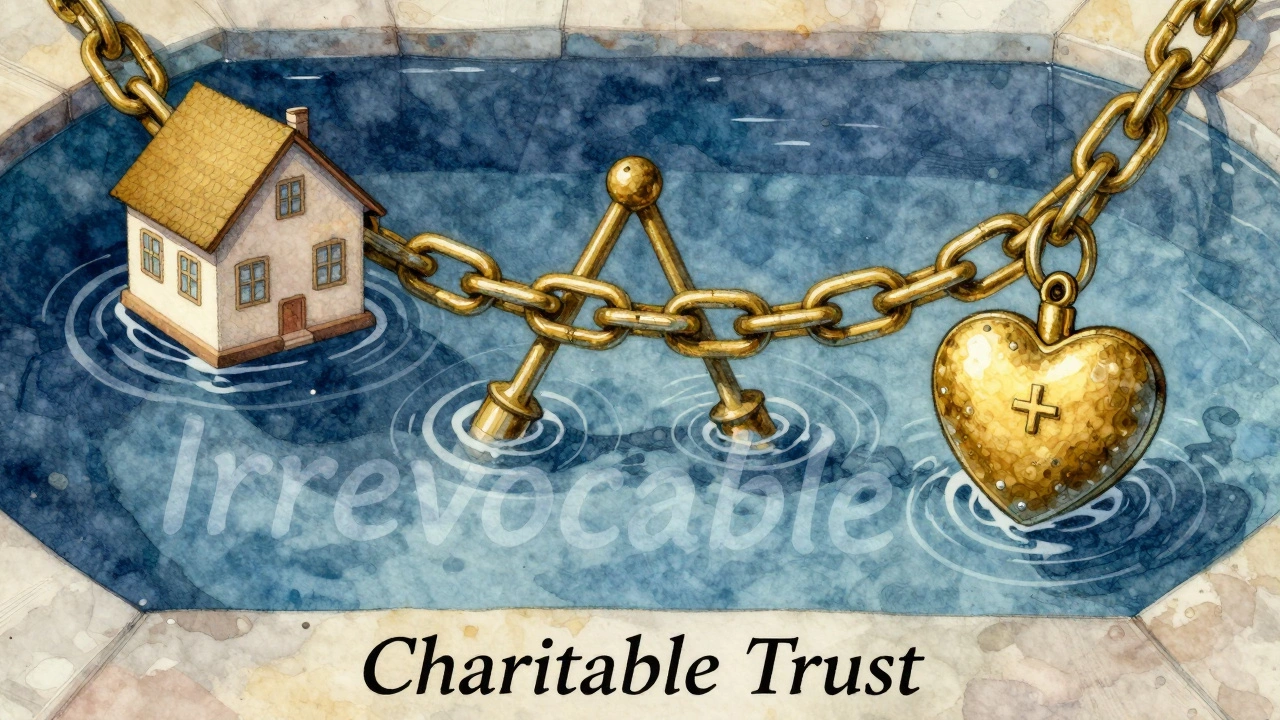
If you’re setting up a charitable trust in Australia, the U.S., the U.K., or most other countries, it’s almost always irrevocable. That means once you transfer assets into the trust-whether it’s cash, property, stocks, or a life insurance policy-you can’t take them back. You can’t change the terms, swap out the charity, or redirect the money to your kids later. This isn’t a loophole; it’s the whole point. Why? Because the tax benefits depend on it. When you give to charity, the government lets you claim a deduction. But only if the gift is truly gone. If you could pull the money back anytime, it wouldn’t count as a donation. The IRS, the ATO, and other tax authorities treat irrevocable charitable trusts as final transfers. That’s why almost every major charitable trust-like a charitable remainder trust or a charitable lead trust-is built this way.What does "irrevocable" actually mean in practice?
You might think "irrevocable" means you lose all control. That’s not quite right. You still get to choose:- Which charity or charities get the money
- How the trust pays out-monthly, annually, or as a lump sum
- Who manages the trust (you, a bank, a trusted friend)
- When the trust ends
Are there any exceptions?
There are rare cases where a charitable trust can be modified-but they’re not about the donor changing their mind. Courts can step in if:- The original charity no longer exists
- The trust’s purpose becomes illegal or impossible
- The trust is underfunded and can’t operate as intended
Why would anyone choose an irrevocable trust?
It sounds risky. Why lock away your money? Because the rewards are real:- Tax deductions now: You can claim a charitable deduction in the year you fund the trust, even if the charity doesn’t receive the money until later. In Australia, this reduces your taxable income, potentially saving thousands.
- Capital gains tax avoidance: If you donate appreciated stock to a charitable trust, you avoid paying capital gains tax when it’s sold. The trust sells it tax-free and reinvests the full amount.
- Income for life: With a charitable remainder trust, you get regular payments while knowing your legacy will support a cause you care about.
- Probate avoidance: Assets in the trust bypass probate. Your family doesn’t have to wait months or years to settle your estate.
What if you want flexibility?
If you’re not ready to give up control, you have other options:- Donor-advised funds (DAFs): You contribute money to a DAF, get an immediate tax deduction, and recommend grants to charities over time. You can change your mind about which charities get money, when, and how much. But you can’t get the money back.
- Direct donations: Give cash or assets directly to a charity each year. You control the timing and amount, but you don’t get the long-term benefits like income streams or estate tax reduction.
- Charitable bequests in your will: Leave money to charity after you die. You keep full control while alive, but you don’t get any tax benefits during your lifetime.
Can you dissolve a charitable trust?
Technically, yes-but only under very strict conditions. In Australia, the court can terminate a charitable trust if:- It’s no longer practical to run
- All beneficiaries (including the charity) agree to end it
- The trust’s purpose has been fulfilled

What happens if the charity goes out of business?
This is a common concern. Say you set up a trust to support a small community arts group, and five years later, they close due to funding cuts. What then? The trust document should include a "successor beneficiary" clause. That’s a backup charity you name in case the original one can’t receive the funds. If you didn’t name one, the court will find a similar organization. That’s why it’s critical to write clear instructions upfront. Don’t just say "support the arts." Say "support youth theatre programs in Sydney’s inner west," and name a backup like the Sydney Theatre Company.How do you set up a charitable trust?
It’s not something you do on your own. You need:- A written trust deed signed by you and the trustee
- A clear description of the charity or charities
- Details on how income and principal are distributed
- A successor trustee and successor beneficiary
- Registration with the Australian Charities and Not-for-profits Commission (ACNC) if the trust will hold assets over $50,000
Final thoughts
A charitable trust isn’t a savings account. It’s a promise. Once you put assets in, they’re no longer yours. But that’s also what makes them powerful. You’re not just giving money-you’re creating a lasting legacy. And if you want to keep control, there are alternatives. But if you’re ready to make a real difference and reduce your tax burden at the same time, an irrevocable charitable trust is one of the most effective tools you have.Can I change the charity in my charitable trust later?
No, you cannot change the charity yourself after the trust is set up. The trust document names the beneficiary, and that can’t be altered by the donor. However, if the named charity no longer exists or can’t operate, a court may redirect the funds to a similar organization under the cy-près doctrine. That’s why it’s important to name a backup charity in your trust deed.
Are charitable trusts taxed?
Charitable trusts themselves are generally tax-exempt. If the trust is registered with the ACNC or equivalent body, it doesn’t pay income tax on earnings from investments. However, if the trust pays income to a non-charitable beneficiary (like you or your family), that income is taxable to them. The trust’s tax status depends on its structure and who receives the payments.
Can I fund a charitable trust with my home or property?
Yes. Real estate, including homes, land, or investment properties, can be transferred into a charitable trust. This is especially useful if the property has appreciated in value. By donating it directly, you avoid capital gains tax and get a tax deduction based on its current market value. The trust can then sell the property and reinvest the proceeds.
What’s the difference between a charitable trust and a donor-advised fund?
A charitable trust is a legal entity you create with a trust deed, offering more control over distributions and income payments, but it’s irrevocable and requires legal setup. A donor-advised fund (DAF) is an account you open with a sponsoring organization (like a community foundation or financial institution). You get an immediate tax deduction, recommend grants over time, and can change which charities receive money-but you can’t get your contributions back or receive income from the fund.
Do I need a lawyer to set up a charitable trust?
Yes. While you can draft a simple trust document yourself, a charitable trust involves complex tax rules, legal requirements, and long-term obligations. A solicitor who specializes in estate planning or nonprofit law can help you avoid costly mistakes, ensure compliance with the ACNC, and structure the trust to maximize your tax benefits and charitable impact.