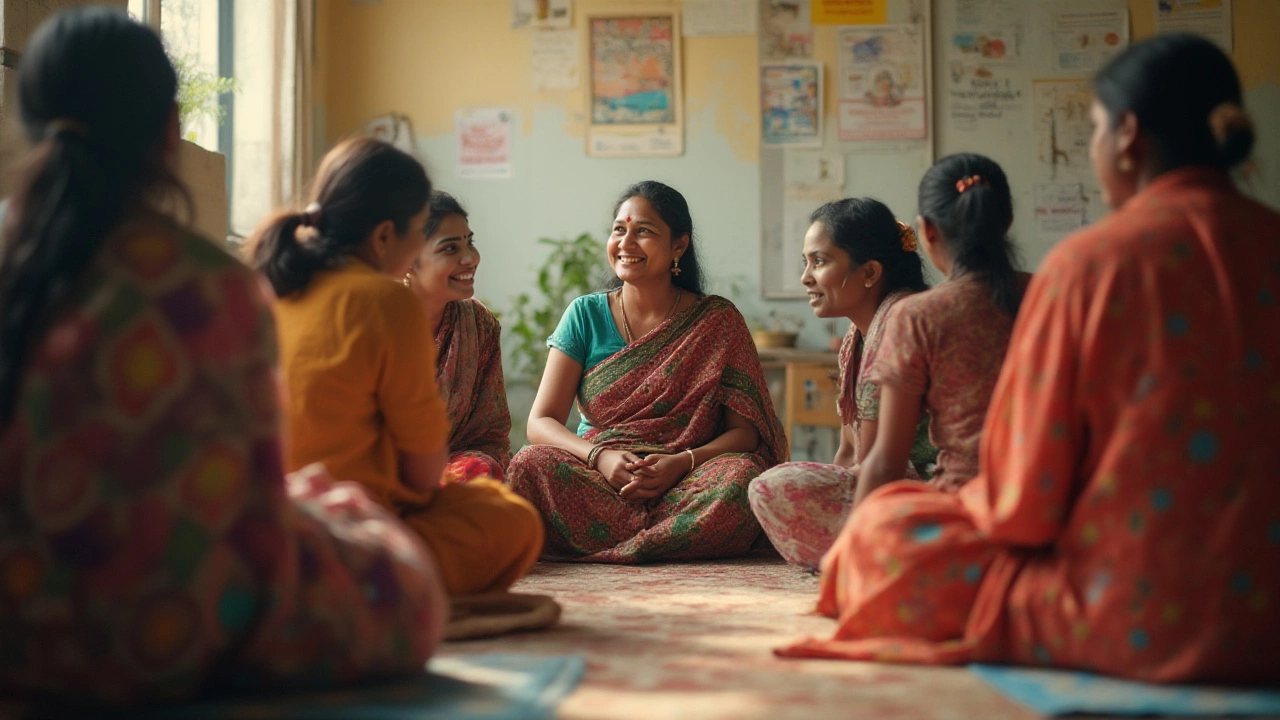
Real-Life Support Group Examples: How They Work and Why They Matter
Explore what a real support group looks like, with practical examples, tips, and a deep dive into how these communities help people cope and heal together.
Read MoreWhen someone truly gets what you’re going through—because they’ve been there too—that’s peer support, a form of help where people with shared experiences offer guidance, empathy, and practical advice to one another. Also known as mutual aid, it doesn’t need a license, a clinic, or a budget. It just needs people willing to show up. Unlike professional counseling, peer support isn’t about fixing someone. It’s about saying, ‘I’ve been stuck in this too. Here’s what helped me.’ It’s raw. It’s real. And in communities across the U.S. and India, it’s becoming the quiet backbone of social change.
Peer support shows up in dozens of forms. It’s the veteran who walks a newly homeless neighbor to a food bank because they once did the same thing. It’s the teen in Arkansas who survived the Start Smart Program and now mentors others just out of shelters. It’s the senior in Virginia who picks up groceries for another elderly person who can’t leave their house. These aren’t volunteers with job titles—they’re peers. And they’re the reason programs like rapid re-housing or senior meal services actually work. Without peer networks, even the best-funded initiatives often fail because trust isn’t built through flyers or forms—it’s built through shared stories.
Groups that focus on outreach, community building, or environmental action all rely on peer support to keep momentum going. When you’re organizing a fundraiser or running a school club, the people who stick around aren’t the ones who got the best pitch—they’re the ones who felt seen. Peer support reduces burnout in outreach teams because no one feels like they’re carrying the whole load alone. It turns isolated individuals into connected communities. And it doesn’t cost a dime. You don’t need a grant to listen. You don’t need a degree to say, ‘Me too.’
What you’ll find below is a collection of real stories and practical guides showing how peer support shows up in everyday community work. From how to structure a volunteer team so no one gets overwhelmed, to what words actually work when you’re trying to reach people in need, these posts cut through the jargon. You’ll see how peer support isn’t just a buzzword—it’s the reason people keep showing up, even when the system fails them.
Explore what a real support group looks like, with practical examples, tips, and a deep dive into how these communities help people cope and heal together.
Read More