Environmental Groups Roles Quiz
How Much Do You Know About Environmental Groups?
Test your understanding of the key roles environmental organizations play in protecting our planet. Select the best answer for each question.
1. Which of these is NOT mentioned as a major role of environmental groups in the article?
2. According to the article, what percentage of regions with active environmental advocacy groups saw more environmental regulations passed?
3. Which organization helped establish the Great Barrier Reef Marine Park?
4. How did Greenpeace Australia contribute to reducing single-use plastic bags in Sydney supermarkets?
5. What is one way environmental groups drive corporate change?
6. Which of the following is mentioned as an example of a citizen science project led by environmental groups?
Results
Environmental groups don’t just plant trees or hold signs at protests. They’re the quiet force behind clean rivers, protected forests, and laws that keep toxic chemicals out of our air and water. If you’ve ever breathed fresh air in a city that used to be smog-choked, or swum in a beach that was once covered in plastic, you’re seeing the results of their work. These organizations aren’t optional extras-they’re essential players in keeping the planet livable.
Advocating for Stronger Environmental Laws
One of the biggest jobs environmental groups do is pushing for laws that actually work. They don’t wait for governments to act. They research, document, and bring evidence to lawmakers. In Australia, groups like the Australian Conservation Foundation helped push through the 2022 National Environment Protection Measure that tightened rules on industrial emissions. In the U.S., the Natural Resources Defense Council played a key role in strengthening the Clean Water Act after decades of industrial runoff poisoned rivers.
These groups hire lawyers, scientists, and policy experts. They submit formal comments during public hearings. They sue governments when laws are ignored. A 2024 study by the University of Melbourne found that regions with active environmental advocacy groups saw 40% more environmental regulations passed over a 10-year period than areas without them.
Monitoring Pollution and Holding Polluters Accountable
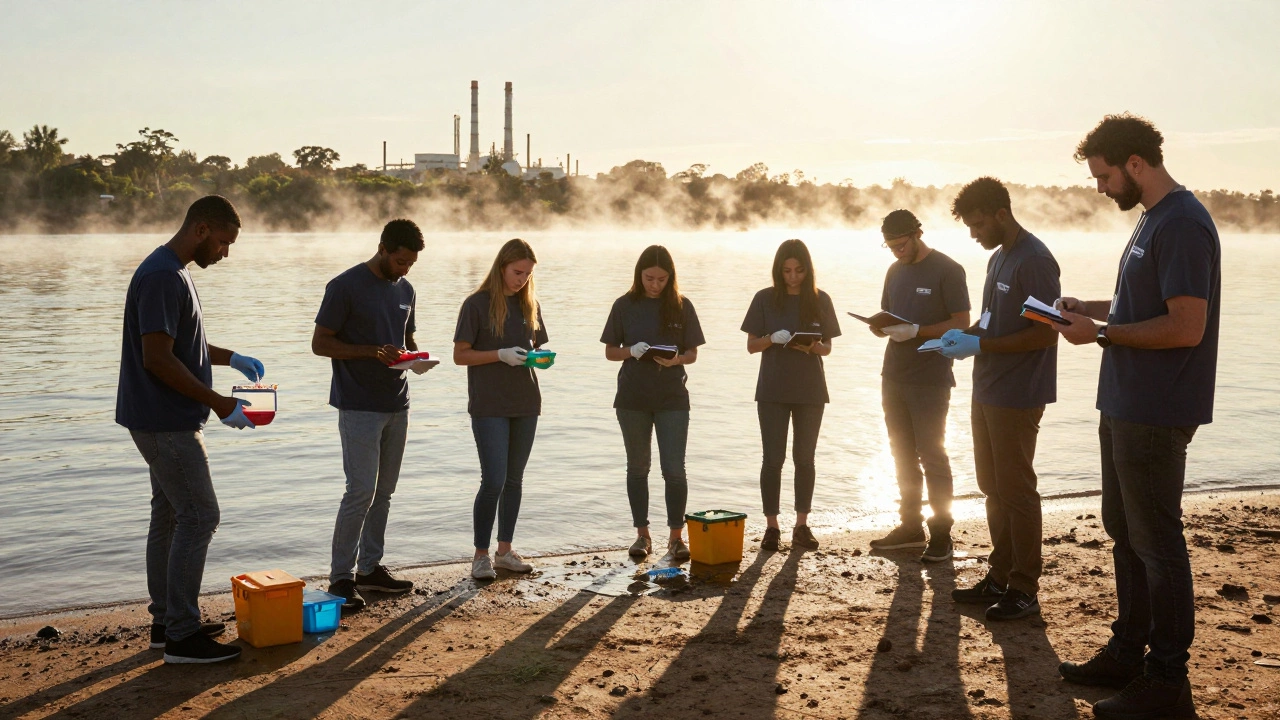
Who checks if a factory is dumping chemicals into a river? Often, it’s not the government-it’s a local environmental group. Groups like Waterkeeper Alliance deploy volunteers with water testing kits to monitor rivers, lakes, and coastlines. They collect samples, send them to labs, and publish the results online. When a company is breaking the law, these groups file lawsuits or report violations to regulators.
In 2023, a small group in Queensland called the Fitzroy Riverkeepers found high levels of heavy metals near a mining runoff site. They shared the data with the public, pressured the state government, and forced an independent audit. The mine was fined $2.3 million. Without that group, the contamination might have gone unnoticed for years.
Protecting Wildlife and Natural Habitats
Many environmental groups focus on saving species and the places they live. The World Wildlife Fund helped establish over 1,200 protected areas globally since the 1970s. In Australia, the Australian Marine Conservation Society campaigned for the Great Barrier Reef Marine Park, which now covers 344,000 square kilometers and bans destructive fishing practices.
These groups don’t just create parks-they manage them. They fund rangers, track animal populations, and fight illegal logging and poaching. The Rainforest Trust has saved more than 26 million acres of tropical forest by buying land and handing it over to local communities to protect. That’s not charity. That’s direct action.
Educating the Public and Changing Behavior
Environmental groups know that laws alone won’t fix the problem. People need to understand what’s at stake. That’s why they run school programs, public campaigns, and social media drives. The Ocean Conservancy’s annual International Coastal Cleanup has mobilized over 18 million volunteers since 1986 to pick up trash from beaches. That’s not just cleaning up-it’s teaching people that their choices matter.
In 2025, a campaign by Greenpeace Australia led to 40% fewer single-use plastic bags being used in Sydney supermarkets within six months. That happened because they didn’t just say “stop using plastic.” They showed people alternatives, made it easy to switch, and made the problem impossible to ignore.
Mobilizing Communities and Empowering Local Action
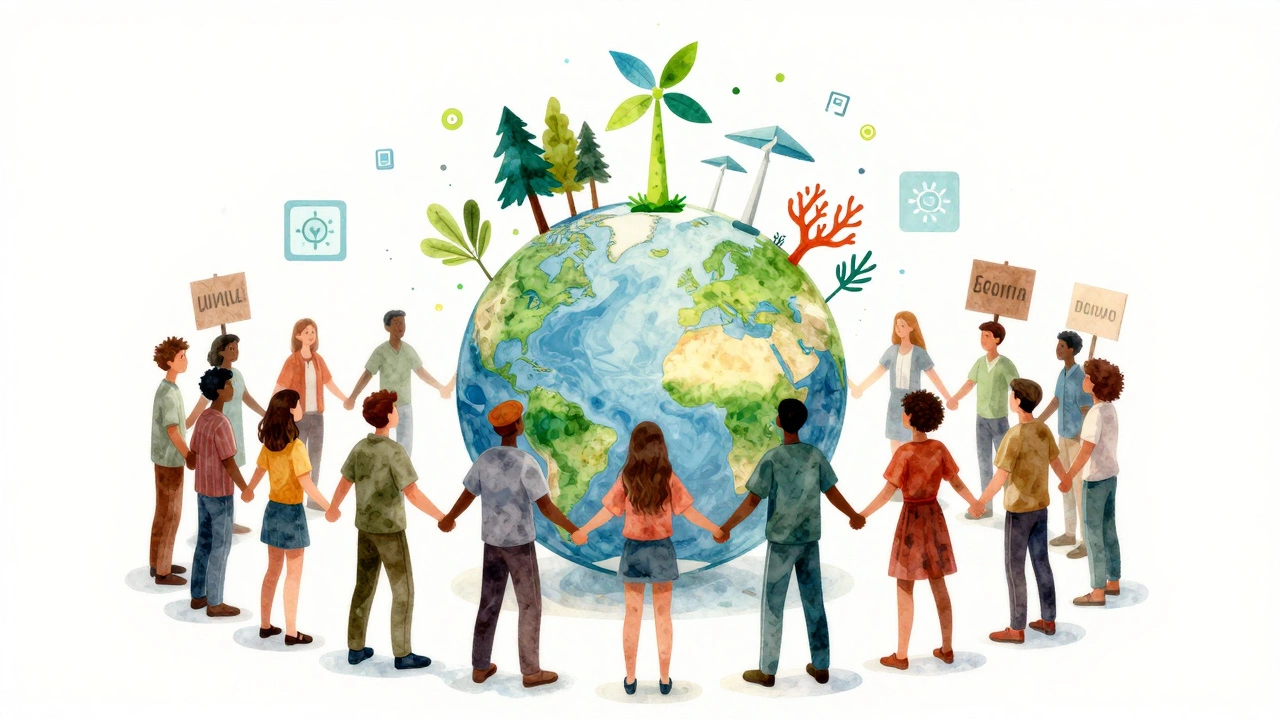
Environmental groups turn ordinary people into activists. They train volunteers to speak at council meetings, organize neighborhood cleanups, and start local recycling programs. In rural Tasmania, a small group called the Tarkine Alliance taught residents how to document illegal logging with drones and GPS. They didn’t wait for big organizations to save their forests-they did it themselves.
These groups often work with Indigenous communities to protect sacred lands. In Canada, the First Nations Environmental Network has partnered with environmental NGOs to block pipelines that threaten ancestral waters. In Australia, the Yirrkala Bark Petition of 1963, led by Aboriginal leaders with support from environmental advocates, was the first legal recognition of Indigenous land rights.

Driving Corporate Change Through Pressure and Collaboration
Big companies don’t change unless they’re forced to. Environmental groups use shareholder meetings, boycotts, and public campaigns to push them. In 2024, after a campaign by Friends of the Earth, Coles and Woolworths in Australia pledged to eliminate all non-recyclable plastic packaging by 2030. That didn’t happen because the CEOs had a change of heart. It happened because thousands of customers stopped shopping there until they did.
Some groups work directly with businesses to find better solutions. The Carbon Trust helps companies measure their emissions and cut them cost-effectively. In 2023, a partnership between the Australian Conservation Foundation and a major coffee chain led to the rollout of compostable cups in 800 stores-saving 120 million disposable cups annually.
Research and Data Collection
Environmental groups are often the ones collecting the data that scientists and governments rely on. They monitor bird migrations, track coral bleaching, measure air quality in real time, and document species decline. The Audubon Society’s Christmas Bird Count has been running since 1900 and is now the longest-running wildlife census in the world.
In 2025, a citizen science project led by the Nature Conservation Council in New South Wales collected over 150,000 observations of native frogs. That data helped identify three new threatened species and led to emergency funding for habitat restoration. Without volunteers and local groups, that data would never have been gathered.
Building International Alliances
Environmental problems don’t stop at borders. Climate change, ocean plastics, and illegal wildlife trade are global issues. That’s why groups like Greenpeace, WWF, and Friends of the Earth work across countries. They coordinate protests, share research, and pressure international bodies like the UN.
In 2024, a coalition of 300 environmental groups from 80 countries pushed for the Global Plastics Treaty. Their pressure helped shape the final agreement, which now requires countries to reduce plastic production by 40% by 2040. That’s a win built on decades of cross-border collaboration.
Do environmental groups only focus on big issues like climate change?
No. While climate change gets a lot of attention, environmental groups work on many fronts: cleaning up local rivers, protecting native animals, stopping toxic waste dumps, reducing plastic use in schools, and preserving neighborhood parks. Many groups focus on hyper-local issues that affect daily life.
Are environmental groups just anti-business?
Not at all. Many groups work with businesses to find sustainable solutions. They help companies save money by reducing waste, cutting energy use, and switching to renewable materials. Their goal isn’t to shut down industry-it’s to make sure industry doesn’t destroy the environment in the process.
How can I trust that environmental groups are using donations properly?
Reputable groups publish annual reports showing exactly how money is spent. Look for transparency labels like the Australian Charities and Not-for-profits Commission (ACNC) accreditation. Groups like the Australian Conservation Foundation and Greenpeace Australia disclose their funding sources and spending breakdowns online. Avoid groups that don’t share this information.
Do environmental groups only care about animals and nature, not people?
Actually, they’re deeply connected. Pollution harms human health-especially in low-income areas. Environmental justice groups fight for clean air in neighborhoods near factories, safe drinking water in Indigenous communities, and protection from heatwaves in urban slums. Protecting nature means protecting people too.
Can small local groups really make a difference?
Absolutely. The most successful environmental wins often start small. A group of residents in a suburb stopped a landfill proposal. A school club convinced their council to ban single-use plastics. These actions build momentum. Many national campaigns began as local efforts. Your local group might be the next big change.
Environmental groups are the watchdogs, the educators, the scientists, and the organizers. They don’t wait for permission to act. They see a problem and find a way to fix it-whether that’s through law, science, protest, or community action. The air you breathe, the water you drink, the forests and reefs you love-they’re still here because these groups refused to give up.