
Homelessness Cost-Benefit Calculator
Calculate Your Impact
The article shows that for every $10 invested in permanent housing, communities save $13 in emergency services. This calculator demonstrates the real-world impact of Housing First programs.
Homelessness isn’t just about lacking a roof. It’s about broken systems, trauma, mental health struggles, and missing connections. The most successful programs don’t just give people a bed-they rebuild lives. And the evidence shows that the ones working best aren’t the ones with the biggest buildings or the most volunteers. They’re the ones that treat people with dignity and give them real pathways out.
Housing First: The Game-Changer
The Housing First model has been proven time and again to be the most effective approach. It doesn’t require people to get sober or clean up their behavior before getting a home. Instead, it gives them stable housing immediately, then wraps them in support. This isn’t theory-it’s practice. In Utah, the program reduced chronic homelessness by 91% between 2005 and 2015. In Vancouver, it cut emergency room visits by 47% and police interactions by 35%. Why? Because when someone has a door they can lock, they can start healing.
Programs using Housing First provide permanent housing, not temporary shelters. They pair each person with a case manager who helps them access healthcare, job training, and mental health services. No red tape. No waiting lists. No conditions. Just a place to live, and the support to stay there.
Outreach Teams That Show Up
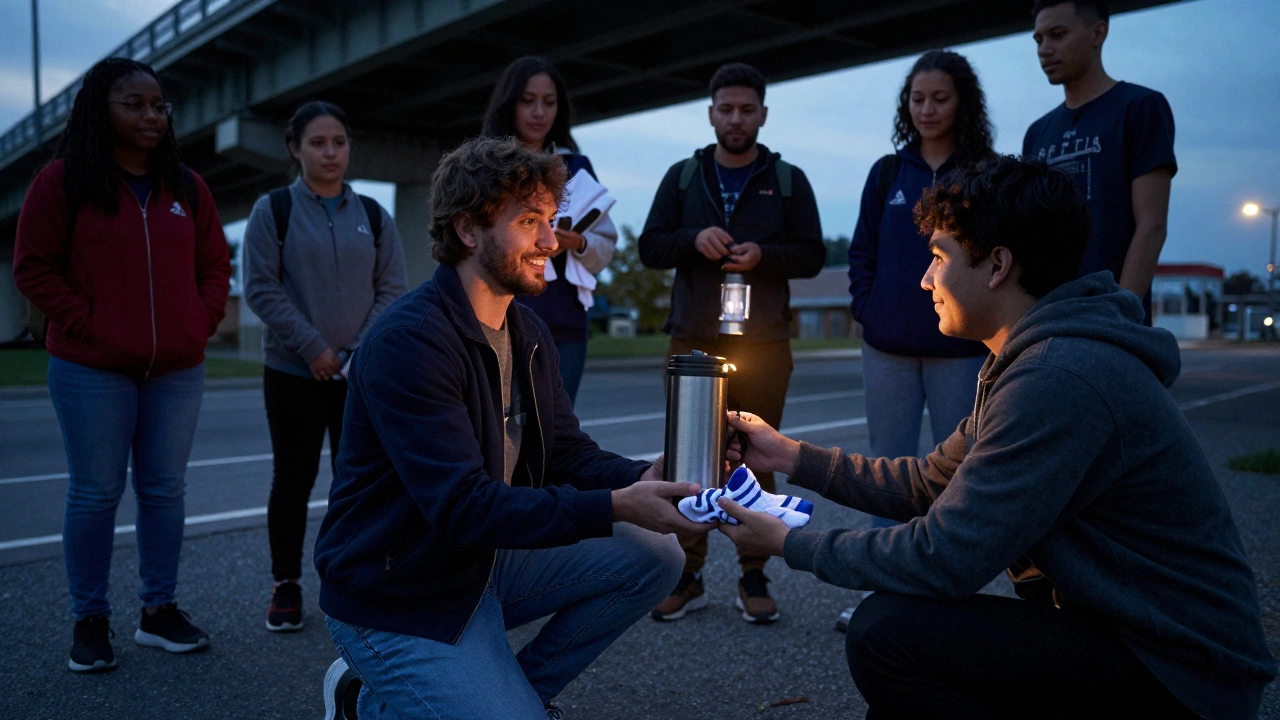
Not everyone walks into a shelter. Many people are too scared, too sick, or too traumatized to even try. That’s where mobile outreach teams come in. These are not volunteers handing out sandwiches. These are trained professionals-nurses, social workers, peer support specialists-who go out into parks, under bridges, and into abandoned buildings to meet people where they are.
In San Francisco, the Homeless Outreach Team (HOT) has a simple rule: if you’re on the street, they’ll find you. They carry medications, clean socks, water, and sometimes just a listening ear. One man in Oakland had been living in a tunnel for 12 years. He didn’t trust anyone. But after 18 months of weekly visits from the same outreach worker, he agreed to a room. He’s now employed at a local nonprofit. That’s the power of consistency.
Integrated Health and Mental Health Services
Half of all people experiencing homelessness have a mental illness. A third have a substance use disorder. Treating these in isolation doesn’t work. The best programs integrate care. Think of it like this: if someone is struggling with schizophrenia and has no place to store their medicine, giving them a pill won’t help. But giving them a home, a fridge, and a nurse who checks in twice a week? That changes everything.
Programs like the Pathways to Housing model in New York combine housing with psychiatric care, medication management, and peer support. They don’t send people to clinics-they bring the clinic to them. One program in Boston reported that 82% of participants stayed housed after two years. Compare that to traditional shelters, where turnover rates often exceed 70% in six months.
Employment and Skill Building That Actually Works
Many assume homelessness is caused by laziness. The truth? Most people want to work. But they face barriers no one talks about: no address, no phone, no clean clothes, no ID. The most successful programs tackle these first.
In Seattle, the Street to Home program runs a paid job training initiative. Participants work 20 hours a week cleaning public spaces, sorting donations, or helping with community gardens. They earn $15 an hour, get a bank account, and receive help applying for ID cards and driver’s licenses. After six months, 68% transition into full-time jobs outside the program. The key? They’re not volunteering. They’re being paid. And they’re treated like workers, not charity cases.
Family-Based Programs That Keep Kids Safe
One in four homeless people is a child. Most of those kids are with their parents. Programs that focus on families are often overlooked, but they’re among the most impactful. Why? Because breaking the cycle of homelessness starts with keeping families together.
The Family Promise network operates in over 200 U.S. communities. They don’t just offer shelter-they provide daycare, tutoring, parenting classes, and job coaching-all under one roof. Parents stay with their kids. No one is separated. In one study, 89% of families in the program secured permanent housing within six months. That’s not luck. That’s structure.
Why Most Shelters Still Fail
Not all shelters are bad. But many are designed for crisis, not recovery. They’re overcrowded. Rules are harsh. You can’t bring your pet. You can’t keep your belongings. You have to leave at 7 a.m. and can’t come back until 5 p.m. These aren’t just inconvenient-they’re traumatic.
A 2023 study from the Urban Institute found that shelters with strict curfews and sobriety requirements had 60% higher rates of people returning to the streets within three months. People don’t leave shelters because they don’t want help. They leave because the system makes them feel worse than being on the street.

What Makes a Program Stand Out?
Successful programs share five traits:
- They give control back-people choose where to live, who to see, and when to seek help.
- They’re long-term-support doesn’t vanish after 30 or 60 days.
- They hire people with lived experience-someone who’s been homeless is often the best case manager.
- They track outcomes-not just how many beds they fill, but how many stay housed.
- They don’t ask for perfection-they meet people where they are, not where they think they should be.
Look at the difference between two programs: one that requires sobriety before housing, and one that offers housing with counseling. The first one pushes people away. The second one pulls them in.
The Bigger Picture: Funding and Policy
These programs work-but they need money. And they need political will. The most successful programs are often funded through a mix of federal housing vouchers, state mental health grants, and private donations. But the real win? Redirecting funds from jails and hospitals into housing.
A 2024 report from the National Alliance to End Homelessness found that every $10 invested in permanent housing saves $13 in emergency services. That’s not charity. That’s smart economics. Yet most cities still spend more on policing homeless people than on housing them.
Some places are changing. Austin, Texas, now allocates 40% of its homelessness budget to Housing First. Denver passed a ballot measure in 2025 to fund 1,200 new permanent housing units. These aren’t just feel-good policies. They’re data-backed solutions.
What Can You Do?
You don’t need to run a nonprofit to help. Support programs that give people homes without conditions. Donate to organizations that hire people with lived experience. Advocate for housing vouchers in your city. Challenge the idea that homelessness is a personal failure. It’s not. It’s a policy failure. And the solutions exist. They’re just not always the ones getting the headlines.
What is the Housing First model?
The Housing First model provides permanent housing to people experiencing homelessness without requiring them to meet conditions like sobriety or employment first. Once housed, individuals receive voluntary support services like mental health care, job training, and case management. This approach has been proven to reduce chronic homelessness by up to 90% in cities like Utah and Vancouver.
Why do some homeless shelters fail?
Many shelters fail because they focus on short-term crisis management instead of long-term stability. Strict rules-like curfews, sobriety requirements, or bans on personal belongings-can make people feel dehumanized. Studies show that shelters with these policies have high turnover rates, with up to 70% of people returning to the streets within six months. People don’t leave because they don’t want help-they leave because the system makes them feel worse.
Do homeless programs really save money?
Yes. A 2024 report from the National Alliance to End Homelessness found that every $10 invested in permanent housing saves $13 in emergency services like hospital visits, jail stays, and police responses. People with stable housing use emergency rooms 47% less and are far less likely to be arrested. Housing isn’t just humane-it’s cost-effective.
Can homeless programs help families?
Absolutely. Programs like Family Promise keep families together by offering housing, childcare, job coaching, and tutoring under one roof. Unlike shelters that separate parents from children, these programs recognize that keeping families intact is key to breaking the cycle of homelessness. In one study, 89% of participating families secured permanent housing within six months.
What role do peer support workers play?
Peer support workers are people who have experienced homelessness themselves. They’re hired as case managers because they build trust faster than traditional social workers. Someone who’s been there understands the fear, shame, and bureaucracy others face. Programs that employ peer workers report higher engagement rates and longer housing retention. In San Francisco, peer-led outreach teams increased housing placements by 35% compared to traditional models.