Environmental Impact Estimator
⚙ Daily Habits
📈 Environmental Footprint Analysis
Your current habits contribute moderately to global environmental stress. Reducing meat consumption and fossil fuel reliance offers the highest immediate impact. Remember: while individual action matters, advocating for systemic policy change amplifies this effect significantly.
You look out the window in Sydney on a sweltering summer afternoon, and the heat feels heavier than it used to. You might wonder what is actually breaking our planet. Is it the plastic bottle you forgot to recycle? Is it the car you drove to work? While those things matter, they are not the primary villains. To understand what destroys the earth the most, we have to look past individual habits and examine the massive, systemic engines driving environmental collapse. The truth is less about personal guilt and more about industrial scale.
The Climate Crisis: The Accelerator of Damage
When scientists talk about the biggest threat to the planet, they point to one clear culprit: human-induced climate change. It is not just about warmer weather; it is a destabilizing force that amplifies every other environmental problem. The burning of fossil fuels-coal, oil, and natural gas-releases greenhouse gases like carbon dioxide and methane into the atmosphere. These gases trap heat, raising global temperatures at a rate unseen in millions of years.
This warming acts as a multiplier. Droughts become longer, making forests more susceptible to catastrophic wildfires. Heatwaves stress marine ecosystems, leading to mass coral bleaching events that destroy entire underwater cities where fish live. In 2025 alone, extreme weather events linked to climate change caused billions in damage worldwide, displacing communities from Miami to Mumbai. The Intergovernmental Panel on Climate Change (IPCC) has repeatedly warned that without drastic cuts in emissions, we will cross tipping points that make recovery impossible.
Is climate change the only thing destroying the earth?
No, climate change is the largest driver, but it works alongside biodiversity loss, pollution, and resource depletion. They are interconnected crises.
Biodiversity Loss: The Silent Extinction
If climate change is the loud alarm, biodiversity loss is the silent killer. We are currently living through what many biologists call the sixth mass extinction. Unlike previous extinctions caused by asteroids or volcanoes, this one is driven entirely by human activity. According to the World Wildlife Fund’s Living Planet Report, wildlife populations have dropped by an average of 69% since 1970. This is not just sad news for animal lovers; it is a functional breakdown of the systems that keep us alive.
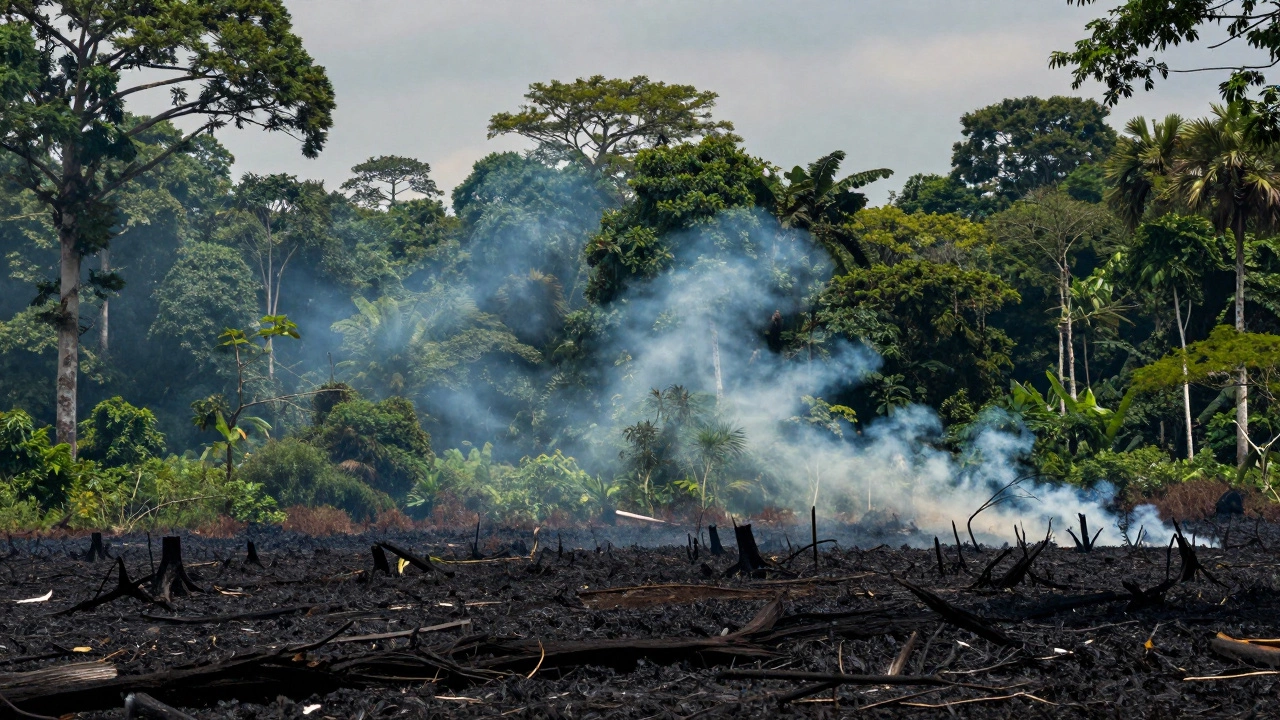
Insects pollinate the crops we eat. Wetlands filter our drinking water. Forests regulate rainfall patterns. When we wipe out species, we pull threads from the fabric of life until the whole thing unravels. Deforestation in the Amazon, often driven by cattle ranching and soy production, removes vast carbon sinks while destroying habitats for countless unique species. The loss of biodiversity reduces nature’s resilience, making ecosystems more vulnerable to diseases and climate shocks.
Pollution: Choking Our Air, Water, and Soil
We often think of pollution as litter on a beach, but the real damage is far more pervasive and toxic. Industrial pollution releases heavy metals, chemicals, and microplastics into the environment. Microplastics, tiny particles from broken-down plastic waste, have been found in the deepest ocean trenches, on mountain peaks, and even in human blood. They disrupt hormonal systems in wildlife and potentially in humans too.
Air pollution from factories and vehicles kills millions of people annually due to respiratory and cardiovascular diseases. It also creates acid rain, which damages forests and acidifies lakes, killing fish and aquatic plants. Agricultural runoff, filled with nitrogen and phosphorus from fertilizers, flows into rivers and oceans, creating "dead zones" where oxygen levels are too low for any life to survive. The Gulf of Mexico has one of the largest dead zones in the world, expanding every year due to fertilizer use upstream.
Resource Depletion: Mining the Future Away
The modern economy runs on extraction. We dig up finite resources faster than the earth can replenish them. Freshwater scarcity is becoming a critical issue, with over two billion people living in water-stressed countries. Aquifers, underground water reserves that took millennia to fill, are being drained for irrigation and industry. Once they are gone, they are gone.
Mining for minerals essential to technology-like lithium, cobalt, and copper for batteries and electronics-causes massive habitat destruction and soil contamination. The push for green energy requires these materials, creating a paradox where solving one environmental problem (climate change) exacerbates another (resource depletion). Sustainable mining practices exist, but they are not yet the norm. The linear model of "take-make-dispose" is fundamentally incompatible with a finite planet.
The Role of Consumerism and Waste
While individuals are not the sole cause, collective consumer behavior drives demand. Fast fashion, single-use plastics, and planned obsolescence in electronics create a culture of waste. The fashion industry alone produces 10% of global carbon emissions and is the second-largest consumer of water worldwide. Clothes are worn fewer times and discarded faster, ending up in landfills or incinerators.
This throwaway culture ignores the true cost of production. It hides the pollution in supply chains and the labor exploitation behind cheap goods. Shifting towards a circular economy, where products are designed for durability, repair, and recycling, is essential. But this requires systemic change in how businesses operate and how consumers value goods.
Who Is Responsible? The Systemic View
It is easy to blame individuals, but data shows that a small number of corporations are responsible for the majority of global emissions. A study by Climate Accountability Institute found that just 100 companies were the source of 71% of global greenhouse gas emissions between 1961 and 2017. Governments play a crucial role too, through subsidies for fossil fuels and weak environmental regulations.
Environmental groups argue that focusing solely on individual action distracts from the need for policy change. We need stricter laws on pollution, incentives for renewable energy, and protection for natural habitats. Individual choices matter, but they must be supported by a system that makes sustainable choices accessible and affordable for everyone.
What Can Be Done? Pathways to Recovery
Despite the grim picture, there is hope. Nature is resilient if given the chance to recover. Reforestation projects are restoring degraded lands. Renewable energy costs have plummeted, making solar and wind power cheaper than coal in many regions. Conservation efforts are helping some species bounce back from the brink of extinction.
Solutions require a multi-pronged approach:
- Policy Reform: Implementing carbon pricing, ending fossil fuel subsidies, and enforcing strict pollution controls.
- Technological Innovation: Developing clean energy storage, sustainable agriculture techniques, and circular manufacturing processes.
- Conservation: Protecting 30% of land and oceans by 2030, as proposed by the Kunming-Montreal Global Biodiversity Framework.
- Consumer Shifts: Reducing meat consumption, buying less, choosing durable goods, and supporting ethical brands.
The question of what destroys the earth the most has a clear answer: it is the combination of unchecked industrial growth, reliance on fossil fuels, and disregard for ecological limits. But understanding the root causes is the first step toward fixing them. The tools for change exist; what is needed now is the political will and collective action to deploy them at scale.
How does deforestation contribute to environmental destruction?
Deforestation releases stored carbon dioxide into the atmosphere, accelerates climate change, destroys habitats leading to biodiversity loss, and disrupts local water cycles, causing droughts and soil erosion.
Are renewable energy solutions enough to stop environmental damage?
Renewable energy is crucial for reducing carbon emissions, but it must be paired with conservation efforts, reduced consumption, and sustainable resource management to fully address environmental destruction.
What is the impact of microplastics on the environment?
Microplastics contaminate soil and water, enter the food chain, harm marine life by ingestion, and may pose health risks to humans. They persist in the environment for hundreds of years.
How can individuals help reduce environmental destruction?
Individuals can reduce their carbon footprint by using public transport, eating a plant-rich diet, minimizing waste, conserving water, and advocating for stronger environmental policies and corporate accountability.
Why is biodiversity important for the earth?
Biodiversity ensures ecosystem stability, provides essential services like pollination and water purification, supports food security, and enhances resilience against diseases and climate change.