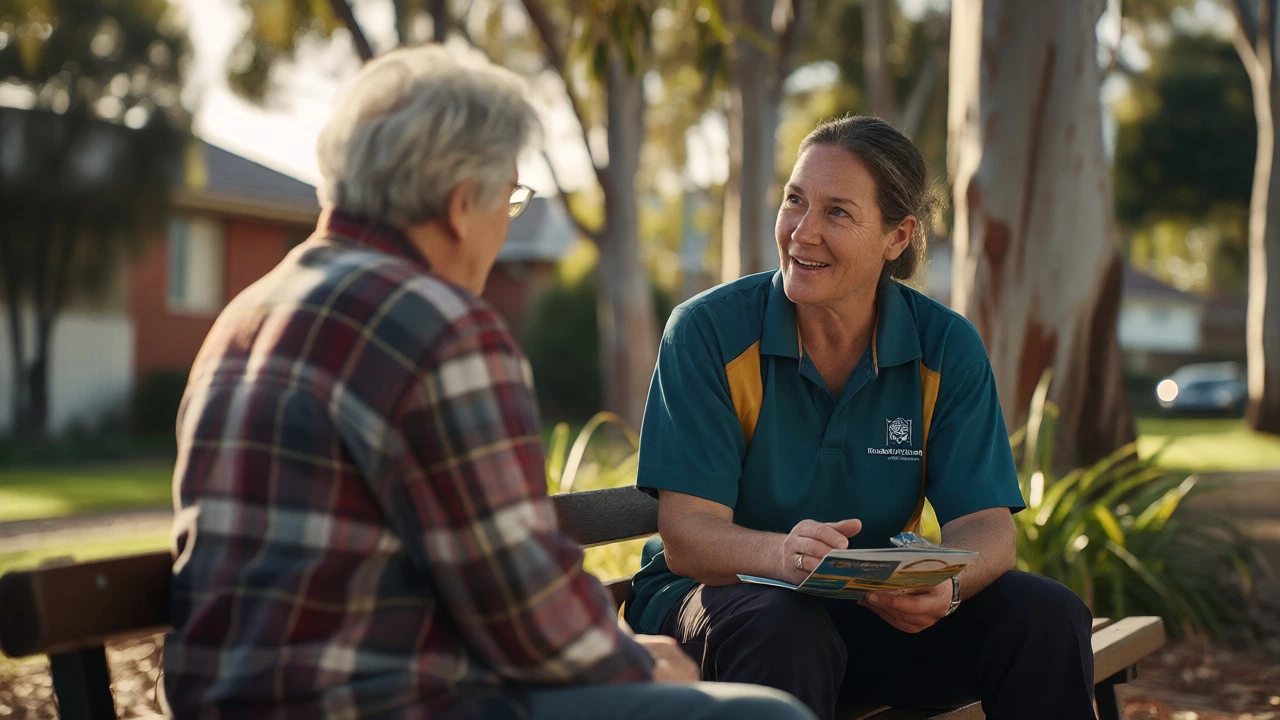
Community Outreach Strategy Evaluator
Evaluate your organization's approach to community engagement. Answer the questions below honestly to receive a tailored assessment and actionable recommendations based on relational outreach principles.
Your Outreach Score
0/5Recommended Next Steps
You’ve spent months planning a campaign. You printed flyers, booked a venue, and hired staff. But when the day comes, only three people show up. Or worse, they show up, take a free tote bag, and never return. This isn’t just bad luck; it’s a failure of community outreach. It’s not about shouting your message into the void; it’s about listening before you speak.
Good outreach doesn’t look like a billboard. It looks like a conversation. If you’re running a non-profit, a local business, or a civic initiative in Sydney-or anywhere else-your success hinges on whether you can move from transactional interactions to relational ones. Here is what that actually looks like in practice, stripped of the jargon.
The Shift From Broadcasting to Listening
Most organizations get this wrong. They start with "Here is what we have." Good outreach starts with "Here is what you need." Think about the last time a salesperson called you. Did they ask about your life first? Probably not. They launched into a pitch. Community members feel the same way when approached by organizations.
Effective outreach requires a needs assessment that happens before any money is spent on advertising. This means sitting in community halls, talking to shop owners, and attending local council meetings not to present, but to observe. What are the actual pain points? Is it transport access? Food security? Mental health support?
If you don’t know, you’re guessing. And guessing is expensive. In Australia, where community ties can be tight-knit yet private, assuming you know what a suburb needs without asking is a quick way to become irrelevant. The goal is to align your resources with their expressed desires, not your internal KPIs.
Trust Is Your Currency
You cannot buy trust. You earn it through consistency. When I worked with a youth mentorship program in Western Sydney, we didn’t launch with a big gala. We showed up at the local park every Saturday for six months, just hanging out, offering water and soccer balls. No sign-up sheets. No fees. Just presence.
This builds what sociologists call social capital-the networks of relationships among people who live and work in a particular society, enabling that society to function effectively. Once trust is established, participation rates skyrocket because people aren’t signing up for an organization; they’re joining a group they already know and respect.
Consistency matters more than intensity. One great event followed by silence looks like opportunism. Regular, low-stakes interactions signal reliability. Are you there when things go wrong? Do you follow up? These small actions compound over time.
Meeting People Where They Are
"Where they are" isn’t just physical location. It’s digital, emotional, and logistical. Many outreach programs fail because they expect marginalized groups to navigate complex bureaucratic systems to access help. Good outreach removes friction.
Consider the logistics. If you hold a workshop at 9 AM on a Tuesday, you exclude shift workers and parents. If you require online registration via a desktop-only portal, you exclude those with limited data plans or older devices. In our experience, simplifying access increases engagement by up to 40%.
Use platforms your audience already uses. For younger demographics, Instagram and TikTok are often more effective than email newsletters. For older residents, local newspapers and community noticeboards still reign supreme. Don’t force them to come to your website; bring your message to their feed.

Leveraging Local Partnerships
You are rarely the most trusted entity in the room. A local barber, a school principal, or a religious leader usually holds more sway than your brand logo. Good outreach leverages these existing community anchors.
Partnering with trusted local figures acts as a social proof mechanism. When a respected local figure endorses your initiative, it transfers their credibility to you. This is far more powerful than paid advertising. In one case study involving a health screening drive, partnering with a local mosque increased attendance by 300% compared to previous standalone efforts.
| Feature | Traditional Outreach | Relational Outreach |
|---|---|---|
| Primary Goal | Awareness & Sign-ups | Trust & Long-term Engagement |
| Communication Style | One-way broadcasting | Two-way dialogue |
| Success Metric | Event Attendance | Repeat Participation & Referrals |
| Resource Allocation | High upfront marketing spend | Investment in personnel & time |
| Risk Factor | Low engagement after initial hype | Slower initial growth |
Cultural Competence and Inclusivity
Sydney is incredibly diverse. A generic approach fails here. Good outreach respects cultural nuances. This goes beyond translating flyers into Arabic or Mandarin. It involves understanding social norms around gender, age, and hierarchy.
For example, in some cultures, direct eye contact with authority figures is seen as disrespectful. If your outreach worker stands tall and demands eye contact while handing out forms, they might inadvertently alienate the very people they want to help. Training staff in cultural humility-the willingness to learn from others’ cultural perspectives-is essential.
Inclusivity also means accessibility. Ensure venues are wheelchair accessible. Provide materials in easy-read formats for those with cognitive disabilities. Offer childcare during events. These aren’t "extras"; they are prerequisites for genuine inclusion.

Measuring What Matters
Stop counting flyers distributed. Start measuring sentiment. How do people feel about your organization? Are they referring friends? Are they volunteering their time?
Quantitative data tells you what happened. Qualitative data tells you why. Use short, anonymous surveys post-event. Ask open-ended questions like, "What was the most helpful part of today?" or "What would make you come back?"
Track retention rates. If 100 people attend your first event but only 5 return for the second, you have a product-market fit issue, not a marketing issue. Adjust your offering based on feedback loops, not assumptions.
Pitfalls to Avoid
- The "Fly-and-Buy" Approach: Showing up once for a photo op and disappearing. Communities remember inconsistency.
- Jargon Overload: Using terms like "stakeholder synergy" confuses locals. Speak plain English.
- Ignoring Feedback: Collecting survey data but never acting on it signals that you don’t care about their opinions.
- Over-Promising: Setting expectations too high leads to disappointment. Under-promise and over-deliver.
Next Steps for Your Team
Ready to improve your outreach? Start small. Pick one neighborhood. Spend two weeks just listening. Identify three key local influencers. Invite them for coffee-not to sell, but to ask. Then, design a pilot program based on their advice. Iterate quickly.
How long does it take to build trust in a new community?
There is no fixed timeline, but expect at least 6-12 months of consistent presence before seeing significant organic engagement. Trust is built through repeated positive interactions, not single events. Patience is your most valuable resource in the early stages.
What is the best metric for measuring community outreach success?
While attendance numbers are useful, focus on retention rates and referral metrics. High repeat participation indicates value delivery, while referrals indicate trust. Net Promoter Score (NPS) adapted for community contexts can also provide qualitative insights into satisfaction levels.
Do I need a large budget for effective outreach?
No. Effective outreach relies more on human connection than financial spend. Staff time, volunteer effort, and strategic partnerships often yield better results than expensive advertising campaigns. Focus on allocating resources to relationship-building activities rather than broad-reach media buys.
How do I handle negative feedback from the community?
View negative feedback as data, not an attack. Acknowledge it publicly if appropriate, apologize sincerely if mistakes were made, and demonstrate specific changes implemented as a result. Transparency in handling criticism builds more trust than avoiding criticism altogether.
Is social media enough for modern community outreach?
Social media is a tool, not a strategy. It amplifies messages but cannot replace face-to-face interaction. Digital channels should support offline engagement, driving people to physical touchpoints where deeper relationships form. Relying solely on digital outreach often results in shallow connections.