Charity Percentage Calculator
How much would you need to donate to match donation percentages?
Based on 2024 data: Low-income households (under $50k) give 4.7% of income, while high-income households (over $200k) give 2.1%.
Your Donation Impact
Low-income benchmark: 4.7% of income
High-income benchmark: 2.1% of income
Why This Matters
Consistency matters
Small regular donations (like $10 weekly) create sustainable support for community programs.
Community impact
1,000 monthly $20 donations provide $240,000 annually—enough to hire staff and feed 100 families year-round.
It’s a question that pops up every holiday season: who gives more to charity - the rich or the poor? The answer isn’t what most people think. You’ve probably heard that billionaires donate millions, and that’s true. But if you look at the numbers differently - not by total dollars, but by percentage of income - the story flips completely.
It’s Not About the Amount, It’s About the Percentage
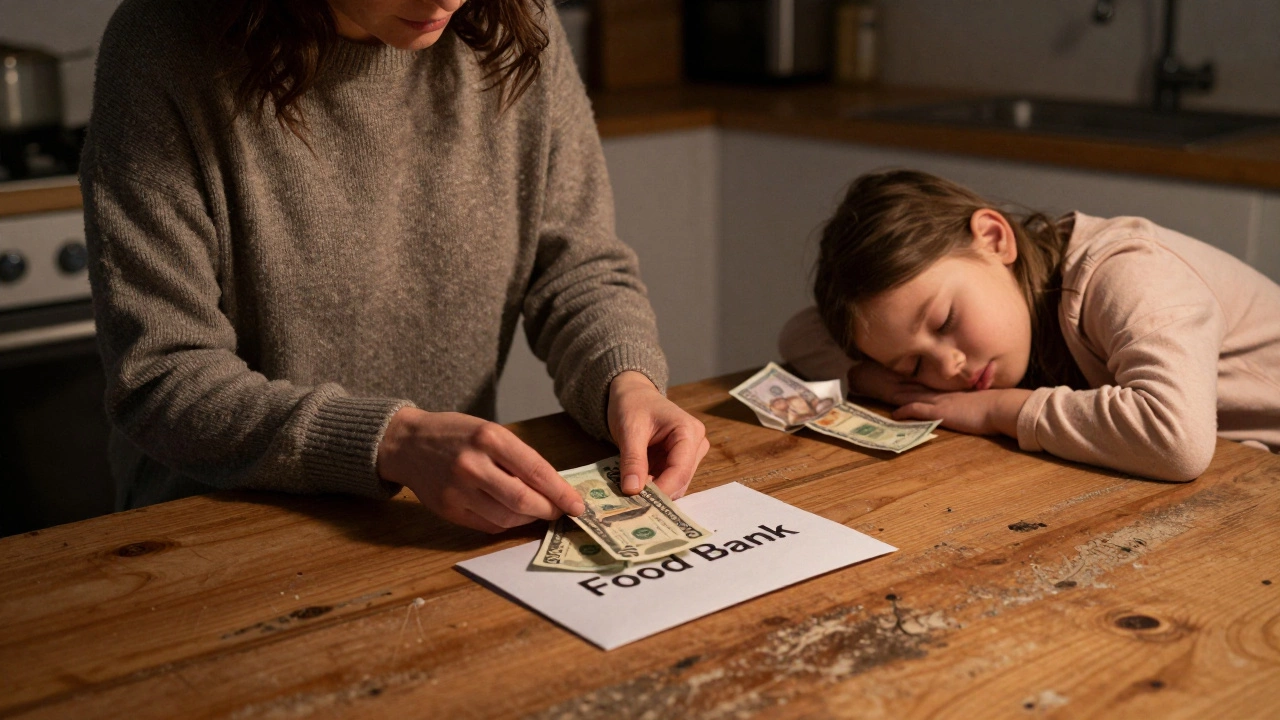
In 2024, the top 1% of U.S. households gave an average of $2,400 to charity. Sounds like a lot? It is. But that’s just 1.8% of their income. Meanwhile, households earning under $30,000 gave an average of $620 - only $1,780 less than the top earners. But here’s the twist: that $620 was nearly 5% of their annual income. For someone living paycheck to paycheck, giving 5% means skipping a meal, skipping the dentist, or not buying new shoes for the kids. That’s not generosity. That’s sacrifice.
A 2023 study from the Chronicle of Philanthropy tracked over 100,000 households across the U.S. and found that low-income donors gave more than double the percentage of their income compared to high-income donors. The pattern held true in Canada, the UK, and Australia. In Sydney, where I live, families earning under $50,000 gave 4.7% of their income to charity. Households earning over $200,000 gave 2.1%.
Why Do Poor People Give More? It’s Not About Guilt
People assume the rich give because they feel guilty. Or because they’re pressured by tax breaks. Or because they’re trying to look good. But poor people don’t have those incentives. They don’t get tax deductions for donations unless they itemize - and most don’t. They don’t have PR teams. They don’t get invited to galas.
What they do have is community. When your neighbor loses a job, you chip in. When your kid’s school needs new books, you bring a box. When the local food bank runs low, you drop off canned goods - even if your fridge is half-empty. Giving isn’t a choice for them. It’s a rhythm. A social contract passed down through generations.
Research from Stanford’s Center on Poverty and Inequality shows that low-income donors are far more likely to give to local causes: food pantries, churches, youth programs, and rent assistance. These aren’t glamorous causes. They don’t make headlines. But they keep people alive.
The Rich Give Big - But Not Often
When the wealthy donate, it’s often a single, large gift. A $10 million endowment. A new wing at a hospital. A foundation named after them. These gifts matter. But they’re rare. Most high-income donors give once a year - if that. Some don’t give at all.
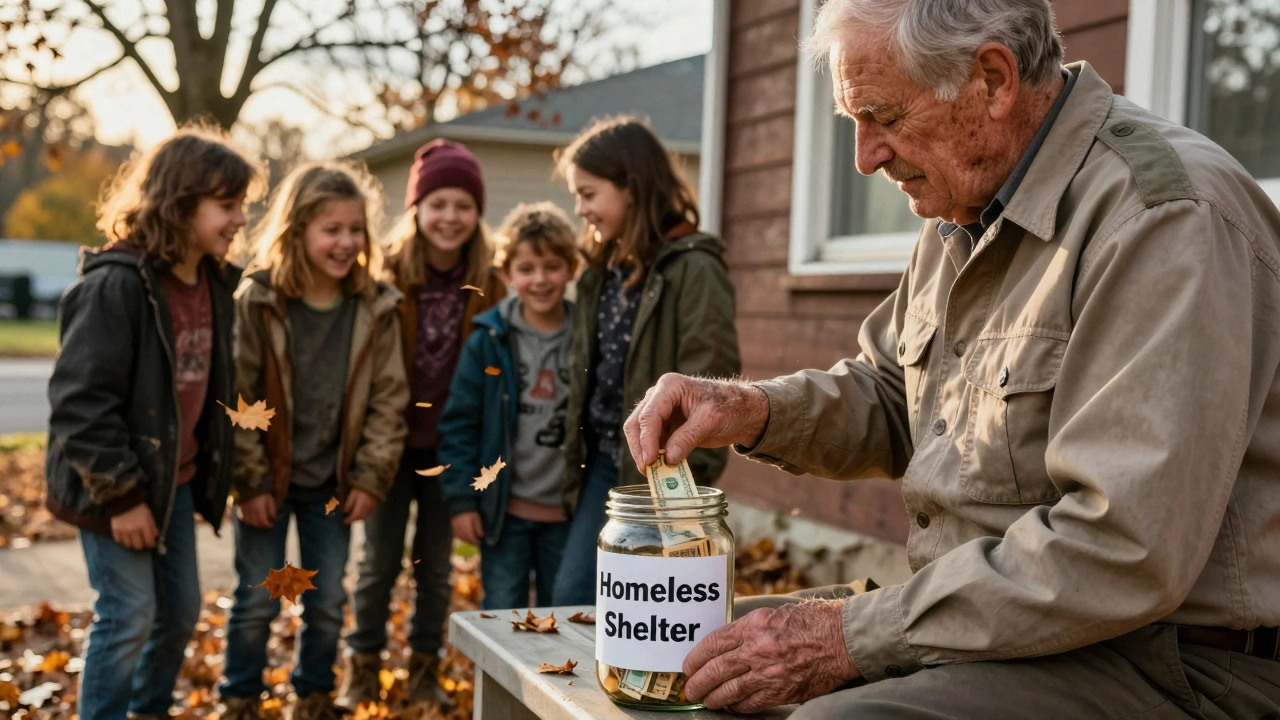
Compare that to low-income donors. They give monthly. Sometimes weekly. A $20 donation to the church. $10 to the animal shelter. $5 to the kid selling lemonade for cancer research. These small, regular gifts add up. In 2024, donations under $100 made up 63% of all charitable giving in the U.S. - and 81% of those came from households earning under $75,000.
Charity Isn’t a Bank Account. It’s a Habit.
Think of charity like exercise. You don’t get fit by running a marathon once a year. You get fit by walking every day. The same goes for giving. The people who give consistently - even a little - create a ripple effect. A church that receives $500 a month from 50 families can run a food program year-round. A single $50,000 donation from a billionaire might fund a one-time event.
And here’s something most donors don’t realize: recurring small donations are more valuable to nonprofits than one-time big ones. Why? Because they’re predictable. Nonprofits can plan. They can hire staff. They can buy supplies. They don’t have to scramble every time a donor changes their mind.
What About Tax Breaks? Do They Change the Game?
Yes, tax deductions help the rich. But they don’t explain the gap. Here’s the data: even after accounting for tax incentives, low-income households still gave a higher percentage of income. In fact, in states with no income tax - like Texas and Florida - the percentage gap didn’t shrink. The pattern held.
That means the difference isn’t about policy. It’s about culture. It’s about lived experience. When you’ve been on the receiving end of help, you know how much it matters. You don’t need a tax form to tell you that.
Don’t Fall for the Billionaire Myth
Media loves stories about Elon Musk donating a spaceship to a charity. Or Jeff Bezos funding a moon landing for orphans. These stories make headlines. But they’re outliers. They’re not the norm. They’re exceptions that distort the truth.
The real story is quieter. It’s the single mom in Chicago who skips her own groceries so her daughter can have a school uniform. It’s the retired bus driver in Brisbane who donates $15 every Friday to the local homeless shelter. It’s the immigrant family in Melbourne who pools their last $20 to help a new neighbor pay their electricity bill.
These people aren’t rich. But they’re the backbone of charity.
So Who Donates More?
If you measure by total dollars, the rich win. But if you measure by sacrifice, by consistency, by impact on daily life - the poor win. They give more of themselves. Not because they have to. But because they know what it means to need help.
Next time you hear someone say, ‘The rich should give more,’ remember: they already do. The real question is: why don’t we celebrate the people who give everything they can - even when they have almost nothing left?
Do poor people get tax breaks for donating?
Most low-income households don’t benefit from tax deductions because they take the standard deduction instead of itemizing. In the U.S., only about 10% of taxpayers itemize. For those earning under $30,000, the number is closer to 3%. So even if they donate, they rarely see a tax benefit. Their giving happens out of necessity, not financial strategy.
Do rich people give more in total?
Yes, in raw dollar amounts. The top 1% of earners in the U.S. gave over $150 billion to charity in 2024. But that’s only 1.8% of their total income. The bottom 50% gave about $25 billion - but that was nearly 4% of their income. So while the rich give more money, the poor give more of what they have.
Is giving more common in certain countries?
Yes. Countries with weaker social safety nets - like the U.S., India, and Brazil - see higher rates of personal giving from low-income households. In places like Sweden or Norway, where government programs cover basic needs, people give less overall. But even there, low-income donors still give a higher percentage of their income than the wealthy.
Why don’t we hear more about poor donors?
Because their giving doesn’t make headlines. No press release. No photo op. No foundation named after them. It’s quiet, daily, and often anonymous. Media focuses on large gifts because they’re easier to report. But the real power of charity lies in the thousands of small acts that go unnoticed.
Can small donations really make a difference?
Absolutely. A nonprofit that gets 1,000 monthly donations of $20 has $20,000 a month - enough to hire two staff members, pay rent, and buy food for 100 families. That’s more sustainable than one $200,000 gift that only lasts a year. Small, regular donations are the engine behind most community charities.