
Environmental Influence Simulator
Adjust the activity level of each group to see how it impacts the final policy outcome.
Policy Outcome Analysis
Balanced policy with moderate regulations and scientific backing.
Ever wonder why a plastic bag ban happens in one city but not the next? Or why a new national park gets protected while another industrial zone expands? It’s rarely just one person pulling the strings. Behind every major environmental rule, there’s a messy, loud, and fascinating mix of players fighting for their piece of the future. From street protesters to backroom lobbyists, these are the people actually moving the needle on how we treat our planet.
If you’re trying to understand who holds the power when it comes to saving (or saving) the environment, you need to look beyond the headlines. The real action happens in five distinct corners of society. Understanding them helps you see not just what policies exist, but why they exist-and who benefits from them. For those interested in how different communities organize themselves locally or globally, resources like this directory show how niche networks operate, though the stakes here are far higher than simple networking.
1. Government Agencies and Regulators
Let’s start with the obvious: the people with the legal authority to write the rules. In the United States, this means agencies like the Environmental Protection Agency (EPA). Globally, it’s bodies within ministries of environment or climate change departments. These aren’t just bureaucrats stamping papers; they are scientists, lawyers, and engineers tasked with turning broad political goals into specific regulations.
Think about air quality standards. Someone has to decide what level of particulate matter is safe for human lungs. That decision comes from government regulators analyzing data, consulting with health experts, and drafting laws that industries must follow. They have the power to fine companies, shut down polluting facilities, and allocate grants for green technology. Without them, environmental promises stay as empty words. Their job is to enforce the "rules of the road" for ecological responsibility.
- Enforce compliance through fines and permits
- Conduct scientific research on pollution levels
- Draft legislative proposals based on data
2. Non-Governmental Organizations (NGOs)
Then there are the watchdogs. NGOs like Greenpeace, the Sierra Club, and the World Wildlife Fund (WWF) don’t make laws, but they create the pressure that makes laws possible. These groups are the engine of public awareness. They run campaigns, file lawsuits against violators, and lobby politicians directly.
Imagine a forest slated for logging. Who stops the bulldozers? Often, it’s an NGO that buys the land, sues the government for failing to protect endangered species, or mobilizes thousands of citizens to protest. They fill the gaps where government oversight fails. Their influence comes from credibility, funding, and the ability to mobilize public opinion. If you’ve ever signed a petition to save a wetland, you were working with an NGO.
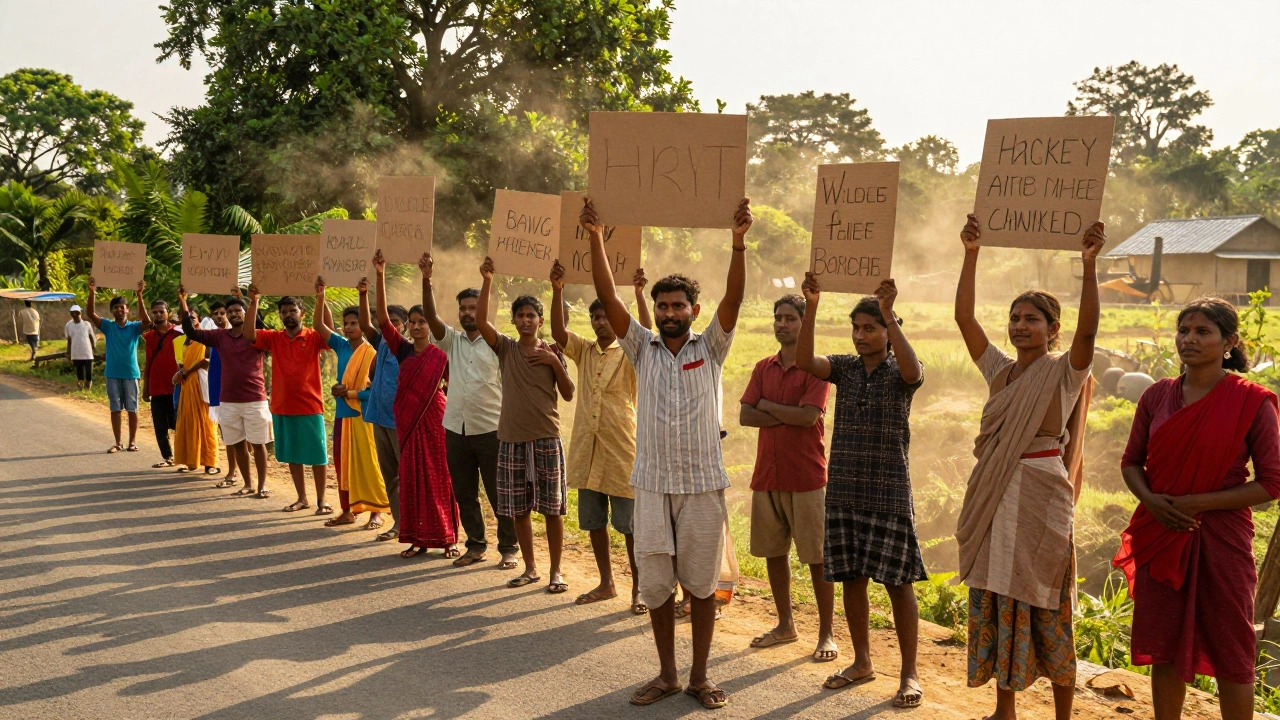
3. Grassroots Activists and Community Leaders
While NGOs often operate at a national or global level, grassroots activists fight the battle on the ground. These are local residents, indigenous leaders, and community organizers who care deeply about their immediate surroundings. Think of the families living near a toxic dump or the farmers watching their water supply dry up.
Grassroots movements are powerful because they are personal. When a local leader stands up to a corporation threatening their neighborhood, it draws media attention and forces policymakers to pay notice. The #StopAdani movement in Australia or the Standing Rock protests in the US are prime examples. These individuals bring moral weight and urgency to policy debates. They remind us that environmental policy isn’t abstract-it affects real people’s health and livelihoods right now.
4. Industry Lobbyists and Corporate Sustainability Officers
We can’t ignore the other side of the table: businesses. Yes, corporations often get criticized for causing pollution, but they also play a huge role in shaping policy. Large companies hire lobbyists to influence legislation, arguing for regulations that are feasible-or sometimes, for loopholes that benefit them.
However, the dynamic is shifting. Many large firms now have Chief Sustainability Officers (CSOs) who push for stricter environmental standards internally and externally. Why? Because investors demand it, consumers expect it, and long-term survival depends on it. Companies like Microsoft and Apple are lobbying for carbon pricing mechanisms because they believe it will level the playing field for green tech. So, while some industry voices try to weaken protections, others are actively helping design smarter, more effective policies.
5. Scientists and Academic Researchers
Finally, there are the brains behind the operation: scientists. Policymakers can’t make good decisions without accurate data. Climate models, biodiversity studies, and chemical toxicity reports all come from researchers in universities and independent labs.
When the Intergovernmental Panel on Climate Change (IPCC) releases a report, it’s not just academic exercise. Governments around the world use those findings to set emission targets. Scientists provide the evidence base that turns fear into fact. Without their work, environmental policy would be guesswork. They translate complex natural processes into actionable insights for lawmakers. Their credibility is their currency, and it’s essential for building trust in any new regulation.
| Group | Primary Goal | Method of Influence | Example Action |
|---|---|---|---|
| Government Agencies | Regulation & Enforcement | Legal Authority | Setting EPA air quality limits |
| NGOs | Advocacy & Awareness | Lobbying & Litigation | Suing oil companies for spills |
| Grassroots Activists | Local Protection | Protests & Media Pressure | Blocking pipeline construction |
| Industry Lobbyists | Profit & Compliance Balance | Campaign Contributions & Drafting | Negotiating tax credits for renewables |
| Scientists | Evidence-Based Insight | Research & Reports | Publishing IPCC climate projections |

How They Work Together (and Against Each Other)
It’s not always a smooth collaboration. Often, these groups are in direct conflict. A scientist might publish data showing a factory is unsafe, leading an NGO to sue the company, while the company’s lobbyists argue the economic impact of closing the plant. Meanwhile, grassroots activists block the gates, and government regulators try to mediate.
This tension is healthy. It ensures no single group dominates the conversation. Good environmental policy emerges from this friction. It requires balancing economic needs, scientific facts, public sentiment, and legal frameworks. When one voice is too loud, the system breaks down. That’s why understanding all five players is crucial for anyone wanting to engage in civic life.
Why This Matters to You
You might think, "I’m not a politician or a scientist. What does this have to do with me?" Everything. Your daily choices-from voting to shopping-support one of these groups over another. Buying from sustainable brands supports corporate CSOs. Signing petitions empowers NGOs. Attending town halls boosts grassroots voices. Ignoring these dynamics means letting others decide your environmental future without your input.
By recognizing who shapes policy, you can better advocate for changes you care about. Whether you want cleaner air, protected forests, or stronger climate laws, knowing who to pressure-and who to partner with-is half the battle.
Who has the most power in making environmental policies?
Government agencies hold the formal legal power to enact and enforce laws. However, NGOs, activists, and scientists often drive the agenda by creating public pressure and providing necessary data. Industry lobbyists also wield significant influence by shaping the specifics of regulations during the drafting process.
Can ordinary citizens influence environmental policy?
Yes, absolutely. Through grassroots activism, voting, contacting representatives, and supporting NGOs, individuals can significantly impact policy outcomes. Collective action often forces governments and corporations to respond to public demands.
What role do scientists play in policy-making?
Scientists provide the evidence base for policies. They conduct research on issues like climate change, pollution, and biodiversity loss. Their findings help policymakers understand risks and design effective solutions based on facts rather than speculation.
Do corporations ever help improve environmental policies?
Yes. While some lobby to weaken regulations, many large companies now advocate for clear, consistent environmental standards. They support policies that encourage innovation in green technology and reduce long-term operational risks related to climate change.
How can I find out which groups are active in my area?
Look for local chapters of national NGOs, attend city council meetings, and county planning meetings, and check community bulletin boards or social media groups focused on local environmental issues. University extension programs also often list active local organizations.