
Find Your Environmental Role
Quiz: The article outlines four main types of environmental groups. Answer these questions to discover where you fit in.
It is impossible to give you a single number for how many environmental groups exist. The reason is simple: the definition changes depending on who you ask. If you count only large international non-profits with famous names, the list is short. If you include every local community garden club, student union chapter, or grassroots activist network, the number runs into the hundreds of thousands globally.
Understanding this landscape requires looking past the headline numbers. You need to understand the different types of these organizations. Each type plays a distinct role in protecting the planet, from lobbying governments in Washington and Brussels to planting trees in your own neighborhood. Knowing the difference helps you decide where to donate, volunteer, or simply learn more.
The Main Categories of Environmental Organizations
To make sense of the sheer volume of activity, we can categorize these groups by their primary method of operation. Most environmental entities fall into one of four major buckets: Conservationists, Advocates, Scientists, and Community Action Groups.
| Type | Primary Goal | Typical Activities | Examples |
|---|---|---|---|
| Conservation Groups | Protect specific species or habitats | Land acquisition, wildlife management, breeding programs | WWF, The Nature Conservancy |
| Advocacy & Policy NGOs | Change laws and corporate behavior | Lobbying, litigation, public campaigns | Greenpeace, Sierra Club |
| Scientific Research Institutes | Generate data and monitor health | Field studies, publishing reports, policy briefs | IPCC contributors, Woods Hole |
| Grassroots & Community Groups | Solve local environmental issues | Cleanups, urban gardening, education | Local land trusts, school clubs |
Conservation Groups: Protecting What Exists
When people think of "environmental groups," they often picture rangers guarding tigers or biologists tracking whales. These are conservation organizations. Their core mission is preservation. They focus on biodiversity, which means protecting the variety of life on Earth.
Large global players like the World Wildlife Fund (WWF) operate in over 100 countries. They work directly with governments to establish protected areas. In 2025, the goal was to protect 30% of the planet's land and oceans by 2030, a target known as "30x30." Conservation groups are the ones buying land to prevent development or managing national parks.
However, not all conservation happens at a global scale. Local land trusts are incredibly common. In the United States alone, there are over 2,000 land trusts. These are smaller organizations that buy or receive donations of land to keep it wild forever. They might protect a single wetland in Ohio or a forest ridge in California. Because they are hyper-local, they are often more agile than big international NGOs but have much smaller budgets.
Advocacy and Policy NGOs: Changing the Rules
If conservation groups protect the physical world, advocacy groups try to change the rules that govern it. These organizations believe that systemic change is the only way to solve massive problems like climate change or plastic pollution. They don't usually plant trees; they sue polluters or lobby politicians.
Groups like Greenpeace are famous for direct action. You might remember images of activists climbing oil rigs or blocking pipelines. This is designed to generate media attention and pressure corporations. Other groups, like the Sierra Club, focus heavily on political lobbying and voter mobilization. They have millions of members who vote based on environmental records.
In recent years, a new wave of youth-led advocacy has emerged. Movements inspired by figures like Greta Thunberg have decentralized the traditional NGO model. Instead of a central headquarters, these are networks of local chapters organizing strikes and protests. Counting these groups is difficult because they are fluid and often digital-first. They rely on social media rather than annual membership dues.

Scientific and Research Organizations: Providing the Evidence
You cannot fight for the environment if you do not understand it. Scientific organizations provide the data that fuels both conservation and advocacy. While some are government-funded (like the EPA in the US or the Environment Agency in the UK), many are independent non-profits or university-affiliated institutes.
These groups monitor air quality, track glacier melt, and study ocean acidification. For example, the Intergovernmental Panel on Climate Change (IPCC) is not an NGO in the traditional sense, but it coordinates thousands of scientists worldwide to produce assessment reports. These reports are the basis for almost all international climate treaties.
Private research institutes also play a huge role. Think tanks and environmental centers publish detailed analyses on carbon pricing, renewable energy efficiency, and sustainable agriculture. They bridge the gap between raw science and practical policy. Without them, politicians would be guessing about what works and what doesn't.
Grassroots and Community Action Groups: The Local Level
This is where the real volume lies. If you want to know how many environmental groups there are, look at your own city. Grassroots groups are formed by neighbors concerned about local issues. Maybe there is a factory dumping waste in the river, or a plan to cut down a historic park.
These groups are diverse. Some are formal non-profits with tax-exempt status. Others are informal collectives that meet once a month to clean up a beach or organize a composting program. In Australia, for instance, local Landcare groups have been active since the 1980s. There are tens of thousands of Landcare groups across the country, each focused on restoring local soil and water health.
Because they are small, they are hard to track in global databases. They don't always register as formal charities. However, their impact is significant. They educate residents, create local habits around recycling and conservation, and often serve as the first line of defense against harmful local developments.
Corporate and Industry Initiatives
It is important to note that not all environmental efforts come from non-profits. Many industries have formed their own associations to promote sustainability. These are sometimes called "greenwashing" critics, but they also drive real change through standards and certifications.
Organizations like the Forest Stewardship Council (FSC) set standards for sustainable logging. Companies pay to get certified, and consumers look for the label. Similarly, the Climate Group works directly with CEOs to reduce carbon emissions. These hybrid models blur the line between business and activism, creating a complex ecosystem of stakeholders.
Why the Number Doesn't Matter as Much as the Network
So, how many groups are there? Globally, estimates suggest there are over 40,000 registered environmental NGOs. But if you include unregistered community groups, student organizations, and industry bodies, the number could easily exceed 100,000.
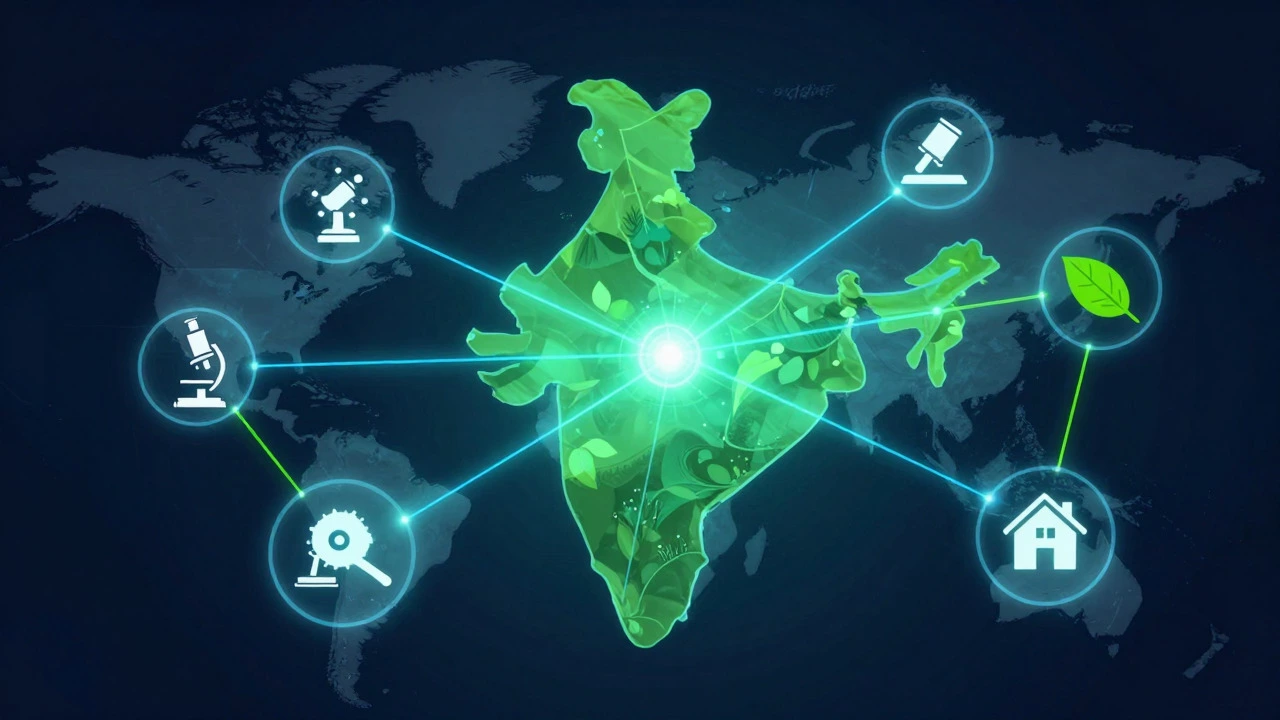
The exact count is less important than understanding the network. These groups rarely work in isolation. A local cleanup group might partner with a scientific institute to test water quality. That data might then be used by an advocacy group to lobby for stricter regulations. Meanwhile, a conservation group might use the resulting policy to protect the area long-term.
For anyone looking to get involved, the key is to find the niche that matches your skills and interests. Do you prefer hands-on work? Join a local restoration crew. Are you good with data? Support a research institute. Want to influence law? Volunteer with a policy NGO. The movement is vast, fragmented, and deeply interconnected.
What is the largest environmental organization in the world?
The World Wildlife Fund (WWF) is often cited as the largest due to its global reach, operating in over 100 countries with a membership base of millions. However, in terms of revenue and assets, The Nature Conservancy is also a top contender, managing vast amounts of land and water resources worldwide.
Are there environmental groups specifically for businesses?
Yes. Organizations like the World Business Council for Sustainable Development (WBCSD) bring together CEOs to share best practices. Additionally, certification bodies like LEED (for buildings) and B Corp (for companies) act as quasi-environmental groups by setting rigorous standards for corporate sustainability.
How can I find local environmental groups near me?
Start by searching for "Landcare" (in Australia), "conservancy" (in the US), or "community garden" followed by your city name. University extension services and local government websites often list registered community groups. Social media platforms like Facebook and Meetup also host many informal local action groups.
What is the difference between an NGO and an INGO?
NGO stands for Non-Governmental Organization, which can operate locally or nationally. INGO stands for International Non-Governmental Organization. An INGO operates in multiple countries, such as Greenpeace or Oxfam, coordinating efforts across borders to address global issues like climate change or deforestation.
Do environmental groups accept government funding?
Many do, especially conservation and research groups. Government grants help fund specific projects like habitat restoration or scientific monitoring. However, some advocacy groups avoid government funding to maintain their independence and ability to criticize government policies without conflict of interest.