
Community Outreach Plan Builder
Use this tool to track your progress through the key stages of creating an effective outreach plan. Check off items as you complete them to see your overall readiness score.
1. Define Goals & Audience Segments
Not Started2. Conduct Stakeholder Analysis
Not Started3. Select Communication Channels
Not Started4. Develop Action Steps & Resources
Not Started5. Monitoring & Evaluation Framework
Not StartedStart checking off tasks to build your plan!
You’ve got the mission. You’ve got the passion. Maybe you even have the funding. But if your community outreach plan is just a vague wish list of "we should talk to people," you’re leaving results to chance. A solid plan isn’t paperwork; it’s your roadmap to turning strangers into supporters and supporters into advocates.
Here’s the hard truth: most outreach fails because it starts with activities instead of objectives. We jump straight to "let’s host a fair" or "let’s post on Instagram" without asking who we need to reach and why. If you want to stop spinning your wheels, you need a structured approach that connects your goals directly to measurable outcomes.
Key Takeaways
- Start with the 'Who': Define specific audience segments before choosing any tactics. Broad demographics like "local residents" are useless for targeting.
- Map Your Stakeholders: Identify key influencers and gatekeepers early. They can open doors faster than cold calling ever will.
- Choose Channels Wisely: Match communication methods to where your audience actually spends time, not where you think they should be.
- Measure What Matters: Track leading indicators (engagement, sign-ups) alongside lagging indicators (funds raised, policy changes).
- Iterate Quickly: Treat your plan as a living document. Review data monthly and pivot strategies that aren’t working.
Define Your Goals and Audience Segments
Before you draft a single email or design a flyer, you need clarity. Vague goals lead to vague efforts. Instead of saying "increase awareness," try "increase local awareness among parents of school-aged children by 15% within six months." This specificity forces you to think about metrics and timelines.
Your audience is rarely one monolithic group. In Sydney, for example, reaching university students in Newtown requires a different approach than engaging retirees in Manly. Break your target population into distinct segments based on behavior, needs, and access points. Are you trying to reach busy professionals? Stay-at-home parents? Small business owners? Each group has different pain points and preferred communication channels.
Use data to back this up. Look at census data, local council reports, or surveys from previous programs. If you’re running a health initiative, don’t just guess that "people need help." Find out which neighborhoods have the highest rates of diabetes or mental health challenges. Specificity here saves you money later.
Conduct a Thorough Stakeholder Analysis
You don’t work in a vacuum. Your success depends on relationships with other organizations, local leaders, and community groups. A stakeholder analysis helps you identify who has influence over your project and who is affected by it. Think of this as mapping the power dynamics in your community.
Create a simple grid to categorize stakeholders by their level of interest and influence. High-interest, high-influence players are your partners-engage them closely. Low-interest, low-influence groups might only need general updates. Don’t ignore the "high influence, low interest" crowd; they can block your progress if they feel overlooked.
| Influence Level | Interest Level | Engagement Strategy | Example Entities |
|---|---|---|---|
| High | High | Manage Closely: Regular meetings, co-design opportunities | Local Councils, Major Sponsors, Key NGOs |
| High | Low | Keep Satisfied: Occasional updates, respect their authority | Regulatory Bodies, Large Landlords |
| Low | High | Keep Informed: Newsletters, social media, town halls | Volunteers, Local Residents, Beneficiaries |
| Low | Low | Monitor: Minimal effort, watch for changes | Distant Competitors, General Public |
This matrix prevents wasted energy. Why spend hours crafting personalized emails to a group that barely cares? Conversely, ignoring a key influencer because they seem uninterested can cost you big time later.

Select the Right Communication Channels
Once you know who you’re talking to, decide how to talk to them. The mistake many organizations make is assuming digital equals effective. For older demographics or culturally diverse communities, face-to-face interaction or traditional media often works better than an app notification.
Consider the concept of channel fit: matching the medium to the message and the audience's habits. If you’re targeting young activists, Instagram Reels or TikTok might drive action. If you’re reaching small business owners, LinkedIn or direct email might get more clicks. For elderly residents, local newsletters, radio spots, or community noticeboards remain powerful tools.
Don’t rely on just one channel. Use an integrated approach. A campaign might start with a Facebook event invite, followed by reminder texts, and culminate in an in-person workshop. Each touchpoint reinforces the previous one. Test different combinations. Did flyers work better than posters? Did email subject lines with emojis get higher open rates? Data beats intuition every time.
Develop Concrete Action Steps and Resources
Now comes the logistics. This section turns your strategy into tasks. Who does what, when, and with what resources? Be realistic about your capacity. Overcommitting leads to burnout and dropped balls.
Break down large goals into weekly or monthly actions. If your goal is to recruit 50 volunteers, your action steps might include: designing a recruitment poster (Week 1), posting on volunteer platforms (Week 2), hosting an info session (Week 3), and conducting interviews (Week 4). Assign clear ownership to each task. Ambiguity breeds delay.
Budgeting is part of this phase too. Account for printing costs, advertising spend, venue hire, and staff time. Hidden costs often derail projects mid-stream. Include a contingency fund-usually 10-15% of the total budget-for unexpected expenses. It’s better to have it and not need it than to scramble for cash when the printer charges extra for rush jobs.
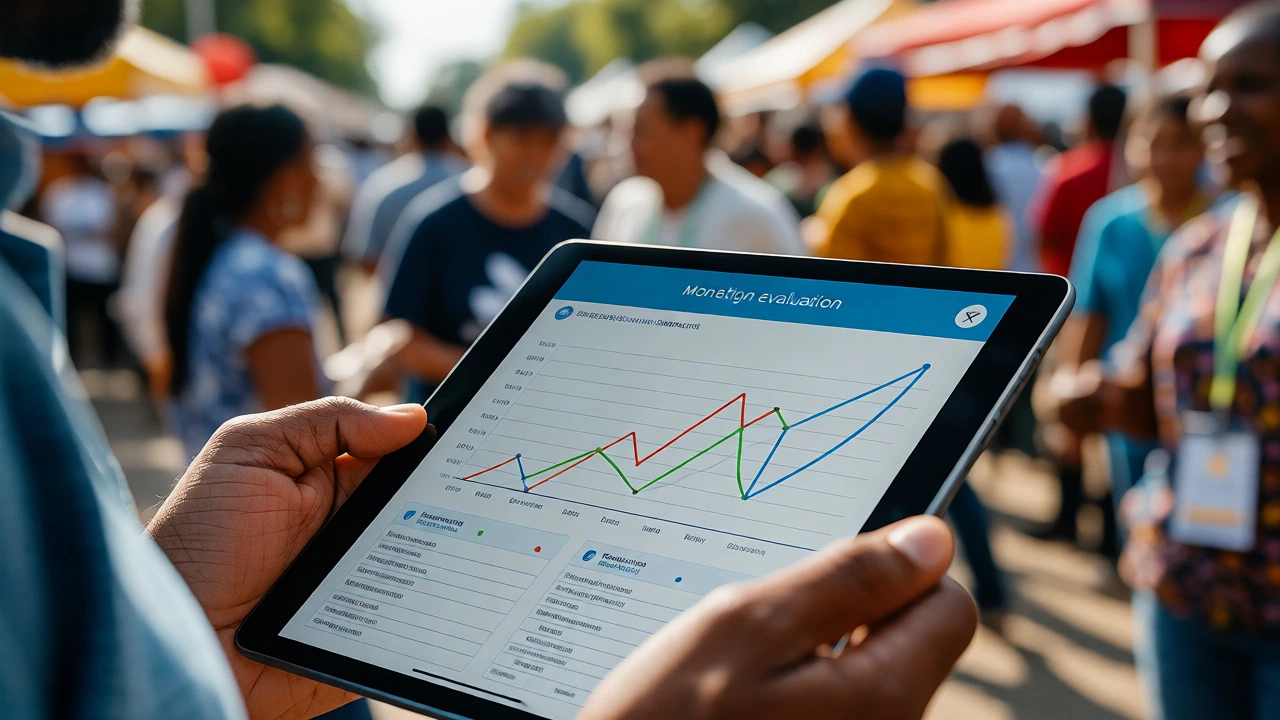
Implement Monitoring and Evaluation Frameworks
How do you know if your outreach strategy is working? You measure it. But don’t just count heads at events. Look for deeper indicators of impact.
Set up two types of metrics: output and outcome. Outputs are tangible products of your activity (number of flyers distributed, number of website visits). Outcomes are the changes resulting from those activities (increased knowledge, changed attitudes, new partnerships formed). An event with 100 attendees (output) means little if none of them signed up for your service (outcome).
Use feedback loops. After each major activity, gather quick feedback via short surveys or informal chats. Ask participants: "Was this useful? What was missing?" Adjust your next steps based on this real-time data. Flexibility is a strength, not a weakness. If a particular messaging angle isn’t resonating, change it immediately rather than waiting until the end of the year to analyze why it failed.
Common Pitfalls to Avoid
Even well-planned initiatives stumble over common errors. First, lack of follow-up. Many organizations send initial communications but fail to nurture leads. A person who attends one workshop isn’t automatically committed. Have a drip campaign ready to keep them engaged.
Second, ignoring cultural nuances. In multicultural areas like Western Sydney, language barriers and cultural norms significantly affect participation. Ensure materials are translated where necessary and that events are scheduled at times convenient for various cultural groups. Respecting these differences builds trust.
Third, underestimating the power of word-of-mouth. People trust peers more than institutions. Encourage existing participants to share their experiences. Provide them with easy ways to spread the word, such as shareable graphics or referral incentives. Organic growth is often more sustainable than paid promotion.
Frequently Asked Questions
How long should a community outreach plan cover?
Most plans should cover 6 to 12 months. This timeframe allows enough duration to see meaningful results while remaining flexible enough to adapt to changing circumstances. Longer-term strategic visions (3-5 years) can exist, but operational plans should be shorter to maintain focus and agility.
Do I need a budget for a community outreach plan?
Yes, even if it’s minimal. Every activity has a cost, whether it’s staff time, printing, digital ad spend, or refreshments for events. Tracking these costs helps justify future funding requests and identifies where money is being wasted. You can start with zero-cost tactics like social media, but labor is still a resource that needs accounting.
What is the difference between outreach and marketing?
Marketing typically focuses on selling products or services to consumers, often aiming for profit. Community outreach focuses on building relationships, providing information, and engaging citizens or beneficiaries. While both use similar channels, outreach prioritizes mutual benefit, education, and long-term community cohesion over immediate transactional sales.
How do I measure the success of my outreach efforts?
Combine quantitative and qualitative data. Quantitative metrics include attendance numbers, website traffic, social media engagement rates, and conversion rates (e.g., sign-ups). Qualitative data comes from surveys, interviews, and observation, revealing shifts in perception, satisfaction levels, and community sentiment. Success is defined by achieving your specific pre-set objectives, not just activity volume.
Should I hire a professional to write my outreach plan?
Not necessarily. Internal teams often understand the community context better than external consultants. However, hiring a professional can be beneficial if you lack strategic planning experience or need an objective perspective. For smaller non-profits, using templates and internal brainstorming sessions is usually sufficient and more cost-effective.