Who Can Use a Local Food Bank? Eligibility & Access Guide
Find out who can use a local food bank, what eligibility looks like, required documents, and how to access help quickly in Australia.
Read MoreWhen you need food bank access, a system that connects people with free groceries and meals when income isn’t enough. It’s not charity—it’s a safety net millions rely on every month. Whether you’re between jobs, raising kids on a fixed income, or just got hit with an unexpected bill, food banks are there. They don’t ask for proof of citizenship, credit checks, or reasons why you’re struggling. They just give you food.
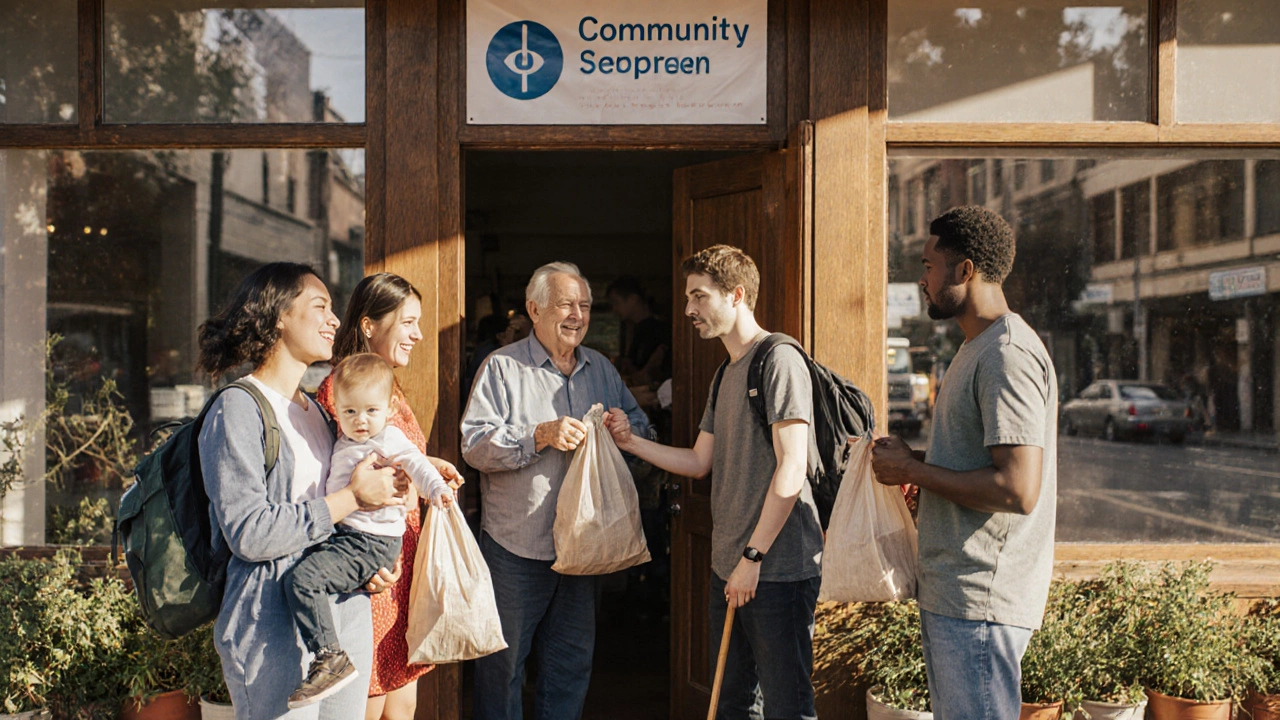
Food pantry, a local drop-off point where people pick up groceries without waiting in line for meals is often the first stop. These are run by churches, community centers, or nonprofits, and they usually offer canned goods, fresh produce, dairy, and sometimes even meat. In cities and towns across the U.S. and India, these pantries open once or twice a week. You show up, bring a bag, and leave with enough for a few days. No appointment needed. Some even let you come back next week.
Hunger relief, the broader effort to reduce food insecurity through coordinated programs, policy, and volunteer networks includes school meal programs, senior food boxes, and mobile food trucks that drive into neighborhoods without grocery stores. It’s not just about handing out cans—it’s about fixing broken systems. A 2023 study by Feeding America found that one in six households in the U.S. struggled to afford enough food. In India, the Public Distribution System and local NGOs fill similar gaps, especially in rural areas where transport and income are limited.
Who uses these services? Teachers. Single parents. Retirees on fixed pensions. People working two jobs but still falling short. Veterans. Students. The myth that only the unemployed need food banks? It’s wrong. Most people who use them are working. They just don’t earn enough.
Getting help isn’t always easy. Some locations have long lines. Others require ID or proof of address—something not everyone has. But the good news? You don’t need to figure it out alone. Community centers, libraries, and even local churches often have staff who know which food bank opens when, where the free meal vans go, and how to apply for SNAP or other government aid.
There’s no shame in asking. No one gets rich from food banks. They’re funded by donations, volunteers, and sometimes government grants. The real shame is when people go hungry because they don’t know where to turn—or think they’re not "deserving." You are. Food isn’t a reward. It’s a right.
Below, you’ll find real guides on how to get food assistance in specific states, what programs exist for seniors and youth, and how community teams organize food drives that actually work. No fluff. No jargon. Just clear steps to get food on your table—and help others do the same.
Find out who can use a local food bank, what eligibility looks like, required documents, and how to access help quickly in Australia.
Read More