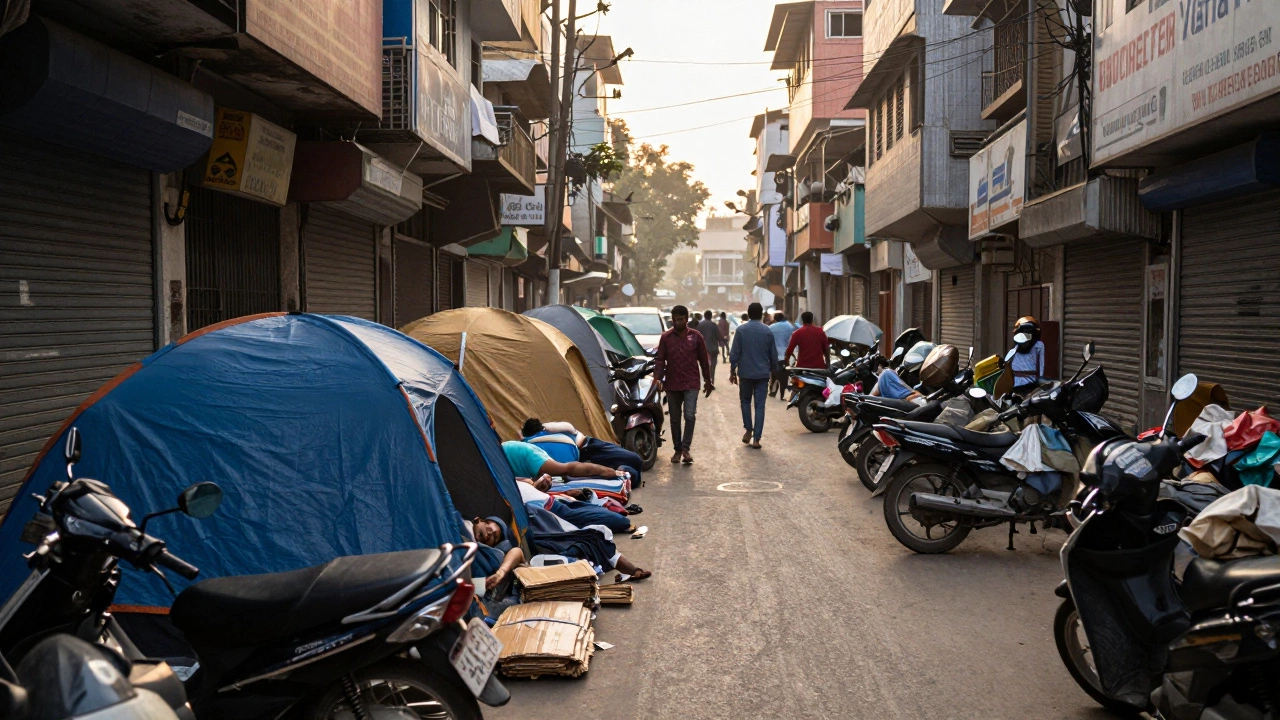
Homeless Living Conditions: What They Really Look Like and How We Respond
When we talk about homeless living conditions, the daily realities faced by people without stable housing, including exposure to weather, lack of sanitation, and legal harassment. Also known as unsheltered homelessness, it’s not just about sleeping on the street—it’s about surviving in a system that often treats survival as a crime. In 2025, cities across the U.S. passed laws that make it illegal to sleep outside, beg for food, or even sit on a sidewalk—no matter if shelters are full, unsafe, or overcrowded. These aren’t solutions. They’re punishments for poverty.
Rapid Re-Housing, a proven program that gives people short-term rent help and case management to move quickly into permanent housing. Also known as housing-first approach, it’s been used successfully in Arkansas and other states because it focuses on stability, not bureaucracy. This isn’t charity—it’s cost-effective. Keeping someone in a shelter for a year costs far more than helping them get into an apartment with a little support. Meanwhile, shelter access, the ability to enter and safely stay in a temporary housing facility. Also known as emergency housing, it’s often blocked by rules that turn away families, pets, or people with mental health needs. Many shelters don’t allow couples. Some turn away men over 50. Others require sobriety tests before you can sleep. These aren’t safety measures—they’re barriers dressed as policy.
And it’s not just about where people sleep. It’s about how they’re treated. In Texas, sleeping in your car can get you fined or arrested. In Arkansas, youth as young as 16 can get help through the Start Smart Program—but only if they find it first. In Virginia, seniors get free meals, but only if they know the name of the program. The system doesn’t fail because people don’t try. It fails because it’s designed to be invisible to those who need it most.
What you’ll find below aren’t just articles. They’re real stories from people on the ground—laws that criminalize survival, programs that actually work, and the quiet heroes trying to fix what’s broken. From how to qualify for housing help near you, to what not to donate to charity shops, to the legal tricks used to push people out of public spaces—this collection cuts through the noise. No fluff. No theory. Just what’s happening, who’s affected, and what can change.