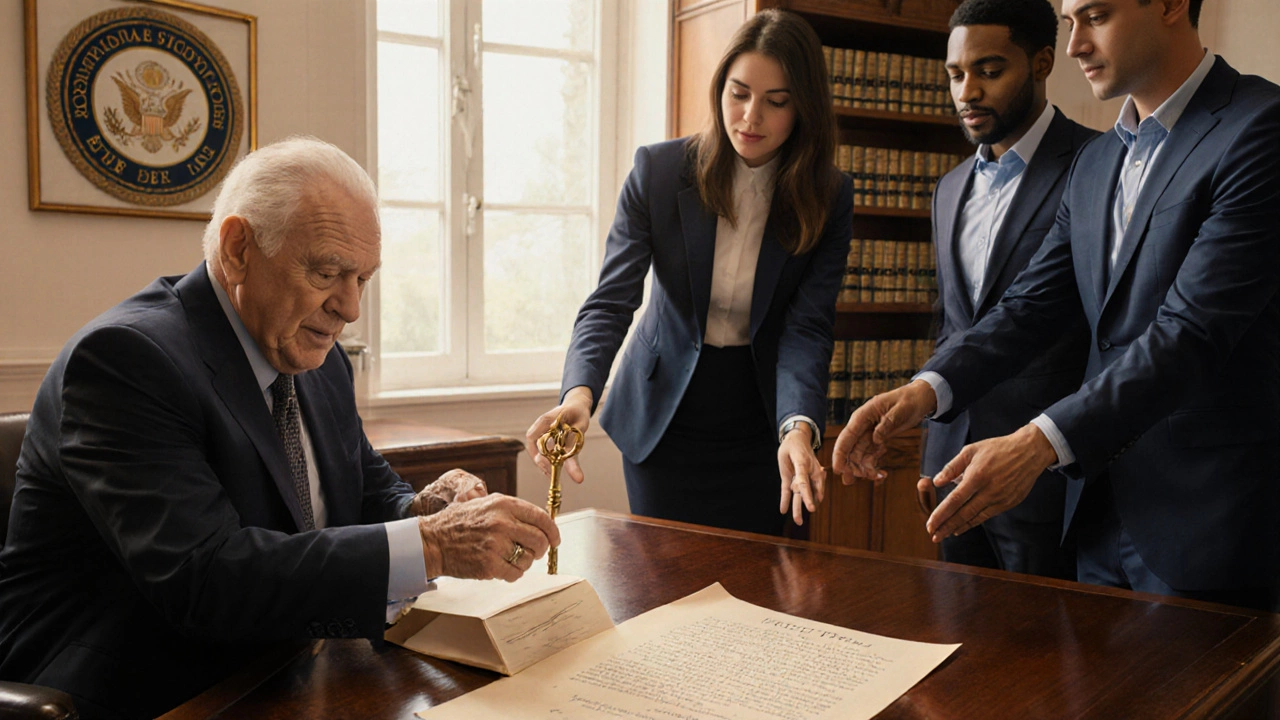
How Does a Charitable Trust Work? A Simple Guide
Learn how a charitable trust works, from creation and registration to daily operation, tax benefits, and common pitfalls-all explained in plain language.
Read MoreWhen someone sets up a trust deed, a legal document that creates a charitable trust by outlining how funds or assets are managed for public benefit. Also known as deed of trust, it’s not just paperwork—it’s the binding contract that gives a charity its legal identity and protects its mission. Without a trust deed, a nonprofit can’t legally hold property, receive tax-exempt donations, or assign responsibility to trustees. It’s the foundation for everything from local food banks to national environmental funds.
A charitable trust, a legal arrangement where assets are held and managed by trustees for the benefit of a public cause, only exists because of this document. The trustee, the person or group legally responsible for managing the trust’s assets according to the deed’s terms doesn’t own the money—they’re legally bound to use it only for the purpose written in the trust deed. And the trust founder, the individual or organization that creates the trust and defines its goals in the deed can specify exactly how the funds are used: feeding the homeless, funding education, protecting land, or supporting seniors. This isn’t vague generosity—it’s locked-in purpose.
Many of the organizations you’ll find in these posts rely on trust deeds to operate. The trust deed lets a charity in Virginia run a senior food program without worrying about personal liability. It lets a group in Arkansas legally hold donations for youth housing. It’s why a school club can accept a $10,000 grant and know the money can’t be spent on anything else. And it’s why donors trust that their contributions won’t vanish into administrative costs—they’re protected by law.
Some people think setting up a trust deed is only for big nonprofits with lawyers and budgets. But that’s not true. Many small community groups start with a simple deed—sometimes just a few pages—and register it with local authorities. The key isn’t complexity; it’s clarity. What’s the goal? Who’s in charge? Where does the money go? Answer those, and you’ve got a working trust.
These posts cover everything you need to know about how these organizations actually function: how to run a fundraiser that lasts the right amount of time, how to build an outreach plan that doesn’t burn people out, how to prove volunteer work, and how to qualify for programs that help people in need. All of it ties back to one thing: a clear, legal structure that makes real impact possible. And at the center of that structure? The trust deed.
Learn how a charitable trust works, from creation and registration to daily operation, tax benefits, and common pitfalls-all explained in plain language.
Read More