
Charity Event Impact Calculator
Calculate what your donation actually provides for a cause. Reputable charities follow the 80/20 rule: at least 80% of funds go directly to the cause while 20% covers operational costs.
How Your Donation Makes a Difference
At least 80% of your donation goes directly to the cause. For example, a $20 donation provides $16 to the cause and $4 for operational costs.
A $100 donation could provide 50 meals for families in need, cover medical supplies for a clinic, or support a child's education.
Your contribution matters more than you might think! Even small donations can make a real difference when combined with others.
Your Impact
A charity event is more than just a party with a donation box. It’s a planned gathering designed to raise money, awareness, or support for a cause-anything from feeding the hungry to saving endangered animals. These events don’t happen by accident. Someone had to organize them, convince people to show up, and make sure the money actually reaches those who need it.
How a Charity Event Actually Works
At its core, a charity event takes something people already enjoy-dining, dancing, running, or even watching a movie-and ties it to a reason bigger than themselves. Think of a local 5K run where participants pay $30 to enter, and every dollar goes to a children’s hospital. Or a dinner gala where tickets cost $150 and include live music, silent auctions, and a short speech from someone whose life was changed by the charity’s work.
It’s not just about collecting cash. Many events focus on raising awareness. A bake sale for mental health might not bring in thousands, but it starts conversations. People ask, “Why are you doing this?” And that’s how change begins.
Organizers usually work with a registered nonprofit. That’s important. If an event claims to support a cause but doesn’t partner with a legal charity, there’s no guarantee the money goes where it should. Legitimate events display the nonprofit’s name clearly, often with its ABN (Australian Business Number) or registration details on flyers or websites.
Types of Charity Events You’ll Actually See
Not all charity events are fancy galas or marathons. Here are the most common ones you’ll find in towns and cities across Australia:
- Fun runs and walks - These are the most popular. People sign up, get sponsors, and run (or walk) for a cause. Sydney’s “City2Surf” raises millions every year for youth services.
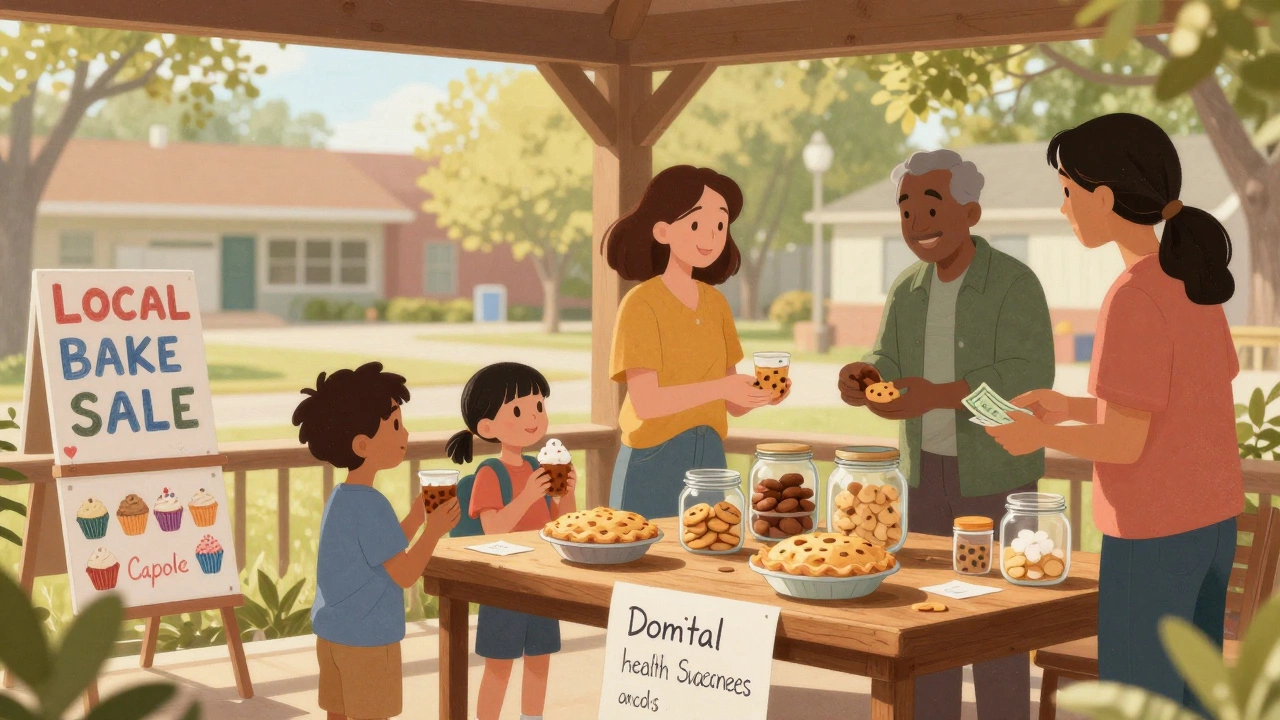
- Bake sales and markets - Simple, community-driven, and often run by schools or local groups. A $5 cupcake can fund a week’s worth of meals for a family in need.
- Dinner galas and auctions - Higher ticket prices, formal settings. Often used by larger charities like the Red Cross or RSPCA to attract donors who can give more.
- Concerts and performances - Local bands, school choirs, or theater groups put on shows and ask for donations at the door.
- Online challenges - Think “no-shave November” or “24-hour gaming marathons.” These spread fast on social media and let people donate from anywhere.
Some events even combine formats. A weekend festival might have food stalls, live music, face painting for kids, and a raffle-all for one cause. The goal? Make it fun enough that people forget they’re giving money.
Who Runs These Events?
You might think only big organizations run charity events. But most are started by regular people. A teacher organizing a bake sale after a student’s family lost their home. A group of friends holding a garage sale to raise money for a friend’s medical bills. A local gym offering free classes for a week and asking attendees to donate.
These grassroots efforts are often the most powerful. They’re personal. They’re local. They’re real. And they don’t need a big budget-just heart and a clear message.
When a nonprofit gets involved, they bring structure: legal permissions, tax receipts for donors, access to their donor database, and sometimes even free equipment or venues. But the energy? That usually comes from volunteers.
Where Does the Money Go?
This is the question people ask most. “If I give $20, how much actually helps?”
Reputable charities follow the 80/20 rule: at least 80% of funds raised go directly to the cause. The other 20% covers costs like event planning, marketing, staff time, and bank fees. Some smaller events might spend more on overhead because they don’t have paid staff. That’s okay-as long as the total amount raised still makes a real difference.
For example, if a local group raises $5,000 for a food bank, and $1,000 goes to renting a hall and printing flyers, that’s still $4,000 worth of meals for families. That’s 2,000 meals. That’s real.
Always check where the money goes. Most charities publish annual reports. Look for phrases like “programs delivered” or “impact achieved.” If you can’t find that info, ask. Good organizations welcome questions.
Why Do People Participate?
People don’t show up because they have to. They come because they care-or because they know someone who does.
Some donate because they’ve been through hardship themselves. Others join because their child’s school is involved. Some just want to feel part of something good. And that’s okay too.
Studies show that people who volunteer at charity events are more likely to keep giving-not just money, but time. One event can turn a one-time donor into a lifelong supporter. That’s the ripple effect.
And it’s not just about the money. Events build community. Neighbors meet. Strangers become friends. Kids learn what generosity looks like. A charity event doesn’t just raise funds-it raises hope.
What Makes a Charity Event Successful?
Success isn’t measured by how much money is raised. It’s measured by how many people feel connected to the cause.
Here’s what works:
- Clear purpose - Everyone should know exactly what the money will do. “Helping homeless youth” is better than “supporting a good cause.”
- Easy to join - Registration should be simple. Don’t make people fill out five forms just to donate $10.
- Good communication - Send updates. Show photos. Say thank you. People want to know their effort mattered.
- Fun and inclusive - If it feels like a chore, people won’t come back. Make it joyful, welcoming, and accessible.
One of the most successful events in Melbourne last year was a “Dress Like Your Pet” day. People paid $10 to wear their cat’s outfit to work. They posted photos online. It went viral. They raised $32,000 for animal shelters. It was silly. It was smart. And it worked.

How to Start Your Own Charity Event
Want to organize one? Start small.
- Choose a cause you care about - Don’t pick something because it’s trendy. Pick something that moves you.
- Find a charity to partner with - Contact a local nonprofit. Ask if they’ll help you with permits, receipts, and promotion. Most will say yes.
- Decide on a simple format - Coffee morning, quiz night, lemonade stand. Keep it easy.
- Set a realistic goal - $500? $2,000? It doesn’t have to be huge. Just meaningful.
- Tell people - Post on Facebook, put up flyers at the library, ask your workplace to share. Word of mouth still works.
- Follow up - After the event, send a thank-you note. Show the total raised. Share a photo of the impact. People need to see that their effort made a difference.
You don’t need a team of 20. You just need one person willing to start.
What to Avoid
Not every event that claims to be “for charity” is legitimate. Watch out for:
- Events that don’t name the charity they support
- Organizers who refuse to share financial details
- Pressure tactics: “You have to donate now or you’re heartless”
- Events run by unknown groups with no website or contact info
If something feels off, trust your gut. There are plenty of real, transparent events out there. You don’t need to support the shady ones.
Final Thought: It’s Not About the Money
A charity event isn’t just a fundraiser. It’s a moment where people choose to connect-to each other, to a cause, to something bigger than their daily grind. It’s a reminder that kindness doesn’t have to be grand. Sometimes, it’s just a bake sale, a walk, or a shared laugh.
And that’s why they matter.
What’s the difference between a charity event and a fundraiser?
A fundraiser is any activity meant to raise money for a cause. A charity event is a type of fundraiser that’s usually public, planned, and often social-like a dinner, run, or concert. All charity events are fundraisers, but not all fundraisers are events. For example, a direct mail campaign or online donation page is a fundraiser, but not an event.
Can I start a charity event on my own?
Yes, but it’s smarter to partner with an existing registered charity. They can handle legal paperwork, issue tax receipts to donors, and help promote your event. Trying to run everything alone can lead to legal issues or confusion over where the money goes. Most charities are happy to support community-led efforts.
Do I need a permit to host a charity event?
It depends on where and what you’re doing. If you’re selling food, using public parks, or playing loud music, you’ll likely need local council permits. If you’re hosting a small event at home, you probably won’t. Always check with your local council or ask your charity partner-they’ve done this before and know the rules.
How much money should I aim to raise?
There’s no magic number. Focus on what’s realistic. A school group raising $500 for a local shelter is just as valuable as a corporate gala raising $50,000. The goal isn’t to be the biggest-it’s to make a real difference. Start small, prove it works, then grow.
Are charity events tax-deductible for donors?
Only if the charity is a registered Deductible Gift Recipient (DGR) in Australia. Most established nonprofits are. Donors should get a receipt that says the charity’s name, ABN, and that the donation is tax-deductible. If you’re unsure, ask the organizer for proof of the charity’s DGR status before donating.