Meal Impact Calculator
The World Food Programme provides 14 meals for every $1 donated. Your contribution directly supports life-saving nutrition for families in crisis zones worldwide.
14 meals per dollar
When you think about charities that feed people, you might picture a local soup kitchen or a weekend food drive. But the biggest player in feeding the hungry isn’t a small nonprofit-it’s a global machine with billions in funding, millions of volunteers, and operations in over 120 countries. The World Food Programme is the largest humanitarian organization in the world dedicated to fighting hunger. It serves 88 million people every year-more than the entire population of Germany.
How the World Food Programme Feeds So Many
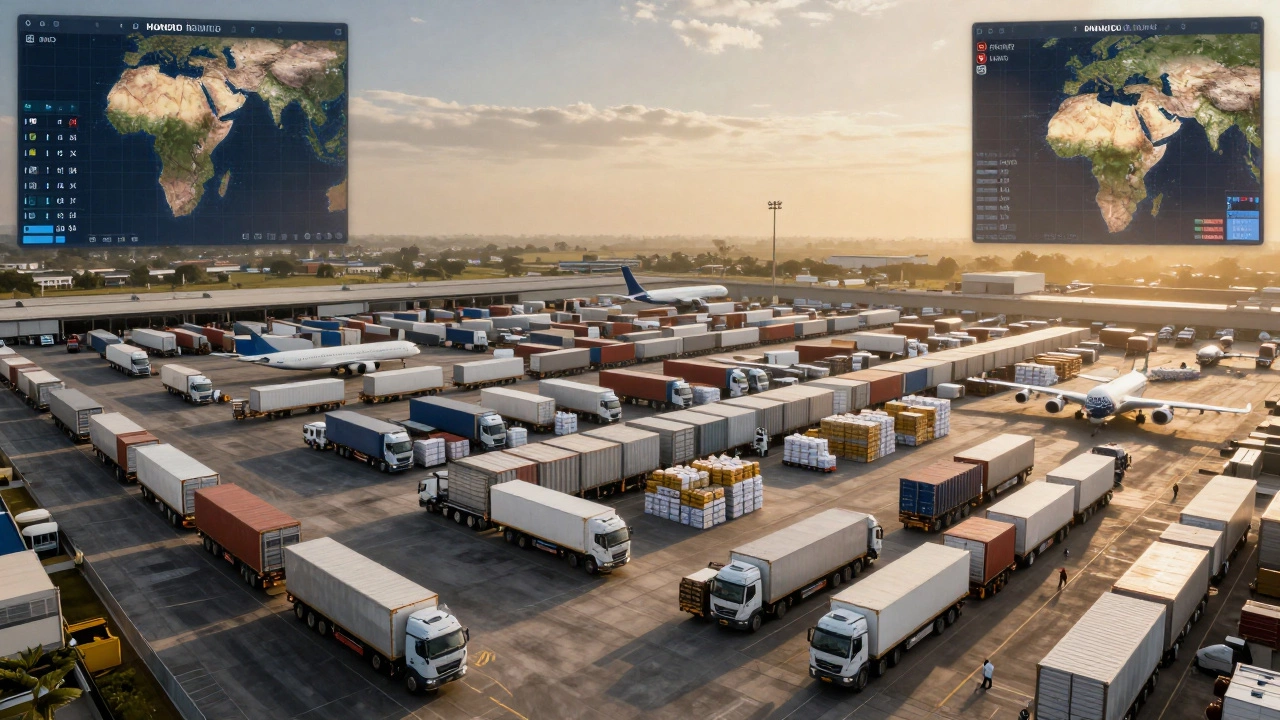
The WFP doesn’t just hand out canned goods. It runs a logistics network that rivals major corporations. Every year, it delivers over 15 billion rations. That’s not just meals-it’s full nutritional packages designed for children, pregnant women, and people recovering from disasters. In 2025, it moved food across 110,000 truck trips, 2,000 ship voyages, and 500 flights. It has warehouses in 80 countries and uses satellite data to predict where famine will strike next.
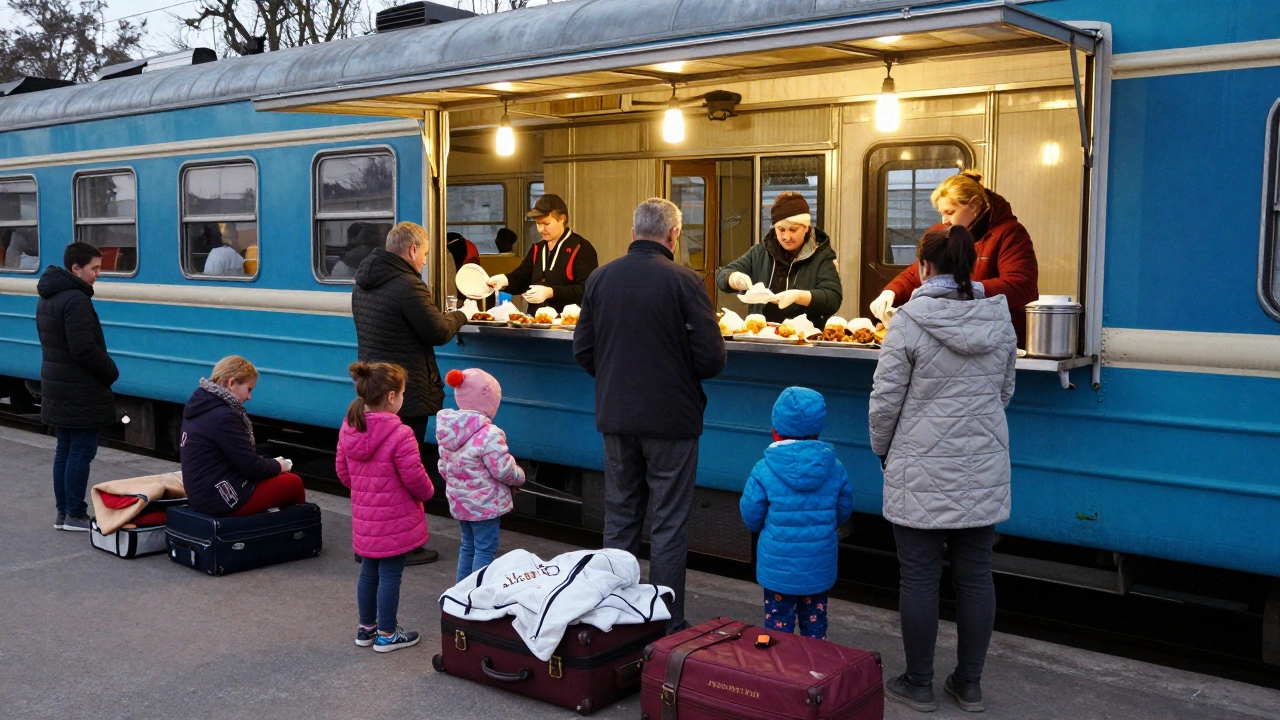
It works in places most charities can’t reach. In Yemen, where war has shattered supply chains, WFP delivers food by air drops. In South Sudan, where roads vanish during rainy season, it uses drones to map safe delivery routes. In Ukraine, it set up mobile kitchens inside train stations so displaced families could eat while fleeing.
Who Else Is in the Game?
Other charities feed millions too, but none come close to the WFP’s scale. The Feeding America network feeds about 35 million people annually in the U.S. alone-impressive, but less than half of what the WFP does globally. Meals on Wheels serves around 2 million seniors each year. The Salvation Army provides over 100 million meals annually worldwide, mostly through local centers and mobile units.
Even UNICEF, which focuses on children’s nutrition, only reaches about 20 million kids with food aid each year. The WFP’s advantage isn’t just size-it’s integration. It works with governments, militaries, airlines, and even tech companies to keep food moving. It doesn’t just respond to hunger-it plans for it.

Why Scale Matters
Feeding one person once is kindness. Feeding 88 million people every single day is a system. The WFP doesn’t rely on volunteers showing up with casseroles. It uses data. It tracks food prices, crop yields, weather patterns, and conflict zones in real time. When a drought hits Ethiopia, it already has trucks lined up in neighboring countries. When a tsunami hits Tonga, it has pre-positioned food on islands before the waves even recede.
This isn’t charity as a reaction. It’s charity as prevention. In 2024, the WFP prevented malnutrition in 14 million children by giving fortified peanut paste to families before they lost their crops. That’s not just feeding-it’s saving lives before hunger even sets in.
Where the Money Goes
Most of the WFP’s funding comes from governments-over 90% in 2025. The U.S. is the largest donor, followed by the European Union, Germany, and Japan. Less than 10% comes from private donors. That’s because feeding millions requires predictable, long-term funding. You can’t fund a 100-truck convoy with a GoFundMe campaign.
Every dollar spent by the WFP delivers 14 meals on average. Compare that to a local food bank, where logistics, storage, and transportation costs can eat up 30-40% of every donation. The WFP’s scale makes efficiency possible. It buys food in bulk from farmers in developing countries, which helps local economies while feeding the hungry.
What You Can Do
If you want to help feed the most people, donating to the WFP is the most effective choice. A $100 donation can feed a family for a month in a crisis zone. You can also advocate-contact your government representatives and ask them to maintain or increase food aid funding. The WFP’s budget is always under pressure. In 2025, it had to cut rations in Syria and Somalia because donations fell short.
Volunteering locally still matters. But if your goal is to feed the most people possible, global systems like the WFP are where the impact multiplies. A single donation to them reaches more people than a thousand local food drives combined.
The Bigger Picture
Feeding the world isn’t about charity. It’s about stability. When people aren’t hungry, they don’t flee their homes. They don’t join armed groups. They send their kids to school. The WFP doesn’t just hand out rice-it helps rebuild economies. In Lebanon, after the 2020 port explosion, it paid farmers to grow food and sold it at low prices to families. That kept farmers in business and families fed.
That’s the real power of the biggest feeding charity: it doesn’t just respond to hunger. It fights the systems that cause it.
Is the World Food Programme the same as the Red Cross?
No. The Red Cross focuses on emergency medical aid, blood donation, and disaster response. The World Food Programme is specifically for food and nutrition. They often work together-Red Cross helps with shelter and first aid, while WFP handles meals-but they’re separate organizations with different missions.
Can I donate food to the World Food Programme?
Not directly. The WFP doesn’t accept physical food donations. Shipping food internationally is expensive and often impractical. Instead, it buys food locally when possible, which supports farmers and avoids waste. Cash donations let them purchase exactly what’s needed, where it’s needed.
How does the WFP decide where to send food?
It uses a mix of data and on-the-ground assessments. Satellite images track crop failures. Weather reports predict droughts. Conflict maps show where people are cut off from markets. Teams on the ground verify hunger levels using nutrition surveys. The most urgent needs get priority-usually places where people are already starving.
Do they feed people in wealthy countries too?
Rarely. The WFP focuses on low- and middle-income countries where governments can’t afford to feed their people. In wealthy nations like the U.S., Canada, or Australia, local charities handle food insecurity. The WFP only steps in if a major disaster overwhelms local systems-like after Hurricane Maria in Puerto Rico in 2017.
What percentage of donations go to actual food?
In 2025, 89% of every dollar donated to the WFP went directly to food and nutrition programs. The rest covered logistics, staff, and technology. That’s one of the highest efficiency rates among global charities. Compare that to some local food banks, where overhead can reach 25-30%.
If you care about feeding the most people possible, the answer isn’t about how many meals your church serves. It’s about supporting the system that feeds 88 million people every day. That’s the World Food Programme.