
Fun Friday Impact Calculator
Enter your current metrics to see how a dedicated 'Fun Friday' could improve outcomes.
Projected Benefits
Projected Engagement Score (out of 100)
Why This Works
Enter data above to receive specific recommendations based on psychological principles of cognitive fatigue and social bonding.
You know that feeling when a kid drags their feet out of bed on Monday but practically flies out the door on Friday? It’s not just about the weekend coming up. For many children, especially those in after-school clubs, Friday represents something specific: a break from the rigid structure of academic pressure and a chance to engage in unstructured play and creative exploration. If you run a club or are a parent wondering why your child lights up specifically on this day, there is solid psychological and educational reasoning behind it.
The concept of "Fun Friday" isn’t just a gimmick to keep kids quiet while parents finish work. It is a deliberate pedagogical strategy used by educators and youth workers worldwide. When we strip away the grades, the tests, and the strict curriculum for one hour, something magical happens in a child’s brain. They reset. This article breaks down exactly why dedicating Friday sessions to fun is crucial for mental health, social skills, and long-term engagement with extracurriculars.
Mental Health Reset Before the Weekend
School weeks are long. By Thursday afternoon, many students are experiencing what psychologists call "cognitive fatigue." Their brains have been processing abstract concepts, following instructions, and managing social hierarchies for five straight days. Adding another hour of structured learning on Friday can feel like pouring water into an already overflowing cup.
A dedicated fun session acts as a pressure valve. It allows children to decompress before heading home for the weekend. Instead of carrying residual stress from math problems or spelling tests into Saturday morning, they leave the club feeling lighter. This transition is vital. It helps separate "school mode" from "home mode," reducing evening meltdowns and improving sleep quality. Parents often report that kids who participate in relaxed Friday activities are calmer at dinner and more rested on Sunday nights.
Building Social Skills Without the Spotlight
In traditional classroom settings, social interaction is often secondary to academic output. Kids might sit next to each other, but they aren’t necessarily collaborating. Fun Fridays change the dynamic. Whether it’s a board game tournament, a craft project, or a free-play sports session, these activities require different types of communication.
- Negotiation: Deciding who goes first in a game teaches fairness.
- Empathy: Cheering for a teammate who missed a goal builds support networks.
- Conflict Resolution: Disagreements over rules happen quickly and must be resolved without teacher intervention.
These soft skills are hard to teach through lectures. You learn them by doing. When the stakes are low-no grades attached-kids are more willing to take social risks. A shy child might speak up during a chaotic relay race in a way they never would during a silent reading period. This builds confidence that transfers back into the classroom.
Boosting Engagement and Attendance
Let’s be honest: attendance drops if kids don’t want to come. If every after-school session feels like an extension of homework, enrollment numbers suffer. Fun Fridays create anticipation. The promise of a relaxed, enjoyable end-of-week activity gives children a reason to show up even if they had a tough week academically.
This consistency matters. Regular attendance ensures continuity in friendships and skill development. If a child skips three Fridays because they’re bored, they miss out on bonding moments with peers. Over time, this isolation can lead to disengagement from the club entirely. By mixing high-energy games or creative projects into the schedule, you keep the community vibrant. It turns the club from a chore into a destination.
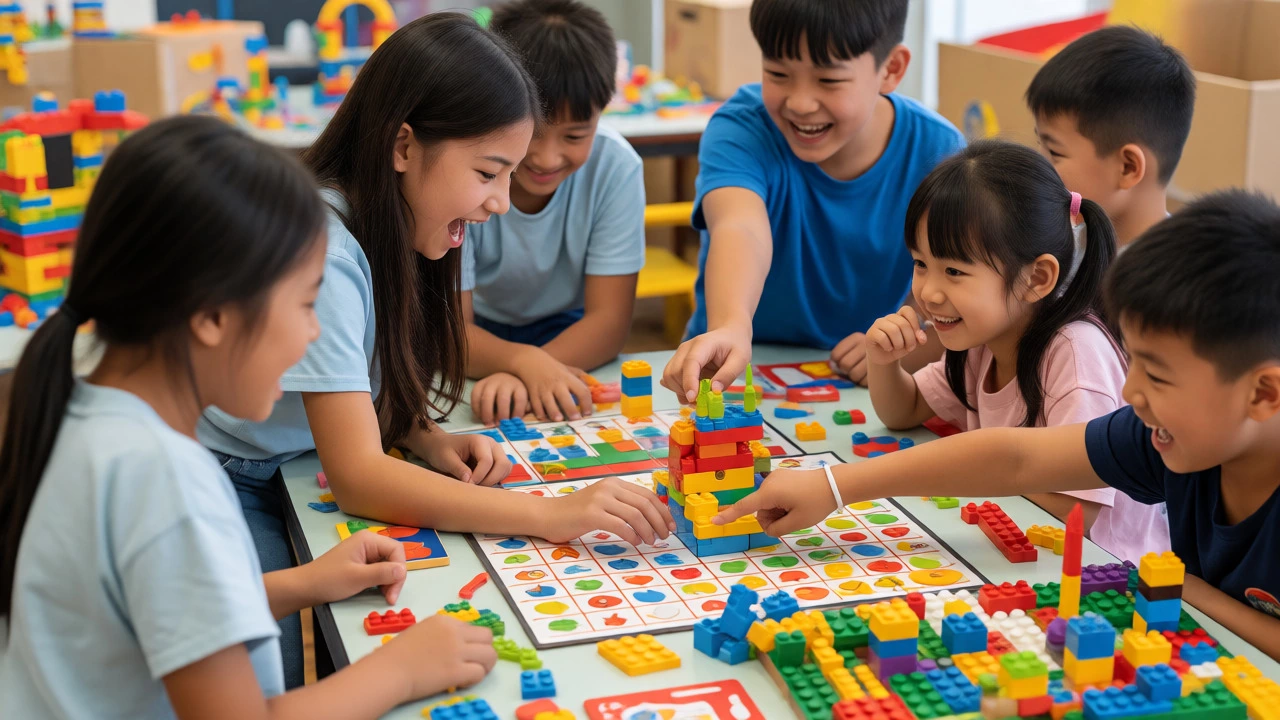
Creativity Thrives in Low-Stakes Environments
Fear of failure kills creativity. In a graded environment, kids hesitate to draw outside the lines or suggest a wild idea because they worry about being wrong. Fun Fridays remove that fear. There is no right answer in a free-form art session or a building challenge with cardboard boxes.
This freedom encourages divergent thinking-the ability to generate multiple solutions to a problem. Studies in developmental psychology suggest that unstructured play is directly linked to higher levels of innovation later in life. When a child spends Friday afternoon experimenting with ideas rather than memorizing facts, they are practicing the cognitive flexibility needed for future careers. It’s not just "playing around"; it’s foundational training for problem-solving.
How to Structure a Successful Fun Friday
You don’t need expensive equipment or complex planning to make this work. The key is intentionality. Here is a simple framework for organizing a session that balances fun with developmental benefits.
| Feature | Traditional Session | Fun Friday Session |
|---|---|---|
| Primary Goal | Skill acquisition / Academic reinforcement | Social bonding / Mental decompression |
| Structure Level | High (Teacher-led) | Low (Student-led or Facilitated) |
| Outcome Measurement | Correct answers / Completed tasks | Engagement levels / Peer interaction |
| Stress Factor | Moderate to High | Low |
| Best For | Mon-Thu Focus | Friday Wind-down |
To implement this, start by rotating themes. One week might be "Game Day," focusing on cooperative board games or card games. Another could be "Maker Space," where kids build things with recycled materials. Keep the rules simple. Avoid eliminating players too early in games, as this can lead to boredom and exclusion. Instead, use formats where everyone stays active until the end.

Pitfalls to Avoid
While the benefits are clear, execution matters. A common mistake is letting "fun" turn into chaos. Without some basic boundaries, a free-for-all can become overwhelming for sensitive children or result in conflicts that overshadow the positive experience. Always set clear expectations at the start: respect others, clean up together, and include everyone.
Another pitfall is inconsistency. If you only do Fun Fridays once a month, the impact is diluted. Making it a weekly ritual creates a reliable rhythm. Children thrive on predictability. Knowing that Friday will always offer a safe space to relax reduces anxiety throughout the rest of the week.
Real-World Impact: Case Examples
Consider a local youth center in Sydney that struggled with mid-year burnout. Attendance dipped in Term 3 as exam pressures mounted. They introduced "Chill Fridays," featuring casual sports and snack time. Within six weeks, attendance stabilized, and staff reported fewer behavioral issues. Teachers noted that students returned to Monday classes with improved moods and better focus.
Similarly, a coding club noticed that beginners were quitting because they felt intimidated by syntax errors. They shifted their final session of the week to "Code Jam" challenges where teams solved puzzles using logic rather than perfect code. Drop-out rates fell by 15% because the focus shifted from perfection to participation.
Final Thoughts on Community Building
After-school clubs are more than just childcare. They are communities. And communities are built on shared joy, not just shared tasks. Fun Fridays provide the glue. They create inside jokes, memorable moments, and a sense of belonging that keeps kids coming back year after year. If you’re looking to enhance your program, don’t underestimate the power of simply having fun together.
Does Fun Friday replace academic tutoring?
No, it complements it. Fun Fridays should be part of a balanced schedule. Use Monday through Thursday for structured learning or skill practice, and reserve Friday for social and emotional decompression. This balance prevents burnout and keeps motivation high.
What are low-cost activities for Fun Fridays?
Board games, charades, scavenger hunts, and free-play with available materials (like blocks or art supplies) are excellent options. These require minimal investment but maximize social interaction. You can also invite parents to donate old toys or books for swap meets.
How do I handle kids who prefer studying over playing?
Offer choices. Create zones within the club space: one for quiet reading or independent projects, and another for group games. This respects individual preferences while maintaining the communal atmosphere. Most kids eventually join the group activities once they see others enjoying themselves.
Can Fun Fridays help with bullying?
Yes, indirectly. Unstructured play allows children to interact outside of their usual social cliques. Mixed-group games force collaboration between different peer groups, fostering understanding and breaking down stereotypes. It humanizes classmates in ways that rigid seating charts cannot.
How long should a Fun Friday session last?
Typically 60 to 90 minutes is ideal. Long enough to settle into an activity, but short enough to maintain energy levels. Ending on a high note leaves participants wanting more, which boosts attendance for the following week.