Global Risk Interconnectivity Simulator
How it works: Environmental threats don't act in isolation. Select a primary risk to see how it acts as a "force multiplier," accelerating other crises and pushing the planet toward critical tipping points.
Select Primary Driver
Click a risk on the left to simulate the compounding effect.
Interactive Analysis Engine ReadyQuick Summary: The Core Risks
- Climate Change: Rising temperatures leading to extreme weather and sea-level rise.
- Biodiversity Loss: The rapid extinction of species causing ecosystem collapse.
- Pollution: Chemical and plastic saturation of the food chain.
- Resource Depletion: Over-extraction of groundwater and fertile soil.
The Invisible Collapse of Biodiversity
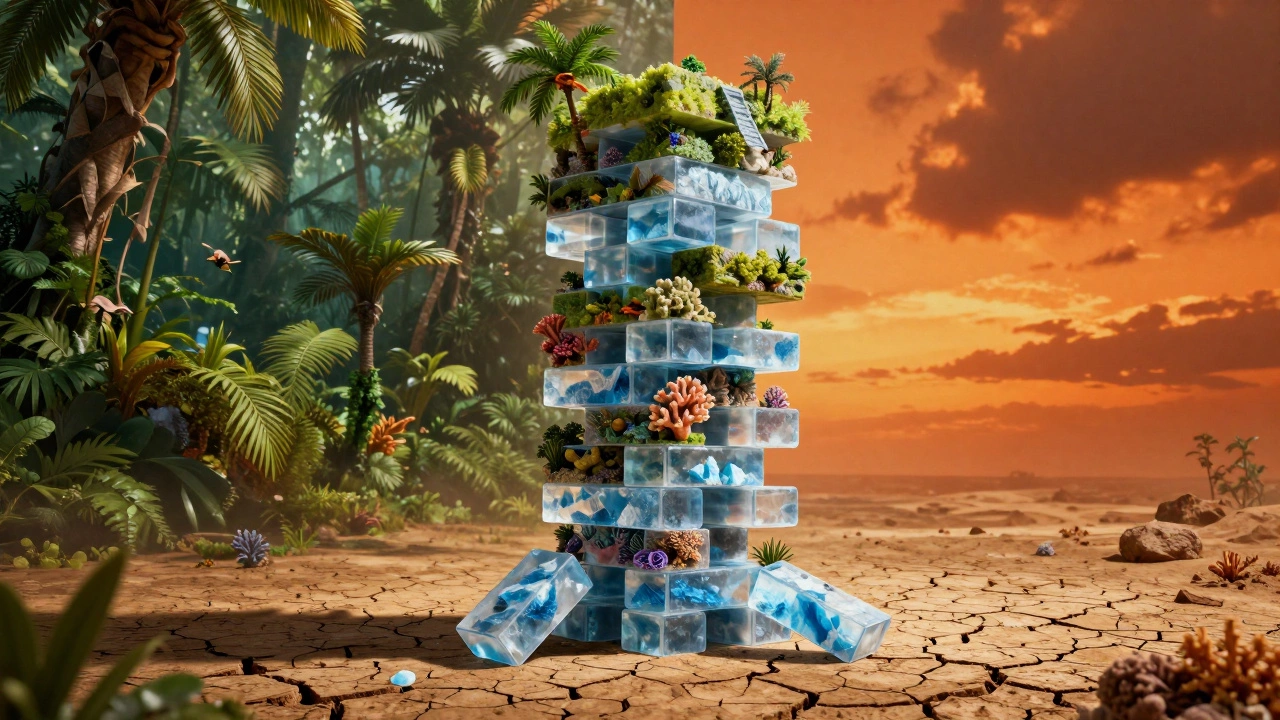
While most people focus on heatwaves, the silent disappearance of life is just as dangerous. Biodiversity refers to the variety of all living things on Earth. When we lose a single species of bee or a specific type of fungus in the soil, it might not seem like a big deal. But ecosystems are like a game of Jenga; you can pull out a few blocks and the tower stays up, but eventually, you hit the one block that brings the whole thing crashing down. We are currently in the Sixth Mass Extinction, and unlike the one that killed the dinosaurs, this one is caused by us. Agricultural expansion, specifically the conversion of rainforests into cattle pastures or soy plantations, destroys the habitats that regulate our oxygen and carbon levels. If the Amazon Rainforest reaches a point where it can no longer produce its own rain, it will flip from a carbon sink to a carbon source, releasing billions of tons of CO2 back into the air.Climate Change and the Tipping Point
Is it just about a few degrees of warming? Not exactly. The real danger lies in "tipping points." These are thresholds where a small change pushes a system into a completely new state. For example, the Greenland Ice Sheet is melting. As the white ice disappears, it reveals darker land or water underneath. This dark surface absorbs more heat, which melts more ice, creating a feedback loop that we cannot stop even if we stop all emissions tomorrow. Consider the permafrost in Siberia. This frozen ground traps massive amounts of Methane, a greenhouse gas that is roughly 80 times more potent than carbon dioxide over a 20-year period. If the permafrost thaws completely, we face a "methane bomb" that could accelerate warming far beyond our ability to adapt. This isn't a vague possibility; satellite data from the last few years shows increasing methane plumes emerging from the Arctic tundra.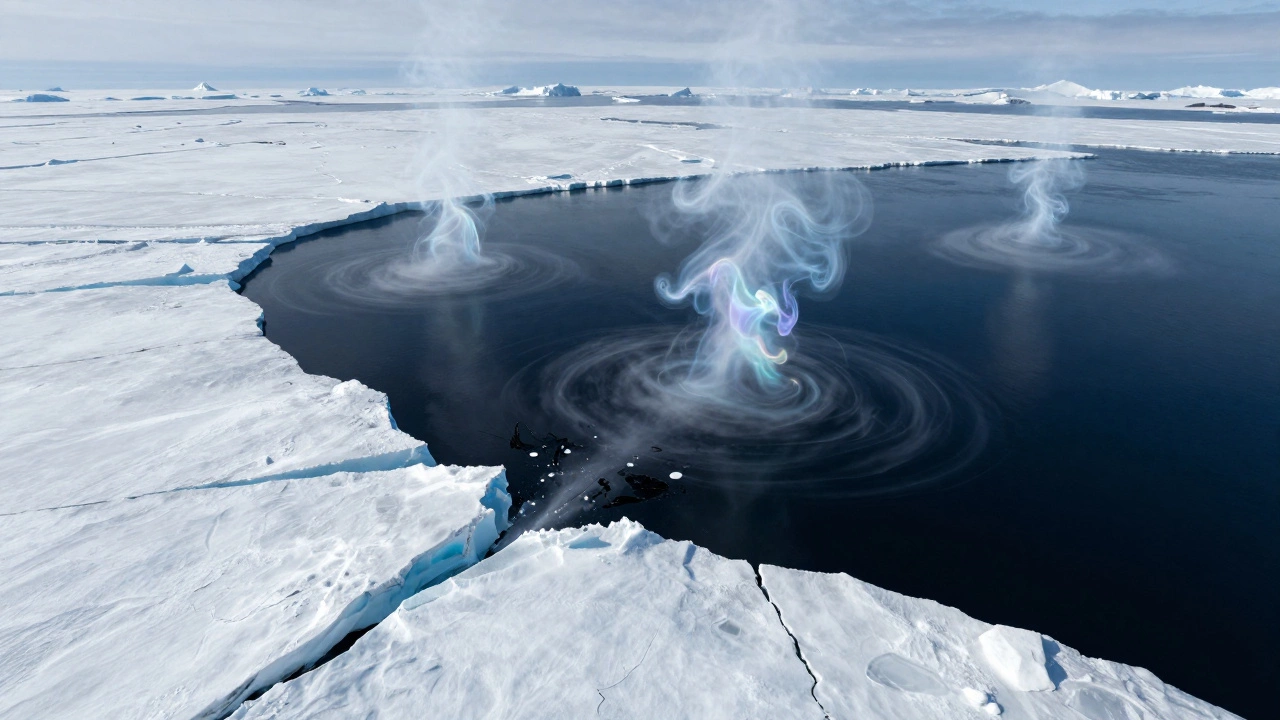
The Plastic and Chemical Saturation
We can't ignore the physical waste we've dumped into the world. Microplastics are now found in the deepest parts of the Mariana Trench and in human placentas. This isn't just an eyesore on a beach; it's a chemical disruption of life. Many of these plastics carry endocrine disruptors-chemicals that mimic hormones and mess with the reproduction of fish, amphibians, and perhaps even humans. Then there are PFAS, often called "forever chemicals." These are used in everything from non-stick pans to firefighting foam. Because they don't break down in the environment, they accumulate in the water table. In some parts of the US and Europe, the concentration of these chemicals in the groundwater is so high that it poses a direct threat to the long-term health of entire populations.| Threat | Primary Driver | Immediate Impact | Long-term Risk |
|---|---|---|---|
| Climate Change | Fossil Fuel Combustion | Extreme Weather | Uninhabitable Heat Zones |
| Biodiversity Loss | Habitat Destruction | Pollination Failure | Food Chain Collapse |
| Pollution | Industrial Waste/Plastics | Toxicity in Wildlife | Human Health Crisis |
| Deforestation | Commercial Agriculture | Soil Erosion | Loss of Carbon Sinks |
The Human Element: Overconsumption and Governance
If we look at the root cause, the threat isn't "carbon" or "plastic"-it's a system of climate change and ecological degradation driven by infinite growth on a finite planet. Our current economic model requires us to consume more every year to be considered "successful." But you cannot have infinite growth on a planet with a limited amount of phosphorus, fresh water, and topsoil. Take the example of the Ogallala Aquifer in the United States. It's one of the largest groundwater sources in the world, and we've been pumping it out far faster than it can recharge to grow corn and cattle. When that water runs out, the agricultural heartland of a superpower collapses. This is a concrete example of how resource depletion creates a vulnerability that can lead to geopolitical instability.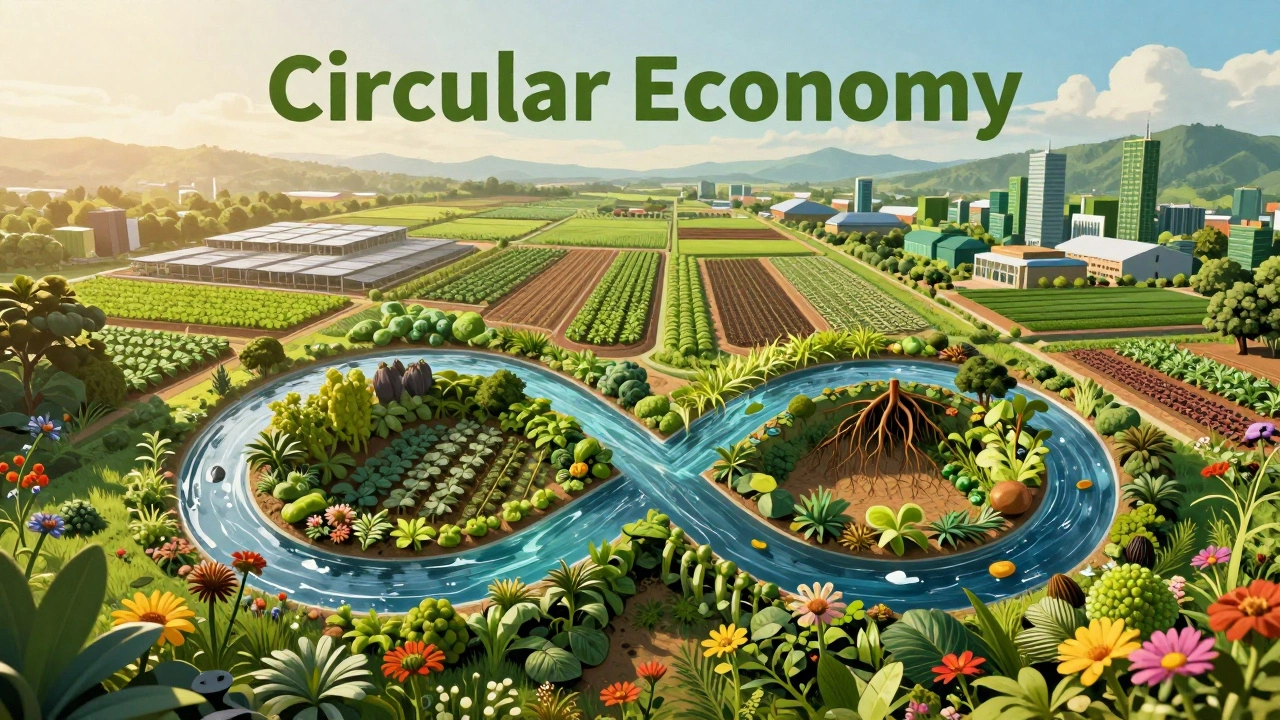
Can We Actually Fix This?
It's easy to feel paralyzed by the scale of these problems. However, the solutions are already here; we just lack the political will to deploy them at scale. Transitioning to a Circular Economy-where waste is designed out of the system and materials are reused indefinitely-would solve a huge portion of the pollution and resource problem. Moreover, focusing on Regenerative Agriculture could actually pull carbon out of the air and put it back into the soil. By planting cover crops and avoiding heavy tilling, farmers can turn their fields into carbon sponges. This doesn't just fight warming; it makes the food supply more resilient to the droughts that are already here.Where Do We Go From Here?
Solving the greatest threat to Earth requires a shift in how we define progress. We need to stop measuring success by GDP and start measuring it by the health of our soil, the purity of our water, and the stability of our climate. This means supporting environmental groups that fight for systemic change, not just those that ask you to use a paper straw. If you want to make a real dent, look at where your money goes. Investing in green bonds or supporting local farmers who use regenerative methods has a much higher impact than simple recycling. We are the first generation to truly understand the damage we're doing, and likely the last one with a window of time to actually stop the worst-case scenarios.Is climate change the absolute biggest threat?
While it's the most famous, it's better to think of it as a "multiplier." Biodiversity loss and pollution are equally dangerous because they destroy the natural systems that help us survive climate change. For instance, mangroves protect coasts from storms; if we destroy them for shrimp farms (biodiversity loss), climate change (rising seas) becomes much more deadly.
Can technology like carbon capture save us?
Carbon capture is a helpful tool, but it's not a magic wand. Most current technology can't scale fast enough to offset our total emissions. The priority must be stopping the emissions at the source. Relying solely on future tech is a gamble with the entire planet as the stake.
What is a "tipping point" exactly?
A tipping point is a critical threshold where a system shifts permanently. Imagine a ball sitting on the edge of a hill; a tiny push can send it rolling all the way down, and you can't push it back up. The collapse of the West Antarctic Ice Sheet is a feared tipping point because once it starts, the process becomes self-sustaining regardless of human action.
Does individual action actually matter?
Individual actions like eating less meat or avoiding plastic are good for awareness and reducing personal footprint, but the biggest impact comes from collective action. Voting for climate-conscious leaders and pressuring corporations to change their supply chains creates systemic shifts that one person cannot achieve alone.
What is the most urgent thing we need to do right now?
The most urgent step is protecting the remaining "keystone" ecosystems-like peatlands, old-growth forests, and coral reefs. These are the planet's natural defense mechanisms. If we lose them, our ability to mitigate any of the other threats vanishes.
Next Steps for Action
- Audit your footprint: Use a reputable calculator to see where your biggest impacts are (travel, diet, or energy).
- Support systemic change: Donate to or volunteer with environmental groups that focus on policy and law, not just cleaning up trash.
- Shift your spending: Move your bank account to a credit union or bank that doesn't invest in fossil fuel expansion.
- Learn and share: Talk to friends about "tipping points" and "biodiversity" to move the conversation beyond just "global warming."