After-School Activity Decoder
Confused by terms like "OSHC," "Enrichment," or "Extracurricular"? Answer three simple questions to find the right label for your child's activity.
You drop your kid off at school in the morning. The bell rings at 3:15 PM. But instead of coming straight home, they head to a room where they build robots, play soccer, or learn French. What exactly do you call that? Is it a club? A class? A program? If you have ever stood in the pickup line wondering what to write on the permission slip, you are not alone. The terminology around after school activity options varies wildly depending on who you ask, where you live, and what the specific goal of the session is.
Here is the quick reality check: there is no single universal name. In Sydney, you might hear "care" if it is just supervision. In the US, "extracurriculars" dominates the conversation for high achievers. In Australia, we often split things into "OOSH" (Out of School Hours Care) and structured enrichment. Understanding these labels matters because it tells you what kind of support you are buying. Are you paying for babysitting with a side of snacks? Or are you investing in skill acquisition? Let’s break down the actual names used in schools and communities so you can find exactly what fits your family’s needs.
The Big Umbrella: Extracurricular vs. Co-Curricular
First, let’s clear up the two terms that confuse parents the most. People use them interchangeably, but educators draw a hard line between them.
Extracurricular activities are optional pursuits outside the standard curriculum. Think drama club, chess team, or student council. They are not graded, they don’t appear on your child’s academic transcript in the same way math scores do, and participation is voluntary. The primary value here is social capital, leadership skills, and exploring interests without the pressure of grades.
Co-curricular activities, on the other hand, directly support the classroom learning. This includes debate teams linked to English class, science olympiads tied to physics lessons, or band practice that reinforces music theory taught during the day. These activities often complement academic goals. While still usually outside regular hours, they feel more like "homework extension" than "fun time."
Why does this distinction matter for you? If your child is struggling with confidence, look for extracurriculars where failure isn’t penalized. If they need help grasping complex concepts, co-curriculars provide context. When you search for options, knowing which term the school uses helps you filter the noise.
Care vs. Enrichment: The Australian Context
If you are in Australia, the term "after school care" carries a very specific legal and operational meaning. It is not just a generic label; it refers to regulated services under the National Quality Framework.
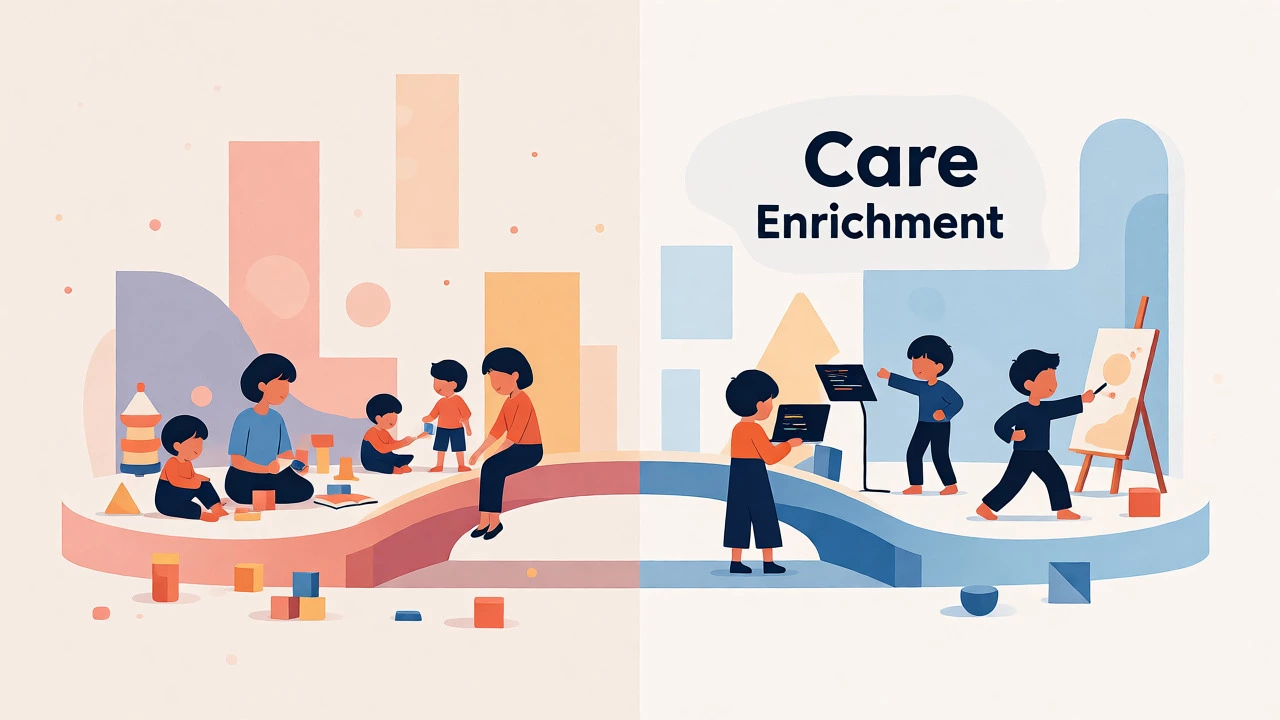
Out of School Hours Care (OSHC) is the formal name for supervised care before school, after school, and during holidays. Its primary function is safety and supervision while parents work. Activities here are often unstructured play, homework clubs, or simple crafts. The staff-to-child ratios are strict, and the focus is on wellbeing rather than skill mastery.
In contrast, Enrichment programs are specialized sessions focused on teaching a specific skill. This could be coding, martial arts, ballet, or Mandarin language immersion. These are often run by third-party providers who rent school halls. Unlike OSHC, you pay for the instruction, not just the supervision. The outcome is measurable: your child learns a song, masters a kata, or writes code.
| Feature | OSHC (Care) | Enrichment Program | Sports Club |
|---|---|---|---|
| Primary Goal | Supervision & Safety | Skill Acquisition | Physical Fitness & Teamwork |
| Structure | Flexible / Unstructured | Curriculum-Based | Training Drills & Games |
| Staff Qualifications | Certified Educators | Subject Matter Experts | Coaches / Volunteers |
| Cost Driver | Hours Supervised | Instruction Quality | Facility & Equipment |
Clubs, Classes, and Teams: Specific Labels You Will See
Once you move past the broad categories, you will encounter specific nouns. Each implies a different commitment level and social dynamic.
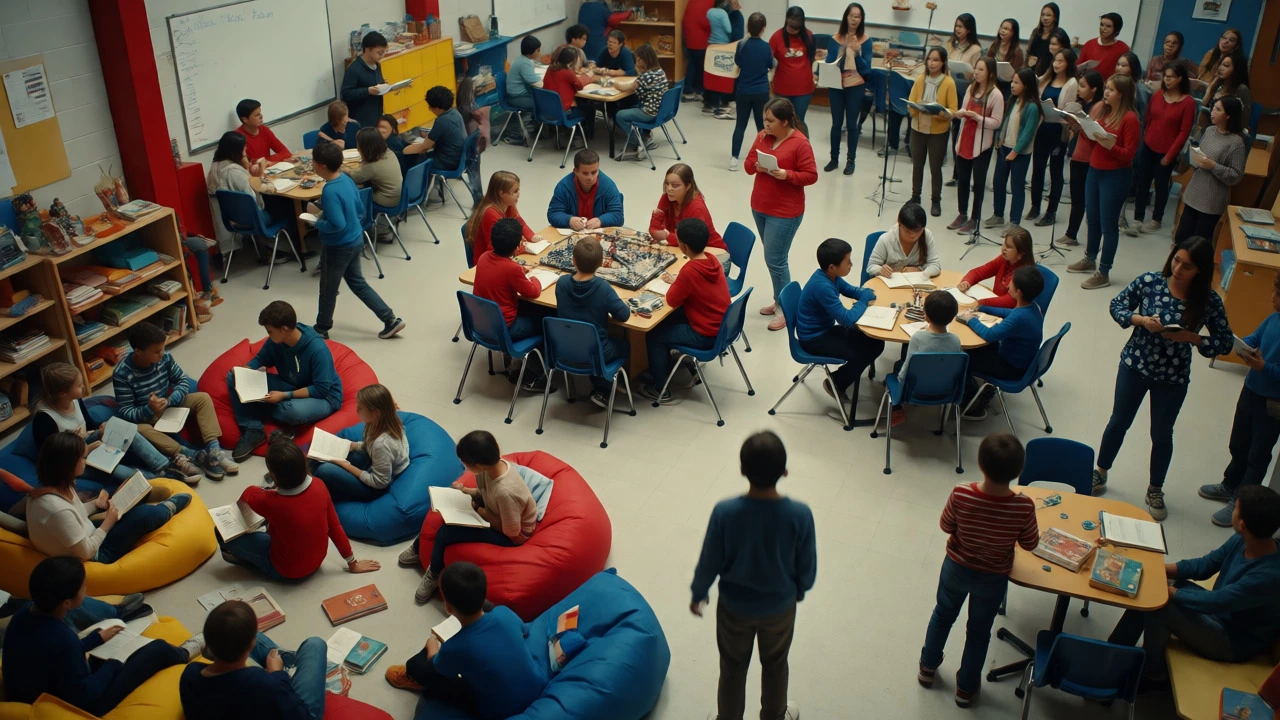
After-school clubs are typically low-commitment groups formed around shared interests. Examples include the gardening club, book club, or Lego league. Attendance is often casual. You can join one week and skip the next without penalty. These are great for shy kids testing the waters or for building a sense of belonging without performance pressure.
Classes or Courses imply a syllabus. If you sign up for "Robotics Class," you expect a progression of lessons over a term. There is usually a start date, an end date, and a final project. Missing three weeks means you miss the foundation needed for week four. This structure suits children who thrive on routine and clear expectations.
Teams or Squads require tryouts or consistent attendance because others rely on you. Soccer, netball, and choir fall here. The social contract is stronger. If you quit mid-season, you impact the group. These activities teach resilience and accountability, but they demand significant parental logistics-transport, gear, and weekend matches.
Who Runs Them? School-Run vs. External Providers
The name of the activity often hints at who is running it. This affects cost, flexibility, and quality control.
School-run activities are organized by teachers or paid staff within the school gates. They are convenient because your child doesn’t need to leave the premises. However, availability depends entirely on teacher capacity. If the math teacher loves astronomy, you get an astronomy club. If they retire, the club might vanish. Costs are usually subsidized, making them cheaper than private options.
External providers operate independently. Companies like Code Club, local martial arts academies, or music tutors rent space in schools. Their branding is distinct-you’ll see logos on flyers, not just school letterhead. Because they compete for customers, they often offer higher-quality specialized equipment or certified instructors. The trade-off? You might need to pick up your child separately from the main school gate, adding a layer to your afternoon routine.
How to Choose the Right Label for Your Family
Don’t let the jargon dictate your choice. Instead, map the activity type to your current life stage and your child’s personality.
- If you need reliable supervision: Look for "OSHC" or "Before and After School Care." Check the ratio of staff to children. Ask about homework support policies.
- If you want to boost academics: Search for "co-curricular" or "academic enrichment." Debate, math competitions, and science fairs fit here. Ensure the provider has subject expertise.
- If you want social ease: Choose "clubs" with low barriers to entry. Art, cooking, or general interest clubs allow kids to make friends without the pressure of being "good" at something immediately.
- If you want physical health: Join "sports teams" or "physical activity programs." Verify insurance coverage and coach qualifications. Consistency matters more than intensity at first.
A common mistake is signing up for too many "classes" when the child actually needs downtime. An "after school activity" should add energy to their day, not drain it. Start with one low-stakes club. See how they handle the transition from school mode to activity mode. Then scale up.
Frequently Asked Questions
Is "extracurricular" the same as "after school activity"?
Not exactly. "After school activity" is a broad umbrella term covering anything done after dismissal, including care services. "Extracurricular" specifically refers to optional non-academic pursuits that enhance a student's profile, often used in university applications. All extracurriculars are after-school activities, but not all after-school activities (like basic childcare) are considered extracurriculars in a resume context.
What is OSHC?
OSHC stands for Out of School Hours Care. It is a regulated service in Australia providing supervision for children before school, after school, and during school holidays. It focuses on safety and wellbeing rather than specialized skill training. It is essential for working parents who cannot collect children immediately at dismissal.
Do after-school activities count towards university admission?
Yes, particularly for competitive courses. Universities look for sustained involvement in extracurricular activities as evidence of time management, passion, and leadership. Short-term, sporadic attendance counts less than long-term commitment to a club, sport, or volunteer role. Depth of engagement matters more than quantity.
How much do these activities typically cost?
Costs vary significantly. School-run clubs may be free or charge small material fees ($10-$20 per term). External enrichment classes range from $150 to $400 per term depending on the specialty. Sports clubs often involve membership fees plus uniform costs. OSHC rates are government-subsidized based on family income, making them accessible for many households.
Can my child switch activities mid-term?
It depends on the provider. Clubs usually allow flexible joining. Classes often have waitlists and fixed cohorts, making mid-term switches difficult. Sports teams rarely accept new players mid-season due to roster constraints. Always check the cancellation policy before signing up to avoid losing money on unused sessions.