Ecosystem Community Identifier
Select the environment or describe the conditions below to discover which ecological community you are observing and how its members interact.
Community Name
Description will appear here.
Key Interactions
Biodiversity & Resilience
Notes on stability...
You might think of a "community" as just people gathering for coffee or organizing a neighborhood clean-up. But in nature, a community is far more complex and critical to survival than a social club. It’s a group of different populations living together in the same area, interacting with each other and their surroundings. If you’ve ever wondered what this looks like outside a textbook, you’re in the right place. We aren’t talking about abstract concepts here; we are looking at real, breathing examples that keep our planet functioning.
Quick Summary: Key Takeaways
- A biological community consists of all the different species (plants, animals, microbes) living in one specific habitat.
- Key examples include coral reefs, temperate forests, and urban parks, each defined by unique interactions like predation and symbiosis.
- The health of a community depends on biodiversity; more species usually mean greater resilience to environmental changes.
- Understanding these natural groups helps us protect them from threats like pollution and climate change.
Defining the Biological Community
Before we look at specific places, let’s clear up the terminology. In ecology, a biological community isn't just a random collection of organisms. It is a distinct set of populations of different species that live in the same geographic area and interact with one another. Think of it as a neighborhood where everyone has a job. Some residents are producers (like plants), some are consumers (like rabbits or hawks), and others are decomposers (like fungi). They don’t just exist side-by-side; they rely on each other. If you remove one key player, the whole structure can wobble or collapse.
This concept differs from a population, which is just one species in one area. A community brings multiple species into the mix. Why does this matter? Because these interactions drive energy flow and nutrient cycling. When a wolf hunts a deer, energy transfers. When a bee pollinates a flower, reproduction happens. These small actions create a web that sustains life. Understanding this helps us see why saving a single patch of forest isn’t just about saving trees-it’s about preserving the intricate social network of nature.
Coral Reefs: The Rainforests of the Sea
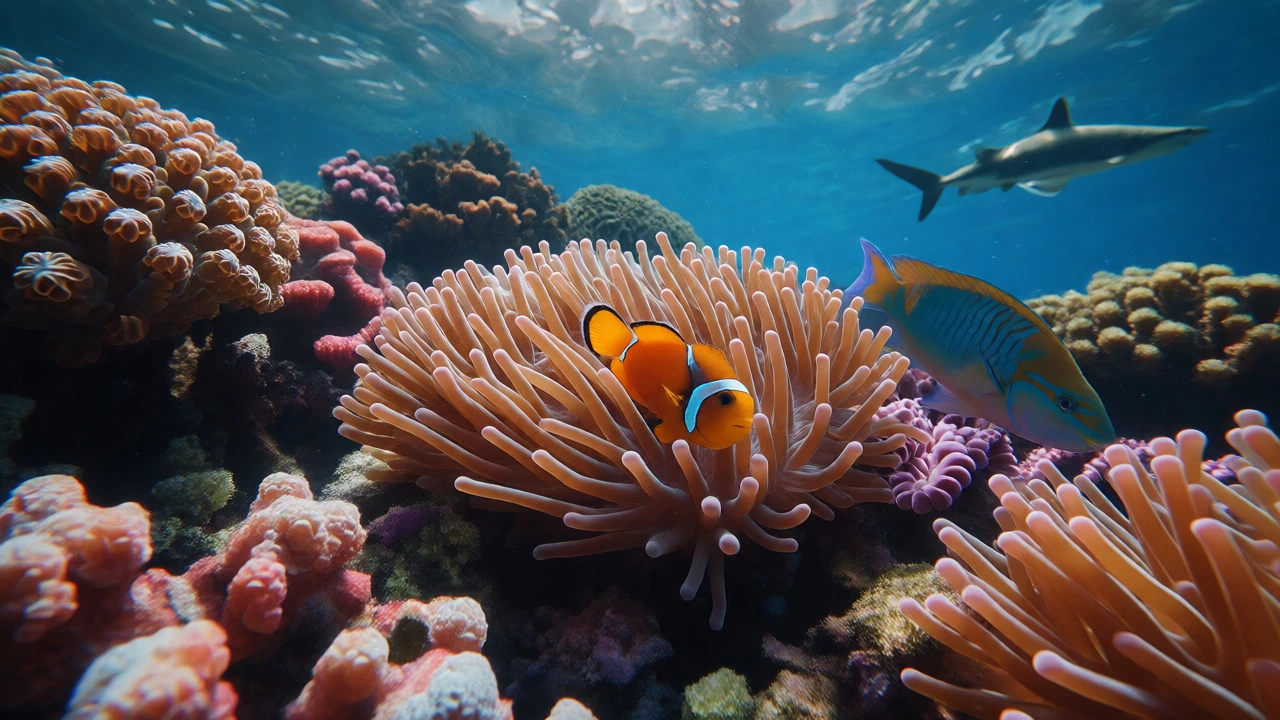
If you want a vivid example of a community in the environment, look no further than a coral reef. Often called the rainforests of the sea, these underwater structures support about 25% of all marine life despite covering less than 1% of the ocean floor. Here, the community is tightly packed and highly specialized. The coral polyps themselves are animals, not plants, but they host microscopic algae called zooxanthellae inside their tissues. This is a classic mutualistic relationship: the algae get shelter and carbon dioxide, while the corals get oxygen and food from photosynthesis.
Surrounding this core partnership is a bustling crowd. Clownfish hide in the stinging tentacles of sea anemones, gaining protection while cleaning the anemone and providing nutrients through their waste. Parrotfish graze on algae, preventing it from smothering the coral. Sharks patrol the edges, keeping fish populations healthy by eating the sick and slow. Every member plays a role. If water temperatures rise and the algae leave (a process called bleaching), the entire community suffers. This fragility highlights how interconnected these groups really are.
Temperate Deciduous Forests: Seasonal Interdependence
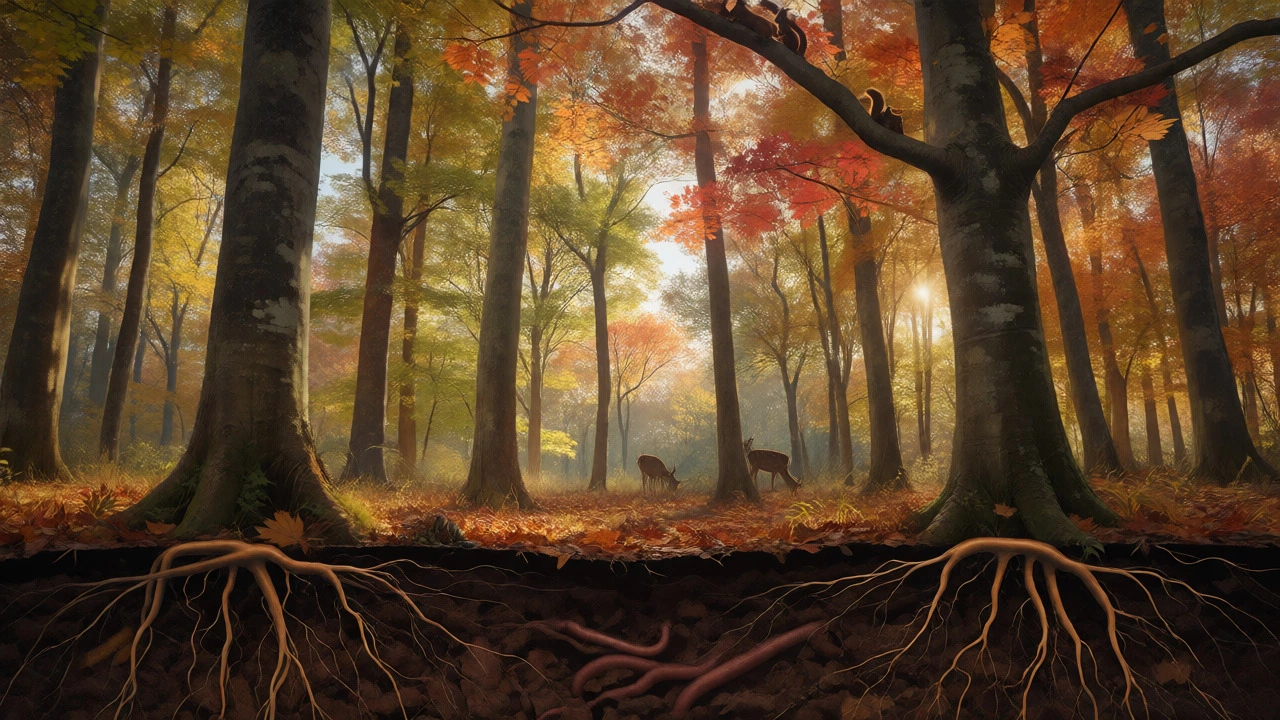
Move away from the ocean, and you’ll find equally fascinating communities in temperate deciduous forests. These forests, common in parts of North America, Europe, and East Asia, showcase how communities adapt to changing seasons. Oak, maple, and beech trees form the canopy, creating layers of life. Birds nest high up, squirrels scurry through the branches, and deer browse the understory. But the real action often happens below ground.
Fungi play a massive role here. Mycorrhizal networks connect tree roots, allowing them to share nutrients and even send chemical warnings about pest attacks. When autumn hits, leaves fall and decompose, feeding earthworms and beetles, which in turn feed birds and mammals. This seasonal cycle forces the community to adapt. Bears fatten up on berries before hibernating, while some insects enter diapause. The community doesn’t stop existing in winter; it shifts its rhythm. Observing this teaches us that stability in nature isn’t static-it’s dynamic and responsive to environmental cues.
Urban Parks: Nature in the Concrete Jungle
Not all communities thrive in remote wilderness. Urban areas host surprising ecological communities too. Consider a local park in Sydney or any major city. You have grasses, ornamental trees, pigeons, sparrows, rats, foxes, and countless insects. This is an urban ecological community. It’s messy and human-influenced, but it functions. Pigeons eat seeds dropped by humans or spilled from bird feeders. Foxes hunt rats, helping control pests that might otherwise overrun garbage bins.
These communities face unique challenges. Pollution, light noise, and fragmentation break up habitats. Yet, they show remarkable resilience. Native bees might struggle, but honeybees and certain wild bees adapt to garden flowers. Studying urban communities helps ecologists understand how wildlife copes with rapid development. It also reminds us that conservation isn’t just for distant rainforests; it starts in our backyards and local parks. By planting native species, you directly support the local community, offering food and shelter to pollinators and birds.
Wetlands: Filters and Nurseries
Wetlands, such as marshes, swamps, and bogs, are another prime example of a functional community. These areas act as natural filters, trapping sediments and breaking down pollutants. Plants like cattails and reeds stabilize the soil, while amphibians like frogs and salamanders breed in the shallow waters. Fish use these areas as nurseries, safe from larger predators found in deeper rivers or oceans.
The community here is heavily dependent on water levels. If a wetland dries out, the frogs disappear, and so do the snakes that eat them. Beavers often engineer these communities, building dams that create ponds, altering the landscape for willows and alders. This shows how one species can shape the entire community structure. Wetlands also store huge amounts of carbon, making them vital in the fight against climate change. Protecting these communities protects water quality and biodiversity simultaneously.
How Species Interact Within Communities
To truly grasp what makes a community work, you need to look at the relationships between its members. These interactions define the community’s structure. Here’s a quick breakdown of the main types:
| Interaction Type | Description | Example |
|---|---|---|
| Mutualism | Both species benefit from the relationship. | Bees and flowers; Corals and algae. |
| Predation | One species eats another, regulating population sizes. | Lions hunting zebras; Spiders catching flies. |
| Commensalism | One benefits, the other is unaffected. | Barnacles on whales; Epiphytes on trees. |
| Parasitism | One benefits at the expense of the other. | Ticks on dogs; Mistletoe on oak trees. |
| Competition | Species vie for the same limited resources. | Plants competing for sunlight; Lions vs. Hyenas. |
Notice how none of these interactions happen in isolation. Predation controls competition. Mutualism enhances survival. These balances keep ecosystems stable. When humans disrupt one link-say, by introducing an invasive species-we risk unraveling the whole tapestry. For instance, if cane toads were introduced to Australia without natural predators, they competed aggressively with native frogs, disrupting the local community balance.

Why Biodiversity Matters for Community Health
You might ask, "Does it matter if there are ten species or fifty?" Yes, it does. High biodiversity generally means a healthier, more resilient community. If a disease wipes out one plant species in a diverse forest, other plants can fill the gap. In a monoculture plantation, that same disease could destroy everything. Diverse communities have functional redundancy-multiple species doing similar jobs. If one fails, another steps in.
Moreover, diverse communities provide more ecosystem services. Clean air, fresh water, crop pollination, and climate regulation all depend on robust biological networks. Losing species isn’t just sad; it’s economically risky. Farmers rely on wild pollinators. Coastal towns rely on mangrove communities for storm protection. Recognizing the value of these natural neighborhoods encourages better policy and personal action.
Threats to Natural Communities
Despite their resilience, natural communities face unprecedented pressure. Habitat loss is the biggest threat. When we cut down forests or drain wetlands for development, we fragment communities. Animals lose access to mates and food. Climate change shifts temperature zones, forcing species to migrate or die. Invasive species outcompete natives. Pollution alters chemistry, affecting everything from soil microbes to top predators.
For example, rising ocean temperatures threaten coral reef communities globally. Acidification weakens shell-forming organisms, impacting the base of the food web. On land, agricultural expansion reduces habitat connectivity. Addressing these issues requires protecting large contiguous areas and reducing pollution sources. It’s not just about saving individual animals; it’s about maintaining the integrity of the community itself.
How You Can Support Local Communities
You don’t need to be a scientist to help. Start by observing your own backyard or local park. Identify the plants and animals. Are there bees? Birds? What do they eat? Plant native species that support local insects and birds. Avoid pesticides that kill beneficial insects. Reduce plastic use to prevent pollution from entering waterways. Support conservation organizations that protect critical habitats.
Engage with your community in the social sense too. Join local clean-up groups or citizen science projects. Monitoring bird counts or frog calls contributes valuable data to scientists. By connecting socially and environmentally, you strengthen both human and biological communities. Remember, we are part of these ecosystems, not separate from them. Our well-being is tied to theirs.
What is the difference between a population and a community?
A population refers to individuals of a single species living in a specific area, such as all the white-tailed deer in a forest. A community includes all the different populations of various species living in that same area, including plants, animals, fungi, and microorganisms. Essentially, a community is made up of multiple interacting populations.
Can an urban area be considered an ecological community?
Yes, absolutely. Urban areas contain ecological communities composed of adapted species like pigeons, rats, cockroaches, and urban plants. While influenced heavily by human activity, these species still interact through predation, competition, and symbiosis, forming a distinct, albeit modified, ecological community.
Why are coral reefs considered good examples of communities?
Coral reefs are excellent examples because they exhibit high biodiversity and complex interdependencies. The relationship between coral polyps and algae, along with the myriad of fish, crustaceans, and mollusks relying on the reef structure, demonstrates clear mutualism, predation, and competition within a confined space.
How does biodiversity affect community stability?
Higher biodiversity typically increases community stability. With more species, there is functional redundancy; if one species declines due to disease or environmental stress, others can perform similar roles, preventing the collapse of ecosystem processes like pollination or decomposition.
Are bacteria part of an ecological community?
Yes, bacteria and other microorganisms are crucial components of ecological communities. They act as decomposers, breaking down organic matter and recycling nutrients. Without them, dead material would accumulate, and essential nutrients would remain locked away, starving the rest of the community.