Historic Fundraiser Comparison Tool
Compare the world's most successful charity events side by side. Select two fundraisers to see detailed metrics and impact analysis.
Live Aid
Comic Relief
Ice Bucket Challenge
Stand Up To Cancer
Hope for Haiti Now
Extra Life
Concert for NYC
PledgeDrive
Detailed Comparison Analysis
Cause:
Type:
Cause:
Type:
Money talks. But when it comes to saving lives, funding research, or rebuilding communities, money screams. You might be wondering what the single largest amount of money raised for a good cause in one go actually looks like. Is it a billionaire’s personal donation? A viral internet campaign? Or a massive global event?
The answer depends on how you define "fundraiser." If we are talking about a specific, organized event with a ticket price or a broadcast appeal, the crown has shifted over the decades. From the rock concerts that defined the 1980s to the digital crowdfunding explosions of today, the scale of generosity keeps expanding. Let’s break down the heavy hitters and see who holds the record.
The Rock Concert King: Live Aid (1985)
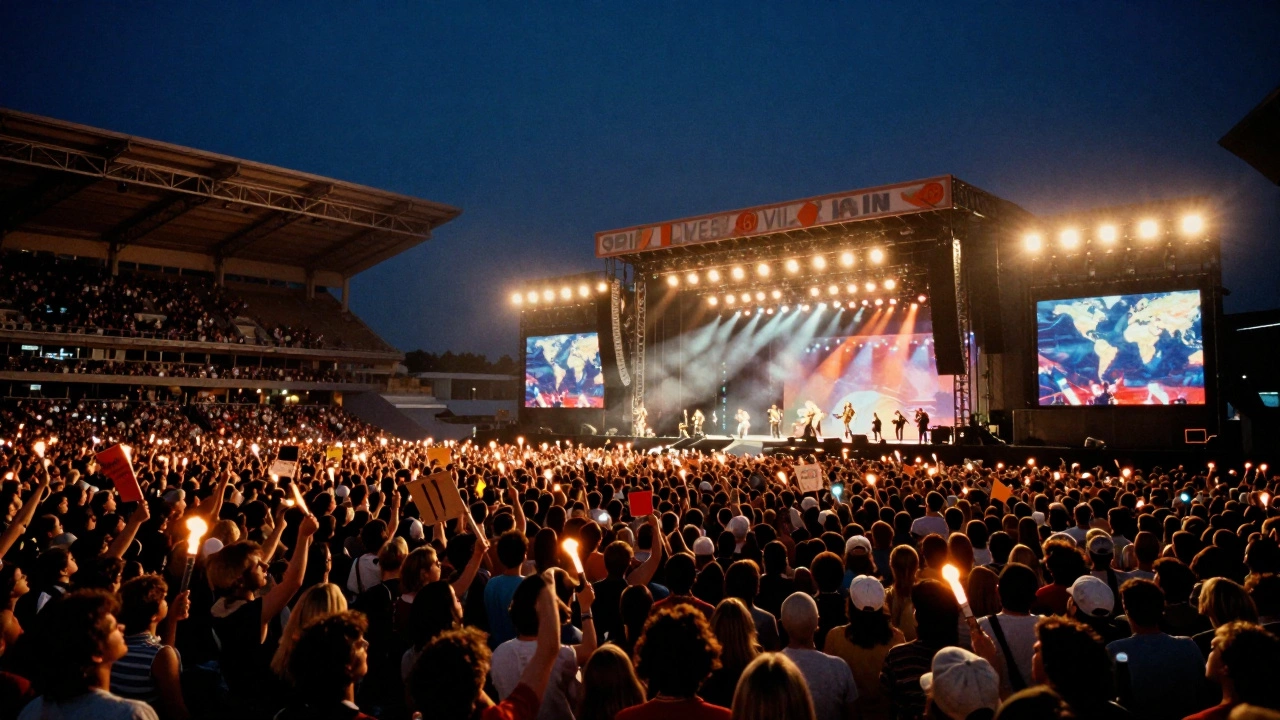
When people ask about the most famous and impactful charity event in history, Live Aid is almost always the first name that comes up. Held on July 13, 1985, this wasn't just a concert; it was a global cultural moment that redefined what charity could achieve through entertainment.
Organized by Bob Geldof and Midge Ure, Live Aid was a dual-venue benefit concert held simultaneously at Wembley Stadium in London and John F. Kennedy Stadium in Philadelphia. The goal was to raise funds for famine relief in Ethiopia. While the exact final figure varies slightly depending on whether you count merchandise sales and subsequent donations triggered by the broadcast, the event itself generated an estimated £150 million (approximately $150 million at the time) in direct contributions. However, its true value lies in the awareness it created, which spurred billions more in international aid over the following years.
| Event | Year | Format | Estimated Funds Raised | Primary Cause |
|---|---|---|---|---|
| Live Aid | 1985 | Global Concert Broadcast | $150M+ (Direct) / Billions (Impact) | Ethiopian Famine Relief |
| Comic Relief | Annual (UK) | TV Special & Red Nose Day | £1 Billion+ (Cumulative since 1985) | Poverty & Social Injustice |
| Hope for Haiti Now | 2010 | Telethon & Concert | $67 Million | Haiti Earthquake Relief |
| The Concert for New York City | 2001 | Benefit Concert | $40 Million+ | 9/11 Victims & Families |
Why does Live Aid still hold the title for many? Because it proved that pop culture could mobilize the entire world. Artists like Queen, U2, David Bowie, and Madonna performed for free. The broadcast reached over 1.9 billion viewers across 150 countries. It set the template for every major celebrity-driven fundraiser that followed.
The Power of Persistence: Comic Relief and Red Nose Day
If Live Aid is the king of single-day spectacles, Comic Relief is the champion of longevity. Launched in the UK shortly after Live Aid, Comic Relief operates on a biennial cycle, culminating in the famous Red Nose Day television specials.
Since its inception in 1985, Comic Relief has raised over £1.5 billion. That is not a one-time sum; that is the cumulative total from decades of campaigns. The model is different here. Instead of relying solely on star power on stage, it relies on public participation. People buy red noses, celebrities do embarrassing skits, and companies match donations. This approach creates a sustainable engine for fundraising rather than a one-off spike.
In the US, a similar model exists with Stand Up To Cancer, which has raised over $1.1 billion since 2008 for cancer research. These organizations show that consistency often beats intensity when it comes to long-term impact.
Digital Giants: When the Internet Takes Over
As we moved into the 2010s and 2020s, the venue for the biggest fundraisers shifted from stadiums to servers. The barrier to entry dropped, and the speed of money flow increased dramatically.
One standout example is PledgeDrive campaigns tied to major disasters. After the 2010 Haiti earthquake, online platforms saw unprecedented traffic. But perhaps the most striking modern example is the rise of livestreaming charities.
Consider Twitch Plays Pokémon style events or the massive Extra Life marathon. In 2023, Extra Life alone raised over $50 million for Children's Miracle Network Hospitals. While this doesn't beat Live Aid's headline number, it demonstrates a shift in demographics. Younger generations prefer interactive, digital-first giving over passive TV watching.
Then there is the phenomenon of viral challenges. The Ice Bucket Challenge in 2014 is a prime example. It wasn't a traditional "event" with tickets or a host, but it functioned as a decentralized fundraiser. It raised approximately $220 million globally for the ALS Association. The key here was social pressure and shareability. Every person who posted a video became a mini-fundraiser themselves.

Corporate and High-Net-Worth Contributions
We must also distinguish between public fundraising events and private philanthropy. If you include direct donations from individuals without a public "event" structure, the numbers get much higher. For instance, during the COVID-19 pandemic, various tech billionaires donated hundreds of millions individually. However, these lack the communal, participatory aspect that defines a "fundraiser" in the traditional sense.
That said, corporate-sponsored events have grown significantly. The Grammy Foundation's Music Cares and various sports league charity games regularly pull in tens of millions. But they rarely crack the top tier of historical records because they are often limited by their niche audience.
Why Some Fundraisers Fail to Break Records
You might wonder why recent mega-events haven't surpassed Live Aid. Several factors play a role:
- Fragmentation of Media: In 1985, everyone watched the same three TV channels. Today, audiences are split across streaming services, social media platforms, and gaming consoles. Capturing a unified global audience is harder than ever.
- Skepticism and Transparency: Donors are more informed. They want to know exactly where their money goes. Large, vague appeals sometimes struggle against targeted, transparent micro-campaigns.
- Competition for Attention: There are thousands of crises happening simultaneously. The "compassion fatigue" is real. Standing out requires more than just big names; it requires a compelling narrative.

How to Apply These Lessons to Your Own Fundraising
Whether you are running a local school bake sale or a non-profit gala, the principles behind these record-breaking events apply. Here is what you can take away:
- Create a Shared Experience: Live Aid worked because people felt part of a global movement. Make your donors feel connected to each other, not just to the cause.
- Leverage Storytelling: Numbers don't move people; stories do. Show the human impact of the donation. Use videos, testimonials, and real-time updates.
- Lower the Barrier to Entry: The Ice Bucket Challenge succeeded because anyone could do it. Make it easy for people to give, whether it's $5 or $500.
- Use Multi-Channel Outreach: Don't rely on one platform. Combine email, social media, physical events, and partnerships to maximize reach.
The Future of Mega-Fundraisers
Looking ahead, the next record-breaker will likely be hybrid. Imagine a virtual reality concert where attendees buy NFTs that fund clean water projects, combined with a synchronized global livestream. Technology continues to lower transaction costs and increase engagement possibilities.
While Live Aid may hold the historical title for the most iconic single event, the definition of success is evolving. It is no longer just about the dollar amount raised in one night. It is about sustainability, engagement, and the ability to mobilize diverse communities across digital and physical spaces. The most successful fundraiser ever might not be a past event, but the next one that perfectly blends technology with human empathy.
Did Live Aid raise $150 million or more?
Live Aid directly raised approximately £150 million (around $150 million at 1985 exchange rates). However, the indirect impact, including government aid triggered by the publicity, is estimated to be in the billions. It remains the benchmark for large-scale charity concerts.
What is the most successful online fundraiser?
The Ice Bucket Challenge is widely considered the most successful viral online fundraiser, raising around $220 million for the ALS Association in 2014. More recently, platforms like GoFundMe have facilitated billions in individual campaigns, though no single campaign has matched the total volume of the Ice Bucket Challenge.
Which charity organization has raised the most money overall?
If looking at cumulative totals over decades, Comic Relief (UK) has raised over £1.5 billion. In the US, Stand Up To Cancer has raised over $1.1 billion. These figures represent long-term efforts rather than single events.
Why hasn't a recent concert beaten Live Aid's record?
Media fragmentation makes it difficult to capture a unified global audience. Additionally, donor skepticism and competition for attention mean that modern events must work harder to stand out. The cultural monolith that existed in 1985 no longer exists in the same way.
Can small organizations learn from these mega-fundraisers?
Yes. Key lessons include creating shared experiences, leveraging strong storytelling, lowering barriers to donation, and using multi-channel outreach. Even without a global budget, building community and transparency can drive significant results.